Views: 0 Author: Site Editor Publish Time: 2026-10-13 Origin: Site
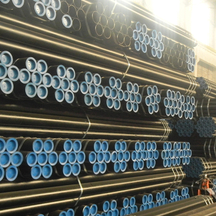
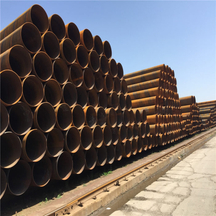
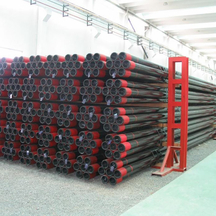
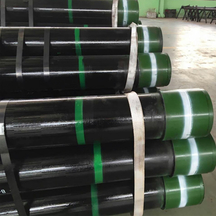
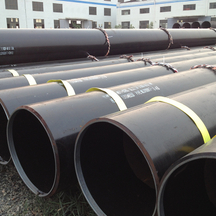
Straight seam steel pipes, also called longitudinally welded pipes, are widely used in oil and gas, water supply, construction, and mechanical engineering. They are produced by forming steel plates or strips into a cylinder and welding the edges along the pipe axis. Common manufacturing methods include ERW, LSAW, and EFW. ERW pipes suit efficient, cost-effective production; LSAW pipes are preferred for large-diameter, heavy-duty pipeline projects; and EFW pipes depend on applicable specifications and manufacturer capabilities. Selection should be based on diameter, wall thickness, grade, operating pressure, weld quality, inspection requirements, and applicable standards.
Straight seam steel pipes are welded pipes made by forming steel plates or strips into a cylindrical shape and joining their edges along the longitudinal direction. They are widely used in oil and gas, water supply, construction, and industrial manufacturing because they offer flexible specifications, consistent dimensions, and efficient production.
Compared with seamless pipes, straight seam pipes use a welding process, allowing manufacturers to control dimensions and select suitable production methods. Quality and performance depend on steel grade, manufacturing process, welding quality, and standard compliance.
Key Points at a Glance
Item | Description |
|---|---|
Defining feature | Longitudinal weld seam parallel to pipe axis |
Raw material | Steel strip, coil, or plate |
Main categories | ERW, LSAW, EFW |
Key advantages | Flexible specifications, consistent dimensions |
Key limitation | Weld quality and inspection are critical |
2.1 Definition and Basic Structure
The defining feature is the longitudinal weld seam, which runs parallel to the pipe axis. The pipe body is formed from steel strip, coil, or plate depending on the process.
Category | Welding Method |
|---|---|
ERW | Electric Resistance Welded |
LSAW | Longitudinal Submerged Arc Welded |
EFW | Electric Fusion Welded |
Main structural components:
Pipe body
Longitudinal weld seam
Pipe ends (plain, beveled, or threaded)
Differences from other pipes:
Pipe Type | Weld Seam |
|---|---|
Straight seam | Longitudinal |
Spiral welded | Helical |
Seamless | None |
2.2 Common Materials and Specifications
Straight seam pipes are made from carbon steel and low-alloy steel. Material selection depends on pressure, temperature, transported medium, environment, and project specifications.
Parameter | Influence |
|---|---|
Outside diameter | Flow capacity, connections, structural design |
Wall thickness | Pressure resistance, load capacity, weight |
Steel grade | Mechanical properties |
Pipe length | Installation and transportation |
Applicable standards | API 5L, ASTM, or project-specific |
Confirm the exact standard, grade, dimensions, and inspection requirements before ordering.
2.3 Key Advantages and Limitations
Advantages | Limitations |
|---|---|
Efficient production | Weld quality depends on process control |
Consistent dimensions | Not suitable for every application |
Broad product range | Inspection and testing are critical |
Flexible diameter and wall options | Performance depends on material and manufacturing |
Inspection is particularly important for pipelines operating under demanding pressure or environmental conditions.
Electric Resistance Welded (ERW) steel pipes are widely used in construction, fluid transportation, mechanical engineering, and other industrial applications. They are made by forming steel strips or coils into a cylindrical shape and joining the edges through electrical resistance heating and pressure. Their efficient production, consistent dimensions, and competitive cost make them a popular choice for suitable projects.
Key Points at a Glance
Item | Description |
|---|---|
Full name | Electric Resistance Welded |
Raw material | Steel strip or coil |
Weld type | Longitudinal |
Key advantage | Efficient production, consistent dimensions |
Key limitation | Diameter and wall thickness range depends on equipment |
3.1 How the ERW Process Works
Step | Action |
|---|---|
1 | Raw material preparation — inspect and prepare steel coils |
2 | Forming — pass strip through rollers to create a cylinder |
3 | Resistance welding — heat and press edges to form a weld seam |
4 | Weld finishing and sizing — remove excess material, adjust dimensions |
5 | Inspection and testing — dimensional checks, weld inspection, mechanical or pressure testing |
High-frequency ERW is common in modern production. Precise process control is essential for consistent weld quality and reliable performance.
3.2 Main Characteristics of ERW Steel Pipes
Advantage | Benefit |
|---|---|
High production efficiency | Continuous high-volume output |
Dimensional accuracy | Uniform OD and wall thickness |
Cost-effectiveness | Efficient material utilization |
Versatile applications | Various grades, dimensions, and finishes |
Quality consistency | Proper welding controls and inspection |
Limitations:
Available diameters and wall thicknesses depend on equipment
Suitability for high-pressure service must be verified
Requires appropriate material specifications and inspection results
3.3 Typical Applications
Industry | Typical Use |
|---|---|
Construction | Structural frameworks, supports, scaffolding |
Water and gas distribution | Suitable distribution systems |
Mechanical engineering | Machinery components, equipment manufacturing |
Automotive | Tubular components and fabricated products |
Industrial fluid transport | Systems meeting pressure and temperature requirements |
3.4 Advantages and Limitations
Advantages | Limitations |
|---|---|
Efficient production | Equipment limits available sizes |
Consistent dimensions | Weld quality requires control |
Competitive pricing | Not automatically suitable for all pressure service |
High-volume capability | Inspection is essential |
Longitudinal Submerged Arc Welded (LSAW) steel pipes are widely used in oil and gas transportation, water transmission, offshore engineering, and large-scale infrastructure. They are typically made from steel plates formed into a cylinder and welded along the longitudinal seam using submerged arc welding. Their suitability for large diameters, substantial wall thicknesses, and demanding specifications makes them important for heavy-duty pipeline applications.
Key Points at a Glance
Item | Description |
|---|---|
Full name | Longitudinal Submerged Arc Welded |
Raw material | Steel plate |
Weld type | Longitudinal |
Key advantage | Large diameter, heavy wall capability |
Key limitation | Higher cost and longer lead times |
4.1 How the LSAW Process Works
Step | Action |
|---|---|
1 | Steel plate preparation — select, inspect, and prepare edges |
2 | Plate forming — shape into cylinder (UOE or JCOE) |
3 | Welding — longitudinal seam via submerged arc welding |
4 | Weld inspection — NDT per applicable specification |
5 | Sizing and finishing — dimensional correction, end prep, heat treatment |
6 | Final testing — hydrostatic, mechanical, dimensional checks |
Submerged arc welding operates beneath a layer of granular flux, protecting the weld pool and supporting stable conditions.
4.2 Main Characteristics of LSAW Steel Pipes
Characteristic | Benefit |
|---|---|
Large-diameter capability | Major pipeline and infrastructure projects |
Substantial wall thickness | Heavy-wall pipes within qualified range |
Flexible material selection | Different grades for strength and toughness |
Reliable weld quality | Proper procedures and inspection |
Project-specific customization | Tailored diameter, wall, and length |
Actual performance depends on material grade, manufacturing quality, dimensions, and standard compliance.
4.3 Typical Applications
Application | Typical Use |
|---|---|
Oil and gas transportation | Onshore and offshore pipelines |
Water transmission | Large-scale supply and municipal infrastructure |
Offshore engineering | Marine structures and pipeline systems |
Power and industrial | Infrastructure requiring specific dimensions |
Heavy-duty structural | Large structural components |
4.4 Advantages and Limitations
Advantages | Limitations |
|---|---|
Large diameter capability | Higher manufacturing costs |
Heavy wall thickness | Longer production lead times |
Flexible material selection | Availability depends on capacity |
Reliable weld quality | Inspection procedures required |
Availability and delivery schedules depend on dimensions, material requirements, production capacity, and inspection procedures.
ERW, LSAW, and EFW are three welding processes for manufacturing straight seam steel pipes. All three produce pipes with longitudinal weld seams, but they differ in welding principles, raw materials, production methods, and typical applications. Understanding these differences helps engineers, contractors, and buyers select the right pipe.
5.1 Side-by-Side Technical Comparison
Comparison Factor | ERW | LSAW | EFW |
|---|---|---|---|
Welding principle | Electrical resistance heating and pressure | Submerged arc fusion welding | Electric-energy-based fusion welding |
Raw material | Steel strips or coils | Steel plates | Depends on manufacturing route |
Production method | Continuous forming and welding | Plate forming and longitudinal welding | Forming and fusion welding |
Product focus | Small to medium diameter | Large diameter and heavy wall | Specialized products |
Production efficiency | High for suitable volumes | Suited to large projects | Depends on route and requirements |
Cost | Economical for standard sizes | Depends on plate, dimensions, inspection | Varies by specification |
Common applications | Structural, mechanical, fluid service | Oil and gas, water, heavy infrastructure | Selected industrial applications |
Actual dimensions, performance, and availability vary by manufacturer. Follow the applicable standard and project requirements.
5.2 Key Differences in Manufacturing
Process | Key Feature |
|---|---|
ERW | Strip or coil formed; resistance heating and pressure join edges |
LSAW | Plate formed; submerged arc welding joins longitudinal seam |
EFW | Electric-energy fusion welding joins prepared edges |
ERW supports efficient, continuous production and consistent dimensions.
LSAW is commonly used for large-diameter pipes and substantial wall thicknesses.
EFW manufacturing routes and permitted applications depend on the product specification and manufacturer. Verify the exact process — do not assume all EFW products are identical.
5.3 Which Process Is Best for Your Project?
Choose | When |
|---|---|
ERW | Cost-effective production, dimensional consistency, efficient delivery |
LSAW | Large diameters, substantial wall thickness, pipeline capability |
EFW | Project specification requires this route and a qualified supplier exists |
Evaluate before deciding:
Steel grade
Outside diameter and wall thickness
Design pressure and temperature
Corrosion conditions
Applicable industry standards
5.4 Quality Control and Purchasing Considerations
Quality depends on raw material, manufacturing controls, weld integrity, and inspection.
Check | Purpose |
|---|---|
Chemical composition | Verifies material |
Mechanical testing | Confirms properties |
NDT | Detects weld defects |
Dimensional inspection | Ensures fit |
Hydrostatic testing | Verifies pressure integrity |
Review mill test certificates, inspection reports, traceability records, and certification requirements. Compare quotations on equivalent specifications to avoid overlooking differences in testing scope or quality.
Quality control ensures the safety, reliability, and performance of straight seam steel pipes. Whether made by ERW, LSAW, or EFW processes, pipes must meet the technical requirements of their intended applications. Effective quality management covers raw material inspection, welding control, dimensional verification, testing, and documentation.
Key Quality Control Procedures at a Glance
Procedure | Purpose |
|---|---|
Chemical composition analysis | Verifies material grade |
Mechanical property testing | Evaluates tensile, yield, and elongation |
Weld inspection | Detects weld defects |
Nondestructive testing | Finds discontinuities without damage |
Hydrostatic testing | Verifies pressure integrity |
Dimensional inspection | Checks OD, wall, length, straightness |
Surface inspection | Detects visible defects |
Note: Not every test is mandatory for every pipe. The required scope is defined by the applicable standard and purchase order.
6.1 Essential Quality-Control Procedures
Test | What It Checks |
|---|---|
Chemical analysis | Steel composition meets grade requirements |
Mechanical testing | Tensile, yield, elongation, impact |
Weld inspection | Visual and NDT examination of the seam |
NDT | Ultrasonic, radiographic, or other methods |
Hydrostatic testing | Pressure integrity where required |
Dimensional inspection | OD, wall thickness, length, straightness, ends |
Surface inspection | Visible defects and damage |
6.2 Understanding Standards and Certifications
Standard | Scope |
|---|---|
API 5L | Line pipe for oil and gas transportation |
ASTM | Various steel pipe products and testing |
ASME | Material specifications and construction codes |
Confirm before ordering:
Exact standard and edition
Material grade
Supplementary requirements
Documentation and certification needs
Note: A general reference to ASTM or ASME alone may not adequately define the required product.
Documentation may include:
Mill test certificates
Inspection reports
Traceability records
Third-party inspection documents
6.3 How to Ensure Reliable Steel Pipe Quality
Evaluate the manufacturer's:
Production capabilities
Quality management procedures
Inspection equipment
Experience with similar products
Confirm before placing an order:
Item | Detail |
|---|---|
Dimensions and grade | Required specifications |
Weld inspection | Applicable testing requirements |
Acceptance criteria | Documentation requirements |
Traceability | Marking arrangements |
Delivery | Packaging and inspection arrangements |
Straight seam steel pipes are essential for oil and gas, water supply, construction, and industrial projects. Selecting the right product requires understanding ERW, LSAW, and EFW manufacturing processes. ERW pipes offer efficiency and cost-effectiveness for structural and fluid transport; LSAW pipes suit large-diameter, heavy-duty pipelines; EFW pipes serve specific fusion-welded applications. The best choice depends on steel grade, diameter, wall thickness, operating pressure, applicable standards, and total project cost.
FAQ:
1. What Is the Main Difference Between ERW, LSAW, and EFW Steel Pipes?
ERW pipes use electrical resistance heating and pressure, LSAW pipes use submerged arc welding, and EFW pipes use an electric-energy-based fusion welding process. They differ in manufacturing methods, product capabilities, and typical applications.
2. Which Is Better for Oil and Gas Pipelines: ERW or LSAW?
The choice depends on pipe diameter, wall thickness, steel grade, operating conditions, and applicable standards. ERW is often suitable for certain smaller-diameter applications, while LSAW is commonly used for large-diameter pipelines.
3. Are LSAW Steel Pipes Stronger Than ERW Steel Pipes?
Not necessarily. Pipe strength depends on the steel grade, dimensions, manufacturing quality, and compliance with applicable specifications. The welding process alone does not determine overall strength.
4. What Information Is Needed to Get a Quote for Straight Seam Steel Pipes?
Provide the pipe type, steel grade, applicable standard, outside diameter, wall thickness, length, quantity, inspection requirements, and delivery destination. These details help suppliers prepare an accurate quotation.
About Us / News / Product / Project / Quality Assurance / Service / Contact Us