Views: 0 Author: Site Editor Publish Time: 2026-06-01 Origin: Site
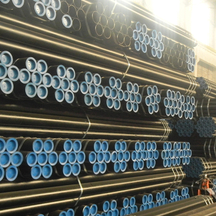
In industrial piping systems, ASTM A106 Gr.B and ASTM A53 Gr.B are widely used carbon steel pipe grades that often appear identical but serve distinct purposes.
ASTM A106 Gr.B is a seamless pipe specification engineered specifically for high-temperature service, making it ideal for power plants, refineries, and boiler systems where elevated heat and pressure are present. In contrast, ASTM A53 Gr.B is a general-purpose standard available in both seamless and welded (ERW) forms, commonly used in water pipelines, structural projects, and low- to medium-pressure environments.
Although they share similar chemical compositions and mechanical properties, their design intents differ significantly. Selecting the wrong grade can lead to severe performance issues or safety risks. Therefore, engineers must carefully evaluate operating temperatures and project specifications to ensure system reliability and compliance.
Key Differences Between ASTM A106 Gr.B and ASTM A53 Gr.B
While ASTM A106 Gr.B and ASTM A53 Gr.B share similar mechanical properties, their fundamental differences in design intent and manufacturing make them suitable for distinct applications.
The primary distinction lies in their service conditions. ASTM A106 Gr.B is specifically engineered for high-temperature service, making it the standard choice for steam lines, refineries, and power plants. It is manufactured exclusively as a seamless pipe, ensuring superior structural integrity under extreme heat and pressure. Additionally, A106 enforces stricter chemical controls—particularly requiring silicon (≥0.10%)—to enhance high-temperature oxidation resistance.
In contrast, ASTM A53 Gr.B is a general-purpose specification used for mechanical, structural, and low- to medium-pressure applications such as water and air distribution. It offers greater flexibility by being available in both seamless and welded (ERW) forms, making it a more cost-effective solution for standard environments.
Why ASTM A106 Gr.B and ASTM A53 Gr.B Cannot Be Interchanged
Key Factor | ASTM A106 Gr.B vs. ASTM A53 Gr.B Differences |
Design Intent | A106 is engineered for high-temperature service (e.g., steam lines, refineries), while A53 is intended for general mechanical and low-to-medium pressure applications. |
Code Compliance | Strict engineering codes like ASME B31.1/B31.3 often explicitly mandate A106 for high-heat systems; substituting A53 can lead to inspection failures and project delays. |
Safety Risks | Using A53 in elevated temperature environments increases risks of material deformation, reduced service life, and weld failure due to thermal stress and pressure fluctuations. |
Manufacturing Process | A106 is exclusively seamless, offering uniform strength. A53 is available as seamless or welded (ERW), with welded seams potentially weakening performance under extreme heat. |
Project Specifications | Procurement documents strictly separate these grades. Unauthorized substitution often results in material rejection or non-acceptance of the entire piping system. |
Chemical Control | A106 enforces stricter chemical controls (e.g., mandatory silicon content) to enhance oxidation resistance at high temperatures, which A53 lacks. |
Application Selection Guide: ASTM A106 Gr.B vs. ASTM A53 Gr.B
Key Factor | ASTM A106 Gr.B (High-Temp Service) | ASTM A53 Gr.B (General Purpose) |
Operating Conditions | Designed for high-temperature and high-pressure environments with continuous thermal stress. | Best for low- to medium-pressure, low-temperature, and general utility applications. |
Typical Applications | Power plants, steam lines, boiler systems, oil refineries, and critical petrochemical processing units. | Water/air pipelines, structural supports, HVAC networks, and standard industrial fluid transport. |
Manufacturing Type | Exclusively seamless, providing uniform strength and superior resistance to heat-induced stress. | Available in both seamless and welded (ERW) forms, offering flexibility and cost-effectiveness. |
Code Compliance | Often explicitly mandated by strict engineering codes (e.g., ASME B31.1/B31.3) for severe service. | Compliant with standard mechanical and structural specifications where extreme heat is not a factor. |
Cost & Budget | Higher initial cost due to stricter chemical controls and seamless manufacturing processes. | More economical and budget-friendly for non-critical, large-scale utility or construction projects. |
Selection Principle | Choose critical safety systems requiring long-term reliability under elevated temperatures. | Choose for general utility and structural needs where hi |
Our Recommended ASTM A106 Gr.B and ASTM A53 Gr.B Pipe Solutions & Global Shipping Services
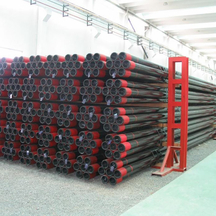
We provide a comprehensive range of high-quality ASTM A106 Gr.B and ASTM A53 Gr.B steel pipe solutions tailored for global industrial projects. Our ASTM A106 Gr.B seamless pipes are engineered specifically for critical high-temperature and high-pressure environments, such as refineries, power plants, and steam systems. For general utility, structural, and low-to-medium pressure applications, our versatile ASTM A53 Gr.B pipes (available in both seamless and ERW types) offer a cost-effective and reliable alternative.
Every pipe undergoes rigorous quality assurance, including hydrostatic testing, ultrasonic NDT, and full mill test certificate (MTC) traceability. Backed by efficient global shipping services—including bulk vessel and containerized transport—we ensure safe, timely delivery to project sites worldwide, serving as your dependable partner for all carbon steel piping needs.
Common Mistakes When Selecting Carbon Steel Pipes
Selecting the correct carbon steel pipe grade is critical for system safety, yet many engineers and procurement teams make costly mistakes when choosing between ASTM A106 Gr.B and ASTM A53 Gr.B.
A common error is assuming pipes are interchangeable based solely on their identical appearance or focusing only on initial cost. While ASTM A53 Gr.B is more budget-friendly, it lacks the high-temperature stability required for steam lines and refineries, which demand ASTM A106 Gr.B. Ignoring operating temperatures can lead to rapid material degradation and severe safety risks.
Furthermore, overlooking strict engineering codes like ASME B31.1 and B31.3 often results in failed inspections and expensive project delays. Many projects explicitly mandate A106 for high-pressure systems, making unauthorized substitutions non-compliant. Finally, failing to verify Mill Test Certificates (MTC) compromises quality assurance and material traceability.
To ensure long-term reliability and compliance, always base your selection on technical service conditions—such as temperature, pressure, and industry standards—rather than price or visual similarity alone.
Conclusion
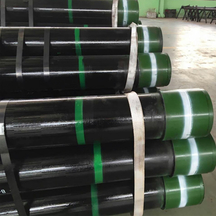
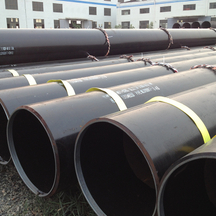
While ASTM A106 Gr.B and ASTM A53 Gr.B may look identical, they serve fundamentally different purposes in industrial piping systems. Visual similarity does not equal functional equivalence, and understanding their distinct design intents is crucial for system safety.
ASTM A106 Gr.B is a seamless pipe engineered specifically for high-temperature and high-pressure service, making it the mandatory choice for critical applications like steam lines, refineries, and petrochemical plants. In contrast, ASTM A53 Gr.B is designed for general-purpose utility, structural use, and low-to-medium pressure environments. Because of differences in manufacturing processes (seamless vs. ERW) and chemical controls, these two grades are not safely interchangeable in demanding conditions.
To ensure engineering compliance and operational reliability, always base your selection on actual service requirements rather than cost or appearance alone. Adopting the right pipe grade prevents costly mistakes, ensures adherence to strict codes like ASME B31.1/B31.3, and guarantees long-term performance for your infrastructure projects.
FAQ:
(1) Is ASTM A106 Gr.B stronger than ASTM A53 Gr.B?
Comparison of mechanical properties and service conditions.
(2) Can ASTM A53 Gr.B replace ASTM A106 Gr.B in steam pipelines?
Explanation of high-temperature service limitations.
(3) What is dual-certified A106/A53 pipe?
Definition and common applications.
(4) Which pipe grade is more cost-effective?
Cost comparison based on application requirements.
(5) How can I identify whether a pipe is ASTM A106 Gr.B or ASTM A53 Gr.B?
Markings, certifications, and material test reports.
About Us / News / Product / Project / Quality Assurance / Service / Contact Us