Views: 0 Author: Site Editor Publish Time: 2026-09-15 Origin: Site
The cross-sectional shape of structural steel tubing significantly influences its load-bearing performance. For ASTM A500 structural tubing, round, square, and rectangular shapes offer distinct advantages. Round tubes provide uniform torsional resistance and suit columns and trusses. Square tubes offer balanced bending performance and easier connections for building frames. Rectangular tubes maximize bending capacity along a specific axis, making them perfect for directional beams and platforms.
Selecting the optimal shape requires evaluating load direction, span length, and fabrication needs rather than just material strength. A properly selected shape maximizes structural efficiency and reduces overall project costs.
What Is ASTM A500 Structural Tubing?
ASTM A500 structural tubing is a carbon steel hollow structural section (HSS) for load-bearing and general structural applications. It comes in round, square, and rectangular shapes—a flexible option for construction, infrastructure, industrial equipment, and fabricated steel structures.
Quick Overview
Aspect | Details |
|---|---|
Standard | ASTM A500 |
Material | Carbon steel |
Product | Hollow structural section (HSS) |
Shapes | Round, square, rectangular |
Grades | Multiple (affect yield and tensile strength) |
Typical use | Construction, infrastructure, industrial equipment, fabricated structures |
Key specs | Chemical composition, mechanical properties, dimensions, manufacturing quality |
Shape Options
Shape | Key Feature | Best For |
|---|---|---|
Round | Uniform material distribution | Axial and torsional loads; smooth profiles |
Square | Equal dimensions in both directions | Balanced behavior; flat connection surfaces |
Rectangular | Different width and height | Optimized stiffness/strength in preferred direction |
Grade & Dimension Considerations
Factor | Impact |
|---|---|
Grade | Yield and tensile strength |
Outside dimensions | Cross-sectional area, moment of inertia |
Wall thickness | Section modulus, radius of gyration |
Length | Overall member design |
Fabrication Flexibility
Operation | Notes |
|---|---|
Cutting | Per project requirements |
Welding | Compatible with carbon steel |
Drilling | Flat surfaces simplify work |
Forming | Prefabricated assemblies |
Advantage: Square and rectangular sections simplify frame connections; round tubes suit multi-directional loading and torsional performance.
Specification Checklist
Confirm Before Ordering |
|---|
ASTM specification and grade |
Outside dimensions |
Wall thickness |
Mechanical properties |
Manufacturing method |
Dimensional tolerances |
Surface condition |
Inspection requirements |
Material documentation |
ASTM A500 Round Tubes: Strength and Versatility
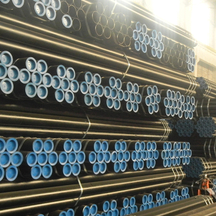
ASTM A500 round tubes are widely used in structural applications because their circular cross-section provides balanced performance in multiple directions. Unlike square and rectangular tubing, round tubing distributes steel continuously around the centerline—ideal for axial loads, bending, torsion, and changing load directions.
Key Advantages at a Glance
Advantage | Details |
|---|---|
Efficient Load Distribution | Stress distributed evenly around section |
Good Torsional Resistance | Material continuous around perimeter |
Multi-Directional Performance | Rotational symmetry—no strong/weak axis |
Clean Appearance | Smooth surface for architectural applications |
Versatile Applications | Columns, towers, trusses, handrails |
Advantages in Detail
1. Efficient Load Distribution
Aspect | Details |
|---|---|
Geometry | Material distributed continuously around centerline |
Benefit | Stress relatively even under axial compression/tension |
Best for | Columns, supports, towers, trusses |
2. Good Torsional Resistance
Aspect | Details |
|---|---|
Why | Material continuous around perimeter |
Benefit | Efficient under twisting forces |
Useful for | Wind, vibration, equipment movement |
3. Multi-Directional Performance
Aspect | Details |
|---|---|
Feature | Rotational symmetry |
Benefit | Consistent properties around central axis |
Advantage | No strong/weak bending axis |
Valuable for | Towers, poles, trusses, exposed structures |
4. Clean Appearance
Application |
|---|
Handrails |
Guardrails |
Architectural structures |
Tubular frames |
Limitations
Limitation | Details |
|---|---|
Connections | Curved surfaces may need specialized fabrication |
Flat connections | Square/rectangular may be more convenient |
Section selection | Diameter and wall thickness must meet structural requirements |
Selection Factors
Factor | Impact |
|---|---|
Diameter | Section properties |
Wall thickness | Strength and local deformation resistance |
Grade | Yield and tensile strength |
Loading conditions | Structural performance |
Connection details | Fabrication requirements |
Design standards | Compliance |
ASTM A500 Square Tubes: Efficient Connections and Balanced Strength
ASTM A500 square tubes combine balanced strength with convenient fabrication. Their four equal sides create a symmetrical cross-section—similar structural properties about both principal bending axes.
Key Advantages at a Glance
Advantage | Details |
|---|---|
Balanced Bending Performance | Equal width and height; similar moment of inertia about both axes |
Connection Convenience | Four flat surfaces simplify welding and bolting |
Material Efficiency | Hollow section reduces weight vs. solid steel |
Fabrication Flexibility | Easy attachment of plates, brackets, beams |
Clean Appearance | Suitable for architectural and exposed structures |
Advantages in Detail
1. Balanced Bending Performance
Aspect | Details |
|---|---|
Geometry | Equal width and height |
Benefit | Similar moment of inertia and section modulus about both axes |
Advantage | No need to orient toward a specific strong axis |
Best for | Columns, frames, supports, racks, equipment structures |
2. Connection Convenience
Aspect | Details |
|---|---|
Feature | Four flat surfaces |
Benefit | Easier attachment of plates, brackets, beams |
Operations | Welding and bolting arranged efficiently |
Result | Simplified production; reduced assembly time |
3. Material Efficiency
Aspect | Details |
|---|---|
Design | Hollow square cross-section |
Benefit | Useful strength with less material than a solid section |
Advantage | Reduced weight; easier transport, handling, installation |
Selection | Different dimensions and wall thicknesses for strength/stiffness/weight balance |
Common Applications
Application |
|---|
Building frames |
Machinery supports |
Platforms |
Agricultural equipment |
Storage systems |
Trailers |
Fencing structures |
General steel fabrication |
Selection Factors
Factor | Why It Matters |
|---|---|
Wall thickness | Strength and local buckling resistance |
Steel grade | Yield and tensile strength |
Unsupported length | Column buckling |
Connection conditions | Fabrication and performance |
Applied loads | Bending strength and deflection |
Local buckling | Important for thin-walled sections |
Square vs. Rectangular Tubing
Aspect | Square | Rectangular |
|---|---|---|
Bending axes | Balanced (equal) | Strong and weak axis |
Best for | Uncertain or changing load directions | Optimized directional strength |
Connections | Convenient flat surfaces | Convenient flat surfaces |
Torsional efficiency | Moderate | Moderate |
ASTM A500 Rectangular Tubes: Optimizing Directional Strength
ASTM A500 rectangular tubes optimize strength and stiffness in a specific direction. Unlike square tubing, they have different width and height—creating a strong axis and weak axis. This makes them ideal for beams and members under directional bending.
Key Advantages at a Glance
Advantage | Details |
|---|---|
High Bending Stiffness (Strong Axis) | Greater depth = higher moment of inertia and section modulus |
Efficient Material Use | Targets strength where needed—not equal on all sides |
Fabrication Convenience | Flat surfaces simplify welding, bolting, connections |
Compact Assemblies | Clean, space-efficient designs |
Directional Optimization | Orient longer dimension to resist primary loads |
Key Details
1. High Bending Stiffness Along Strong Axis
Aspect | Details |
|---|---|
Principle | Greater depth places steel farther from the neutral axis |
Result | Higher moment of inertia and section modulus |
Benefit | Greater bending and deflection resistance in preferred direction |
Advantage | Without excessive material weight increase |
2. Common Applications
Application |
|---|
Beams |
Building frames |
Equipment supports |
Platforms |
Trailers |
Bridges |
Industrial structures |
Tip: For vertical loads, orient the longer dimension vertically to improve bending resistance.
3. Fabrication Advantages
Operation | Benefit |
|---|---|
Welding | Flat surfaces |
Bolting | Easy connections |
Cutting | Simple |
Plate/bracket connection | Straightforward |
Advantage: Clean, compact assemblies where space is limited.
Design Considerations
Factor | Why It Matters |
|---|---|
Orientation | Incorrect orientation reduces efficiency and increases deflection |
Strong vs. weak axis | Weak axis may govern design |
Column buckling | Check both axes for compression members |
Radius of gyration | Affects buckling resistance |
Wall slenderness | Local buckling check for thin-wall sections |
Load direction | Determines optimal orientation |
Rectangular vs. Square Tubing
Aspect | Rectangular | Square |
|---|---|---|
Bending axes | Strong and weak | Balanced (equal) |
Best for | Directional bending (beams) | Uncertain/changing load directions |
Material efficiency | Optimized for one direction | Balanced all around |
Connections | Flat surfaces | Flat surfaces |
Round vs. Square vs. Rectangular ASTM A500 Tubes: Key Structural Differences
Selecting the right ASTM A500 structural tubing shape is critical for optimizing structural efficiency. Round tubes offer superior torsional resistance and balanced bending, making them ideal for columns and towers. Square tubes provide equal strength on both axes and feature flat surfaces for easy connections in building frames. Rectangular tubes maximize bending capacity along a specific strong axis, making them perfect for directional beams and platforms.
There is no universally strongest shape; the optimal choice depends on load direction, fabrication needs, and weight efficiency. Engineers must evaluate structural calculations rather than relying on shape alone to ensure a safe and cost-effective design.
How Cross-Sectional Shape Affects Structural Design
The cross-sectional shape of an ASTM A500 steel tube directly influences how a member carries loads. Round, square, and rectangular tubes may share the same steel spec—but geometry determines moment of inertia, section modulus, radius of gyration, and torsional resistance.
Shape Comparison at a Glance
Factor | Round | Square | Rectangular |
|---|---|---|---|
Bending | Consistent around axis | Balanced both axes | Strong and weak axis |
Compression/Buckling | Balanced | Balanced | Weak axis may govern |
Torsion | Excellent | Good | Dimension-dependent |
Connections | Curved—may need specialized details | Flat surfaces—easy | Flat surfaces—easy |
Best for | Multi-directional loads, towers | Columns, frames, uncertain load directions | Beams, directional bending |
Key Design Factors
1. Bending and Stiffness
Aspect | Details |
|---|---|
Key property | Moment of inertia |
Larger inertia | Greater bending resistance; better deflection control |
Rectangular | Efficient when bending in one direction |
Square | Balanced bending properties |
Round | Consistent properties around central axis |
2. Compression and Buckling
Aspect | Details |
|---|---|
Key factors | Radius of gyration, unsupported length |
Rectangular | Weaker axis may control design |
Square & round | More balanced buckling resistance |
Action | Evaluate both principal axes |
3. Torsion and Multi-Directional Loading
Shape | Torsional Performance |
|---|---|
Round | Excellent—material continuous around center |
Square | Good |
Rectangular | Dimension-dependent |
Best for: Towers, trusses, equipment frames with changing load directions.
4. Connections and Fabrication
Shape | Connection Consideration |
|---|---|
Square & rectangular | Flat faces simplify welding, bolting, and plates |
Round | Curved surfaces may need specialized details |
Tip: Match shape to fabrication methods, joint configuration, equipment, and installation requirements.
5. Material and Weight Efficiency
Approach | Benefit |
|---|---|
Select geometry that places material where needed | Reduces unnecessary steel consumption |
Optimize shape instead of increasing wall thickness | Maintains strength and stiffness with less weight |
Selection Factors
Factor | Why It Matters |
|---|---|
Load magnitude | Required capacity |
Load direction | Optimal shape and orientation |
Span | Deflection control |
Unsupported length | Buckling resistance |
Wall thickness | Strength and local buckling |
Steel grade | Material properties |
Connections | Fabrication feasibility |
Our Recommended ASTM A500 Steel Tube Products and Global Shipping Services
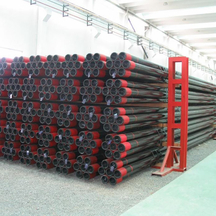
We supply premium ASTM A500 steel tubes in round, square, and rectangular profiles. Engineered for optimal structural performance, our tubes are ideal for construction, infrastructure, and industrial fabrication.
Quality and compliance are paramount. We conduct rigorous inspections—including dimensional checks, mechanical testing, and surface evaluation—and provide comprehensive Mill Test Certificates (MTCs) to guarantee full adherence to ASTM standards.
Beyond manufacturing, we provide end-to-end global shipping solutions. We understand that timely delivery is critical to maintaining project schedules. Our logistics team manages secure bundling and flexible transportation options (container and break-bulk freight) to prevent transit damage and ensure your structural tubing arrives safely and on time.
To receive a customized product and shipping quotation, please contact us today with your required tube shape, steel grade, dimensions, testing requirements, quantity, and delivery destination. Our expert team will recommend the optimal ASTM A500 steel tube configuration tailored to your exact project needs.
Conclusion:
Selecting the right ASTM A500 cross-section is critical for efficient structural design. Round tubes offer balanced strength and superior torsional resistance, making them ideal for columns and trusses. Square tubes provide equal strength on both axes and feature flat surfaces for easy connections in building frames. Rectangular tubes maximize bending capacity along a specific strong axis, making them perfect for directional beams and platforms.
Choosing the optimal shape requires evaluating load direction, span length, and fabrication needs rather than just material strength. A properly selected shape maximizes structural efficiency and reduces overall project costs.
FAQ:
Q1: Is ASTM A500 round tubing stronger than square tubing?
Strength depends on dimensions, wall thickness, grade, and loading direction rather than shape alone.
Q2: Why are rectangular tubes commonly used for beams?
Their geometry can provide greater stiffness and section modulus in the desired bending direction.
Q3: Which ASTM A500 tube shape is best for columns?
Round, square, or rectangular tubes can all work, depending on buckling, connection, and load requirements.
Q4: Are ASTM A500 square and rectangular tubes easy to weld?
Yes, their flat surfaces generally make fabrication and welding convenient when proper procedures are followed.
Q5: How do I choose between round, square, and rectangular ASTM A500 tubes?
Consider the applied loads, bending direction, torsion, buckling, connections, available space, and required section properties.
About Us / News / Product / Project / Quality Assurance / Service / Contact Us