Views: 0 Author: Site Editor Publish Time: 2026-09-24 Origin: Site
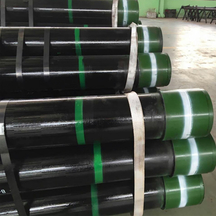
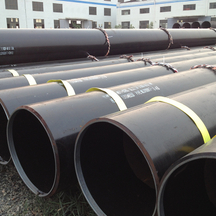
API 5L steel pipe is the industry standard for long-distance oil and gas pipelines, engineered to transport crude oil and natural gas under high pressure and varying temperatures. Its key advantage lies in balancing high strength (grades X60–X80) with toughness and excellent weldability for efficient field construction. The specification offers PSL1 and PSL2 levels, allowing engineers to select precise chemical and mechanical controls for demanding environments, including cold regions or sour gas service. To ensure longevity, API 5L pipes are often paired with external coatings and cathodic protection. Selecting the correct grade, dimensions, and manufacturing method is critical for achieving a safe, durable, and cost-effective pipeline system.
Applications of API 5L Steel Pipes in Oil and Gas Pipelines
API 5L steel pipes are widely used in oil and gas pipelines because they are designed to transport petroleum, natural gas, and other fluids over long distances. Their standardized mechanical and chemical requirements suit projects where strength, weldability, toughness, and dimensional consistency matter. Grade, manufacturing method, diameter, and wall thickness are selected based on pipeline design and operating conditions.
Main Applications at a Glance
Application | Typical Use |
|---|---|
Crude oil transportation | Oil fields to refineries and storage |
Natural gas transportation | High-pressure gas transmission |
Gathering pipelines | Wells and collection facilities |
Transmission pipelines | Long-distance product movement |
Cross-country projects | Challenging terrain and environments |
2.1 Crude Oil Transportation
API 5L pipes are common in crude oil transmission lines connecting oil fields with refineries, storage facilities, and ports. These pipelines operate over long distances and under significant internal pressure.
Selection considerations:
Strength for internal pressure
Crude oil properties
Operating temperature
Water content and internal corrosion
External coating and cathodic protection
Natural gas transmission is a major application. Gas pipelines often operate at relatively high pressures, making strength and fracture resistance key design factors.
Consideration | Detail |
|---|---|
Higher-strength grades | X60, X65, X70, X80 for suitable projects |
Temperature changes | Performance across varying conditions |
Ground movement | Environmental load resistance |
Welding quality | Critical due to many field joints |
2.3 Gathering and Transmission Pipelines
API 5L pipes serve both gathering and transmission systems, though service requirements differ.
System | Function |
|---|---|
Gathering | Wells and collection facilities to processing |
Transmission | Long-distance movement to distribution |
Grade and dimensions depend on pressure, fluid characteristics, diameter, terrain, and project conditions. Evaluate these factors rather than selecting by nominal strength alone.
2.4 Cross-Country and Challenging Pipeline Projects
Long-distance API 5L pipelines may cross deserts, mountains, agricultural areas, and permafrost zones. Pipe selection must consider more than internal pressure.
Factor | Why It Matters |
|---|---|
Low-temperature toughness | Prevents brittle fracture |
Mechanical damage resistance | Survives installation and service |
Weldability | Ensures reliable field joints |
External corrosion protection | Extends service life |
API 5L Steel Pipe Grades and Material Selection
Selecting the correct API 5L grade is key to designing a long-distance oil and gas pipeline. Different grades provide different yield and tensile strength levels, while project conditions may also require specific controls for toughness, chemical composition, weldability, and testing. Base selection on the complete pipeline design, not simply the highest-strength grade.
Selection Factors at a Glance
Factor | Key Point |
|---|---|
PSL level | PSL1 basic, PSL2 stricter |
Strength grade | Based on design pressure and diameter |
Weldability | Critical for field welding |
Toughness | Important for low-temperature service |
Corrosion | Coating, cathodic protection, sour service |
Economics | Balance strength with cost |
3.1 API 5L PSL1 vs. PSL2
API 5L provides two Product Specification Levels:
Level | Requirement |
|---|---|
PSL1 | Basic line pipe requirements |
PSL2 | Tighter chemical, mechanical, testing, and manufacturing controls |
PSL2 suits demanding projects needing consistent material properties and additional verification. However, PSL2 is not automatically a substitute for project-specific requirements. Always review the pipeline design code and purchasing specification.
3.2 Common API 5L Grades
Common grades include L245/B, L290/X42, L360/X52, L390/X56, L415/X60, L450/X65, L485/X70, and L555/X80.
Grade | Approx. Min. Yield Strength |
|---|---|
X42 | 42 ksi |
X52 | 52 ksi |
X60 | 60 ksi |
X65 | 65 ksi |
X70 | 70 ksi |
X80 | 80 ksi |
Higher-strength grades provide greater pressure resistance and can help optimize wall thickness. However, higher strength does not make a pipe suitable for every pipeline.
Also consider:
Weldability
Toughness
Operating temperature
Corrosion conditions
Manufacturing requirements
Construction procedures
3.3 Choosing the Appropriate Strength Grade
Start with the pipeline's:
Design pressure
Diameter and wall thickness
Operating temperature
Transportation medium
Then determine required material strength and performance characteristics.
Application | Likely Grades |
|---|---|
High-pressure transmission | X60, X65, X70, X80 |
Less demanding service | Lower-strength grades |
Weldability is key for long-distance pipelines with extensive field welding. Review chemical composition and carbon equivalent to support suitable welding procedures.
Additional considerations:
Low-temperature service: adequate impact toughness
Sour service: controls for H₂S-related damage
Corrosion protection, inspection, and testing requirements
Key Factors When Selecting API 5L Steel Pipes
Selecting API 5L steel pipes for long-distance oil and gas pipelines requires more than choosing a steel grade. The pipe must match the pipeline's pressure, temperature, dimensions, transported medium, environment, and construction requirements. A proper selection process balances safety, service life, welding performance, and project cost.
Key Factors at a Glance
Factor | Key Point |
|---|---|
Pressure and temperature | Grade and wall thickness must resist internal pressure |
Diameter and wall thickness | Based on engineering calculations |
Weldability | Critical for extensive field welding |
Corrosion | Internal, external, and sour-service control |
Toughness | Prevents fracture propagation |
Installation | Terrain, climate, and construction conditions |
4.1 Operating Pressure and Temperature
Design and operating pressure are among the first factors to consider. Pipe grade and wall thickness must resist internal pressure under normal and potential conditions.
Condition | Consideration |
|---|---|
High pressure | Higher-strength grades may be needed |
Cold regions | Adequate low-temperature toughness |
Elevated temperature | Affects material and corrosion behavior |
Follow the applicable pipeline design code for final selection.
4.2 Pipe Diameter and Wall Thickness
Factor | Effect |
|---|---|
Diameter | Transportation capacity and flow efficiency |
Wall thickness | Pressure resistance and structural performance |
Large-diameter pipes suit major transmission projects. Wall thickness is selected by pressure, diameter, material strength, external loads, and installation conditions. Excessive thickness raises cost; insufficient thickness compromises performance. Determine dimensions through engineering calculations.
4.3 Weldability and Construction Requirements
Long-distance pipelines need extensive field welding. API 5L pipe should suit the specified welding procedure.
Factor | Impact |
|---|---|
Carbon equivalent | Affects weldability and preheating |
Chemical composition | Influences weld quality |
Terrain and climate | May require extra toughness and inspection |
4.4 Corrosion and Environmental Conditions
Corrosion Type | Causes |
|---|---|
Internal | Water, CO₂, H₂S, fluid characteristics |
External | Soil, groundwater, marine exposure, coating damage |
Depending on the project, use:
External coatings
Internal corrosion-control measures
Cathodic protection
Additional controls for sour service
4.5 Toughness and Fracture Resistance
Toughness is critical for pipelines under high pressure, low temperature, or conditions where fracture propagation is a concern. Specify impact testing and material requirements per the project standard.
Manufacturing and Quality Requirements for API 5L Line Pipes
The manufacturing quality of API 5L line pipe directly affects the safety, durability, and operating performance of long-distance oil and gas pipelines. Because these pipes may operate under high pressure and challenging conditions, manufacturers must control material quality, production processes, dimensions, welding, and testing. Buyers should also review the applicable API 5L edition and project specifications before ordering.
Quality Requirements at a Glance
Requirement | Key Point |
|---|---|
Manufacturing process | Seamless or welded, matched to project |
Chemical composition | Within specified limits for grade and PSL |
Mechanical properties | Yield, tensile, elongation, impact |
Welding | Controlled parameters and heat treatment |
Hydrostatic testing | Verifies pressure integrity |
NDT | Detects pipe body and weld defects |
Documentation | Certificates and traceability |
5.1 Seamless and Welded Manufacturing Processes
API 5L line pipes can be made by different methods depending on size, grade, application, and project requirements.
Process | Typical Use |
|---|---|
Seamless | Specific sizes and demanding service |
ERW | Efficient welded production |
LSAW | Large diameter and heavy wall |
SSAW | Large-diameter pipe production |
Select the method by engineering requirements, not the assumption that one process is universally superior.
5.2 Chemical and Mechanical Properties
Chemical composition is a key part of quality control. Elements must remain within specified limits for the grade and PSL level:
Carbon
Manganese
Sulfur
Phosphorus
Alloying elements
Controlled chemistry helps achieve required strength, toughness, and weldability.
Mechanical testing verifies:
Property | Purpose |
|---|---|
Yield strength | Deformation resistance |
Tensile strength | Maximum stress capacity |
Elongation | Ductility |
Impact toughness | Low-temperature performance |
5.3 Welding and Heat Treatment
For welded pipes, weld quality is critical. Manufacturers must control:
Welding parameters
Consumables
Heat input
Post-weld processes
Heat treatment requirements depend on the manufacturing process, grade, dimensions, and applicable API 5L requirements. Proper control maintains consistent mechanical properties and dimensional stability.
5.4 Hydrostatic and Nondestructive Testing
Test | Purpose |
|---|---|
Hydrostatic testing | Verifies pressure-containing integrity |
Ultrasonic testing | Detects internal discontinuities |
Radiographic testing | Detects weld and body defects |
NDT methods are applied according to pipe type and applicable specification.
5.5 Dimensional Control and Documentation
Quality control includes checking:
Outside diameter
Wall thickness
Length
Straightness
Pipe ends
Surface condition
Our Recommended API 5L Steel Pipe Products and Global Shipping Services
We supply API 5L steel pipes for long-distance oil and gas pipeline projects, available in grades X42, X52, X60, X65, X70, and X80, with PSL1 or PSL2 compliance. Our product range includes seamless and welded pipes in customized outside diameters, wall thicknesses, and lengths to meet high-pressure transmission requirements. Rigorous quality control covers chemical composition, tensile and impact testing, hydrostatic testing, non-destructive examination, and dimensional inspection, with full traceability documentation provided. Export orders feature protective bundling and optimized loading for container or bulk vessel shipment to prevent transit damage. Our global shipping services coordinate efficient international delivery based on destination port and schedule. To request a quotation, provide grade, PSL level, dimensions, inspection requirements, and destination port for a tailored product and logistics proposal.
Conclusion:
Selecting the right API 5L steel pipe for long-distance oil and gas pipelines requires a balanced engineering approach, not just material purchasing. Key factors include choosing the appropriate grade (X42–X80) based on operating pressure, toughness, and weldability, while balancing strength with project economics. The Product Specification Level (PSL1 vs. PSL2) must align with service demands, as PSL2 enforces stricter chemical, mechanical, and traceability controls. Pipe dimensions (outside diameter and wall thickness) directly impact pressure resistance, flow capacity, and installation costs. Environmental conditions—such as low temperatures or corrosive/sour media—require specific impact toughness and corrosion management, including external coatings and cathodic protection. Rigorous manufacturing quality, including chemical analysis, hydrostatic testing, non-destructive examination, and field-welding compatibility, ensures reliability.
FAQ:
FAQ 1: What is API 5L steel pipe used for?
API 5L steel pipe is primarily used for transporting oil, natural gas, and other fluids in pipeline transportation systems.
FAQ 2: Which API 5L grade is suitable for high-pressure pipelines?
Grades such as X60, X65, X70, and X80 can be used for high-pressure applications, but the appropriate grade depends on the pipeline design, operating conditions, and applicable project specifications.
FAQ 3: What is the difference between API 5L PSL1 and PSL2?
PSL2 generally has stricter chemical composition, mechanical properties, testing, and quality requirements than PSL1.
FAQ 4: How do you select the right API 5L pipe grade?
Selection should consider operating pressure, temperature, pipe diameter, wall thickness, transportation medium, corrosion environment, toughness, weldability, and project specifications.
About Us / News / Product / Project / Quality Assurance / Service / Contact Us