Views: 0 Author: Site Editor Publish Time: 2026-09-17 Origin: Site
ASTM A500 round steel tubes are a premier choice for modern building structures, offering an optimal balance of structural strength and fabrication flexibility. Their circular cross-section provides efficient load distribution, making them ideal for columns, diagonal braces, and truss chords. The closed-section geometry offers superior resistance to compression, bending, and torsional forces compared to open structural sections, while maintaining a favorable strength-to-weight ratio.
These cold-formed carbon steel tubes are highly versatile, allowing engineers to design compact structural members for roof trusses, large-span industrial buildings, and architectural frameworks. They can be easily cut, welded, and drilled to meet specific project configurations, significantly streamlining on-site assembly. Furthermore, appropriate surface treatments can be applied to enhance corrosion resistance for long-term durability in various environmental conditions.
ASTM A500 Round Steel Tube: Grades, Properties, and Structural Characteristics
ASTM A500 round steel tubes are structural hollow sections used in building frames, columns, braces, trusses, and other load-bearing structures. They combine mechanical strength, closed-section geometry, and fabrication flexibility.
Quick Overview
Aspect | Details |
|---|---|
Standard | ASTM A500 |
Material | Carbon steel |
Product | Structural hollow sections |
Shape | Round |
Typical use | Building frames, columns, braces, trusses |
Key advantages | Strength, efficient geometry, fabrication versatility |
Grades
Grade | Notes |
|---|---|
A | Basic structural grade |
B | Common structural grade |
C | Higher strength |
D | Per specification requirements |
Mechanical Properties
Property | Meaning |
|---|---|
Yield strength | Stress at which permanent deformation begins |
Tensile strength | Maximum stress before failure |
Elongation | Indication of ductility |
Note: Properties are considered with tube diameter, wall thickness, member length, support conditions, connections, and loading.
Structural Characteristics of Round Tubes
Aspect | Details |
|---|---|
Cross-section | Circular; closed profile |
Advantage | Material distributed around entire perimeter |
Performance | Efficient under axial loads; useful in bending and torsion |
Best for | Compression members; balanced resistance about different axes |
Caution | Slender tubes may buckle—check diameter-to-thickness and slenderness |
Fabrication & Connection
Consideration | Details |
|---|---|
Methods | Welding, bolting, connection systems |
Appearance | Smooth surface for exposed architectural structures |
Verify | Material compatibility, welding procedures, tolerances, standards |
Conclusion
ASTM A500 round steel tubes offer:
Structural strength
Efficient geometry
Fabrication versatility
Applications of ASTM A500 Round Steel Tubes as Structural Columns
ASTM A500 round steel tubes are widely used as structural columns in buildings and steel structures. A column transfers vertical loads from floors, roofs, and other components to the foundation. Their closed, balanced cross-section makes them efficient for compression and other forces.
Quick Overview
Aspect | Details |
|---|---|
Function | Transfer vertical loads to foundation |
Key advantage | Closed, balanced cross-section |
Best for | Compression members with bending |
Geometry benefit | Material distributed around circumference; multi-directional resistance |
Additional benefit | Favorable strength-to-weight relationship |
Applications in Building Frames
Application | Typical Use |
|---|---|
Commercial buildings | Columns supporting roof, floors, platforms |
Industrial facilities | Equipment platforms, pipe racks, mezzanines |
Warehouses & workshops | Steel-framed structures |
Architectural projects | Exposed structural designs; clean appearance |
Compression & Buckling Considerations
Factor | Impact |
|---|---|
Member length | Buckling resistance |
End conditions | Effective length |
Diameter | Section properties |
Wall thickness | Local buckling resistance |
Slenderness | Overall buckling risk |
Connections & Load Transfer
Connection Type | Purpose |
|---|---|
Base plates | Transfer loads to foundation |
Beam-to-column | Structural connections |
Welded joints | Rigid connections |
Bolted assemblies | Field connections |
Corrosion Protection
Protection | Application |
|---|---|
Painting | General protection |
Galvanizing | Outdoor and aggressive environments |
Coating systems | Per service conditions |
Applications as Braces in Building Structures
ASTM A500 round steel pipes are widely used as braces because they resist axial forces efficiently and offer a compact, durable profile. Bracing systems stabilize buildings against wind, seismic activity, vibration, and other lateral loads.
Bracing Types at a Glance
Type | Description | Key Point |
|---|---|---|
Diagonal Bracing | Connects columns and beams to form triangular load paths | Improves frame stability |
X-Bracing | Two diagonals cross within a structural bay | Members work in tension, compression, or alternating loads |
Wind Bracing | Controls lateral movement in tall/large structures | Transfers horizontal forces |
Seismic Bracing | Part of lateral-force-resisting system | Cyclic loading, connection behavior, slenderness |
Key Details
1. Diagonal and X-Bracing Systems
Aspect | Details |
|---|---|
Function | Triangular load paths improve stability |
Load transfer | Lateral forces toward foundation |
X-bracing | Two diagonals cross in a bay |
Member action | Tension, compression, or alternating axial loads |
Advantage | Closed circular section provides balanced resistance |
2. Wind and Seismic Bracing
Load Type | Consideration |
|---|---|
Wind | Horizontal forces in tall buildings, warehouses, large-span facilities |
Seismic | Cyclic loading, connection behavior, member slenderness, code requirements |
Suitability | Depends on structural system and project engineer requirements |
3. Advantages of Round Tubes for Bracing
Advantage | Details |
|---|---|
Symmetrical cross-section | Similar properties about different axes |
Simplified orientation | No strong/weak axis |
Closed shape | Useful torsional characteristics |
Smooth surface | Clean appearance |
Compact form | Space efficiency |
Fabrication | Cut into different lengths and configurations |
4. Connection and Buckling Considerations
Factor | Consideration |
|---|---|
Connections | Gusset plates, welded, bolted joints |
Connection design | Safe force transfer |
Geometry | Adequate fabrication and installation access |
Buckling (compression) | Member length, diameter, wall thickness, end restraints |
Local buckling | Evaluate where applicable |
Conclusion
ASTM A500 round steel tubes offer a practical option for:
Diagonal bracing
X-bracing
Wind bracing
Seismic bracing
Other building bracing systems
Applications as Truss Chords
ASTM A500 round steel tubes are suitable for truss chords because their closed circular section efficiently carries axial forces. A truss transfers loads through tension and compression—top and bottom chords form primary members, with web members connecting them.
Quick Overview
Aspect | Details |
|---|---|
Function | Primary longitudinal members in trusses |
Top chord | Usually compression (depends on configuration) |
Bottom chord | Usually tension (depends on configuration) |
Key advantage | Closed cross-section; efficient axial resistance |
Selection | OD and wall thickness per structural capacity |
Applications
Application | Typical Use |
|---|---|
Roof Trusses | Warehouses, factories, commercial buildings |
Large-Span Structures | Sports facilities, agricultural buildings |
Industrial Structures | Open interior spaces |
Architectural Trusses | Exposed structures; clean appearance |
Advantage: Tubular chords create efficient systems while limiting intermediate supports.
Connection & Fabrication
Aspect | Details |
|---|---|
Connection methods | Welding, gusset plates, bolted assemblies, tubular joints |
Design considerations | Force transfer, local stresses, tolerances, accessibility |
Fabrication accuracy | Cutting, alignment, welding procedures, dimensional control |
Prefabricated trusses | Accurate manufacturing simplifies transport and site assembly |
Buckling & Structural Design
Factor | Impact |
|---|---|
Member length | Buckling resistance |
Diameter | Section properties |
Wall thickness | Local buckling resistance |
Restraint conditions | Effective length |
Slenderness | Overall buckling risk |
How to Select ASTM A500 Round Steel Tubes for Different Structural Applications
Columns, braces, and truss chords experience different loading conditions. Select tube grade and dimensions according to the specific application—not one size for every project.
Selection Steps at a Glance
Step | Action | Key Point |
|---|---|---|
1. Structural Load | Determine loads on the member | Columns = compression; braces = tension/compression; chords = axial |
2. Grade | Select per design strength and ductility | Match project spec; verify with MTCs |
3. OD & Wall Thickness | Balance capacity, weight, cost | Larger/thicker ≠ always most efficient |
4. Buckling & Slenderness | Check overall and local buckling | Critical for compression members |
5. Connections & Fabrication | Welding, bolting, gusset plates, base plates | Confirm space and access for reliable connections |
6. Environmental Conditions | Corrosion protection | Painting, galvanizing, or coating systems |
Key Details
1. Determine the Structural Load
Member | Typical Loading |
|---|---|
Columns | Axial compression; may also experience bending |
Braces | Tension, compression, or cyclic loading |
Truss chords | Primarily axial forces |
Consider: Dead loads, live loads, wind, seismic, equipment loads, project-specific forces.
2. Choose the Appropriate Grade
Factor | Consideration |
|---|---|
Design strength | Required capacity |
Ductility | Performance under loading |
Fabrication | Welding and forming |
Standards | Applicable structural codes |
Verification | Material test certificates |
3. Select Outside Diameter and Wall Thickness
Factor | Impact |
|---|---|
Larger diameter | Improved buckling and bending resistance |
Thicker wall | Increased cross-sectional capacity |
Trade-off | Weight, cost, fabrication |
Evaluate | Strength, weight, connections, budget together |
4. Check Buckling and Slenderness
Factor | Impact |
|---|---|
Member length | Buckling resistance |
End restraints | Effective length |
Diameter | Section properties |
Wall thickness | Local buckling resistance |
Diameter-to-thickness ratio | Local buckling check |
5. Consider Connections and Fabrication
Method | Consideration |
|---|---|
Welding | Access and procedures |
Bolting | Connection details |
Gusset plates | Force transfer |
Base plates | Foundation connection |
Tubular joints | Fabrication complexity |
Also consider: Cutting, drilling, bending, welding, surface treatment, length, tolerances.
6. Consider Environmental Conditions
Environment | Protection |
|---|---|
Outdoor | Painting, galvanizing |
Moisture exposure | Coating systems |
Corrosive | Suitable protective system |
Consider | Service environment and maintenance conditions |
Our Recommended ASTM A500 Round Steel Tubes and Global Shipping Services
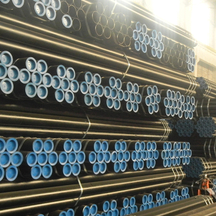
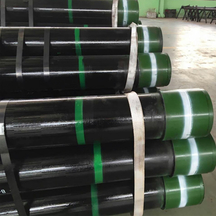
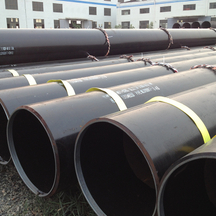
We supply premium ASTM A500 round steel tubes engineered for modern building structures. Ideal for columns, diagonal braces, and truss chords, our tubes offer superior resistance to compression, bending, and torsional forces, ensuring maximum structural integrity.
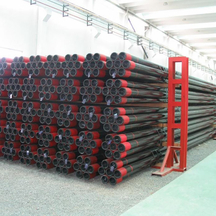
We provide versatile options across various grades, outside diameters, and wall thicknesses to meet precise design loads and buckling requirements. Quality and compliance are paramount; all products undergo rigorous dimensional and mechanical testing, backed by comprehensive Material Test Certificates (MTCs) for full traceability. We also support customized cutting, bundling, and protective packaging to streamline your on-site fabrication.
Beyond manufacturing, we provide end-to-end global shipping solutions. We understand that timely delivery is critical to maintaining construction schedules. Our logistics team manages secure bundling and flexible transportation options to prevent transit damage and ensure your tubing arrives safely and on time.
To receive a customized product and shipping quotation, please contact us today with your required grade, dimensions, quantity, and delivery destination. Our expert team will recommend the optimal structural tubing configuration tailored to your exact project needs.
Conclusion
ASTM A500 round steel tubes are a premier choice for modern building structures, offering an optimal balance of structural strength and fabrication flexibility. Their circular cross-section provides efficient load distribution, making them ideal for columns, diagonal braces, and truss chords. The closed-section geometry offers superior resistance to compression, bending, and torsional forces compared to open structural sections, while maintaining a favorable strength-to-weight ratio.
Engineers must select the correct grade, diameter, and wall thickness based on specific axial loads and buckling requirements rather than price alone. Furthermore, appropriate surface protection is essential for outdoor or aggressive environments to ensure long-term durability. Note that ASTM A500 is a structural specification and should not be used for pressurized fluid applications.
FAQ:
FAQ 1: Can ASTM A500 round steel tubes be used as structural columns?
Yes, ASTM A500 round tubes can be used as structural columns when their grade, dimensions, connections, and load capacity meet the project design requirements.
FAQ 2: Are ASTM A500 round tubes suitable for building bracing?
Yes, round ASTM A500 tubes are commonly suitable for diagonal, wind, and other structural bracing applications when properly designed.
FAQ 3: Can ASTM A500 round steel tubes be used for truss chords?
Yes, they can serve as top or bottom truss chords because their tubular geometry efficiently carries axial forces.
FAQ 4: What factors should be considered when selecting ASTM A500 round tubes?
Engineers should consider grade, outside diameter, wall thickness, structural loads, buckling, connection design, fabrication, and environmental conditions.

About Us / News / Product / Project / Quality Assurance / Service / Contact Us
