Views: 1 Author: Site Editor Publish Time: 2026-06-26 Origin: Site
API sleeves (couplings) are critical components in the oil and gas industry, connecting casing and tubing strings under high-pressure conditions. Manufactured to strict API 5CT standards in grades like J55, N80, and P110, they ensure well integrity. However, exposure to harsh elements like CO₂, H₂S, and saltwater makes effective corrosion protection essential to prevent thread damage and connection failures.
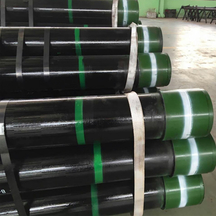
To enhance durability, API sleeves utilize advanced protective methods, including phosphate treatments, copper plating, rust-preventive oils, and specialized thread protectors. Proper storage and handling further minimize corrosion risks before field installation. Understanding these classifications and protection technologies is vital for selecting reliable products that reduce maintenance costs and extend equipment life.
What Are API Sleeves?
API sleeves, also known as API couplings, are critical components in oil and gas drilling operations. They are designed to connect lengths of casing or tubing, forming a secure, continuous pipeline string. Manufactured to strict API 5CT standards, these sleeves ensure compatibility, dimensional accuracy, and reliable performance under high pressure and harsh downhole conditions.
Structurally, an API sleeve is a short, thick-walled steel cylinder with precisely machined internal threads on both ends. This design ensures a tight, sealed joint that prevents leakage and maintains well integrity during drilling and production. They are widely used in onshore and offshore oil, natural gas, and geothermal wells.
To meet varying operational demands, API sleeves are manufactured in different steel grades, including J55, K55, N80, L80, and P110. The appropriate grade is selected based on well depth, pressure, and environmental factors like H₂S or CO₂ exposure. Furthermore, precision thread machining and heat treatment are essential to prevent loosening and enhance overall durability.
Classification of API Sleeves
API sleeves are classified based on connection type, steel grade, service environment, and manufacturing process to ensure optimal performance in specific oil and gas applications. Selecting the correct category is essential for matching product capabilities with well conditions, thereby ensuring safe, efficient, and reliable operations.
Casing and tubing couplings serve distinct structural and transport functions, while premium sleeves offer enhanced sealing for high-performance wells. Steel grades like J55, N80, and P110 dictate mechanical strength and suitability for varying depths and pressures. Environmental classifications address standard, sour (H₂S), and extreme HPHT conditions. Furthermore, manufacturing methods such as seamless forging, precision machining, and heat treatment significantly enhance the durability and structural uniformity of the final product.
Key Classifications of API Sleeves
Classification Category | Types & Specifications | Key Characteristics & Applications |
Connection Type | API Casing, API Tubing, Premium Connections | Casing provides structural support; tubing transports fluids; premium sleeves offer enhanced sealing and torque resistance. |
Steel Grade | J55, K55, N80, L80, P110 | Determines strength and pressure resistance. Ranges from shallow wells (J55) to high-strength deep wells (P110) and sour service (L80). |
Service Environment | Standard, Sour Service, HPHT | Standard for normal drilling; Sour for H₂S environments; HPHT for extreme high-pressure and high-temperature deep wells. |
Manufacturing Process | Seamless, Machined, Heat-Treated | Seamless offers uniform structure; machined ensures precise dimensions; heat-treated enhances hardness and overall durability. |
Corrosion Protection Methods for API Sleeves
Corrosion protection is vital for maintaining the structural integrity and sealing performance of API sleeves in harsh oil and gas environments. Exposure to moisture, saltwater, and acidic gases like CO₂ and H₂S can cause thread damage and connection failures if left uncontrolled. Effective protection requires a multi-layered approach, starting with surface treatments such as phosphate coating for rust resistance, copper plating for wear resistance, and specialized epoxy or polymer coatings for extreme chemical environments.
Because threads are highly sensitive, they require specific care, including the application of anti-rust oils, thread compounds to prevent galling, and plastic thread protectors. Furthermore, proper packaging (such as waterproof wrapping and wooden crates) and dry storage conditions are essential to prevent premature rust during transit. Finally, best practices in the field, including regular inspections and careful handling, ensure long-term durability and reduce overall maintenance costs.
Corrosion Protection Methods for API Sleeves
Protection Category | Methods & Materials | Key Benefits & Applications |
Surface Treatment | Phosphate coating, copper plating, zinc coating, epoxy/polymer coatings | Enhances rust resistance, improves wear resistance, and provides chemical protection in harsh environments. |
Thread Protection | Anti-rust oil, thread compounds, plastic thread protectors | Prevents galling, reduces friction, and preserves thread accuracy during handling and installation. |
Packaging & Storage | Waterproof wrapping, wooden boxes, steel pallets, ventilated storage | Prevents moisture and saltwater exposure during transit and long-term storage. |
Field Maintenance | Regular inspections, cleaning, and reapplication of compounds | Ensures long-term durability and prevents mechanical damage during field operations. |
Why Choose Our API Sleeves?
We supply a comprehensive range of high-quality, API 5CT-compliant sleeves, including casing and tubing couplings in grades like J55, N80, and P110. Manufactured with strict quality control, our sleeves ensure precise threading and reliable sealing for demanding oil and gas environments.
To guarantee durability, we apply advanced corrosion protection, including anti-rust oils, plastic thread protectors, and reinforced waterproof packaging. We support global buyers with flexible trade terms (FOB, CIF, CFR, EXW) and reliable multi-modal shipping, ensuring smooth customs clearance and timely delivery.
Beyond standard products, we offer customized solutions tailored to your specific engineering requirements. Backed by an experienced technical team, we provide expert product selection and application guidance to build long-term partnerships. Whether you need standard or bespoke API sleeves, our combination of manufacturing expertise and global logistics capabilities ensures your project's success. Contact us today to request a quotation or discuss your technical requirements.
How to Select the Right API Sleeve
Selecting the correct API sleeve is critical for ensuring safe and reliable oil and gas operations. The process begins with clearly defining well conditions, such as depth, pressure, and fluid composition, to determine the appropriate steel grade. For instance, J55 or K55 are ideal for shallow wells, while N80 and P110 provide the high strength needed for deep, high-pressure environments. In sour service wells containing H₂S or CO₂, corrosion-resistant grades like L80 are essential.
Equally important is ensuring precise thread compatibility. API sleeves must perfectly match the pipe's outer diameter, wall thickness, and thread profile to prevent leakage and mechanical failure. Environmental factors also dictate the need for enhanced corrosion protection, such as zinc coatings, phosphate treatments, or anti-rust oils, alongside proper thread protectors for safe storage and transport.
Always verify that the selected sleeve complies with strict API 5CT standards to guarantee mechanical strength and dimensional accuracy. Finally, partnering with a reliable supplier is vital. A professional manufacturer not only ensures consistent quality and timely delivery but also provides expert technical support and customization options. By carefully evaluating these factors, operators can enhance operational safety, reduce maintenance costs, and extend equipment lifespan. We offer expert guidance and high-quality, API-compliant sleeves to meet your exact project specifications.
Conclusion
API sleeves are vital connectors for oil and gas operations, where proper classification and corrosion protection directly impact well safety and longevity. Selecting the correct connection type, steel grade, and surface treatment is essential to withstand harsh downhole environments and prevent premature failure.
We supply a comprehensive range of high-quality, API 5CT-compliant API sleeves, including casing and tubing couplings. Our products feature advanced corrosion protection and are available in customizable specifications to meet your exact project requirements. Backed by strict quality control, professional packaging, and efficient global shipping, we ensure reliable delivery and consistent performance.
Whether you need standard products or bespoke solutions, our expert team is ready to provide technical support and competitive quotations. Contact us today to discuss your technical requirements and partner with a trusted supplier for your next oil and gas project.
FAQ:
(1) What is the difference between an API casing coupling and an API tubing coupling?
Explain differences in size, application, load requirements, and connection standards.
(2) How can API sleeves be protected from corrosion?
Discuss coatings, thread protectors, rust preventive oils, proper storage, and routine maintenance.
(3) What steel grades are commonly used for API sleeves?
Introduce J55, K55, N80, L80, P110, and explain their typical applications.
(4) How do I choose the correct API sleeve for my project?
Provide guidance based on pipe size, thread type, operating conditions, pressure, corrosion resistance, and API compliance.
About Us / News / Product / Project / Quality Assurance / Service / Contact Us