Views: 0 Author: Site Editor Publish Time: 2026-07-15 Origin: Site
Electric Resistance Welded (ERW) pipes are widely used in construction, oil & gas, water transport, and mechanical engineering. Formed from steel strip and joined by electric resistance heat without filler metal, they offer consistent dimensions, smooth welds, and high production efficiency at a competitive cost.
Weld quality is the most critical factor affecting ERW pipe performance and reliability. A strong weld ensures resistance to pressure, mechanical stress, and harsh environments, while welding defects—such as incomplete fusion, cracks, porosity, and lack of penetration—can weaken the structure, reduce corrosion resistance, shorten service life, and increase leak or failure risks. Even minor flaws may become critical under high pressure or continuous operation.
Key factors influencing weld quality include steel strip condition, edge preparation, welding current, speed, heat input, equipment alignment, and cooling. Poor control of any parameter can lead to defects. Identifying root causes is essential for quality improvement and cost reduction.
Common Defects in ERW Pipe Welding
Weld quality directly determines the strength, durability, and reliability of Electric Resistance Welded (ERW) pipes. During production, improper welding parameters, poor raw materials, or equipment issues can introduce defects that compromise pipe performance. Understanding these common defects is the first step toward effective prevention and quality improvement.
The table below summarizes the most frequent ERW welding defects, their root causes, and potential consequences.
Defect Type | Main Causes | Potential Consequences |
|---|---|---|
Incomplete Fusion | Insufficient heat input, improper welding speed, poor edge preparation, incorrect pressure | Weak weld joint, reduced pressure resistance, potential crack initiation point |
Weld Cracks | Excessive heat input, rapid cooling, residual stress, material impurities | Serious structural weakness, risk of leakage or failure under cyclic loading |
Porosity | Contaminants (oil, rust, moisture, scale), excessive gas generation during welding | Reduced weld density, lower mechanical strength, compromised corrosion resistance |
Lack of Penetration | Incorrect welding current, excessive speed, poor edge alignment | Incomplete joint formation, lower strength, potential failure under high pressure |
Undercut & Surface Defects | Excessive heat, improper equipment settings, poor process control | Reduced effective wall thickness, weakened structure, increased maintenance needs |
Preventive Measures for ERW Pipe Welding Defects
Preventing welding defects is essential for improving the quality, reliability, and service life of Electric Resistance Welded (ERW) pipes. Since defects are often caused by multiple factors, effective prevention requires strict control of raw materials, production parameters, equipment conditions, and inspection processes.
Preventive Measure | Key Actions and Benefits |
|---|---|
Optimize Welding Parameters | Precisely adjust welding current, voltage, speed, and pressure based on material and thickness. Stable conditions prevent incomplete fusion, burn-through, and material property changes. |
Use High-Quality Raw Materials | Ensure steel strips have consistent chemical composition, suitable mechanical properties, and clean edges free from oil, rust, and moisture to improve weld formation and reduce porosity. |
Maintain Production Equipment | Conduct regular inspection and adjustment of forming rolls, welding units, and cooling systems. Preventive maintenance prevents uneven pressure, poor alignment, and unexpected downtime. |
Implement Strict Quality Control | Utilize advanced testing methods (ultrasonic, eddy current, hydrostatic testing) and continuous monitoring to quickly identify and correct defects before large-scale production issues occur. |
Improve Operator Skills | Provide proper training on equipment operation and defect identification. Establishing clear production standards and recording process data supports continuous improvement. |
Choose a Reliable Partner | Select experienced manufacturers with advanced equipment and strict inspection systems to guarantee consistent product quality and reliable performance. |
Choosing High-Quality ERW Pipes
Selecting high-quality ERW steel pipes is essential for ensuring safe operation, long service life, and reliable performance. Although ERW pipes are widely used due to their cost efficiency, their quality can vary. Understanding key selection factors helps buyers choose products that meet their project requirements.
Selection Factor | What to Check | Why It Matters |
|---|---|---|
Manufacturing Standards | Compliance with ASTM, API, EN, or JIS specifications | Ensures consistent chemical, mechanical, and dimensional properties; guarantees reliability for demanding applications |
Material Quality | Consistent chemical composition, good weldability, stable mechanical properties | Directly affects pipe strength, durability, and suitability for structural, fluid, or oil & gas use |
Welding Quality | Advanced welding equipment, precise process control, UT/ECT/hydrostatic testing | Confirms weld integrity; reduces risk of fusion defects, cracks, and in-service failures |
Dimensional Accuracy | Accurate OD, wall thickness, length, and straightness | Facilitates easy installation; ensures system compatibility and leak-free connections |
Surface Quality | No cracks, deep scratches, corrosion, or uneven weld beads | Improves corrosion resistance and reduces fabrication issues |
Supplier Experience | Modern facilities, strict QC, technical support, and customization capabilities | Provides consistent quality, reliable delivery, and expert guidance for complex projects |
Our ERW Pipe Solutions & Worldwide Shipping
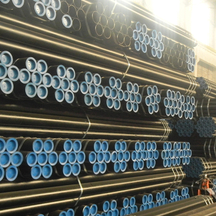
We are a professional supplier of Electric Resistance Welded (ERW) pipes, serving construction, oil & gas, water transportation, and mechanical engineering industries. Our products combine quality manufacturing, precision, and cost efficiency to meet diverse project needs.
Product Range
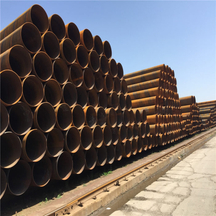
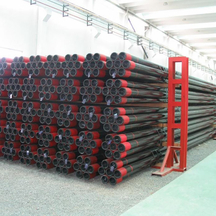
We offer carbon steel, galvanized, structural, and oil & gas ERW pipes in various diameters, wall thicknesses, lengths, and steel grades. Customized solutions—including special sizes, material grades, and surface treatments—are available for unique project requirements.
Quality Assurance
All pipes are manufactured to international standards (ASTM, API, EN) and undergo rigorous inspections: dimensional checks, chemical analysis, mechanical testing, weld evaluation, and non-destructive testing (NDT). This ensures reliable performance in demanding environments.
Global Shipping
Through an efficient logistics network, we deliver worldwide via sea, air, or express freight. All products are securely packed to prevent transit damage, and we provide complete export documentation for smooth customs clearance and timely delivery.
Why Choose Us
Strict quality control and full traceability
Custom manufacturing for specific specifications
Experienced technical support and responsive service
Reliable global shipping with on-time delivery
We are committed to being more than a supplier—we aim to be a trusted long-term partner. Whether for standard orders or large-scale industrial projects, our team delivers dependable ERW pipe solutions and professional support to customers around the world. Contact us today to discuss your requirements.
Conclusion
ERW pipe welding quality directly determines strength, reliability, and service life in oil & gas, construction, water supply, and infrastructure applications. Common defects—incomplete fusion, cracks, porosity, lack of penetration, and surface imperfections—can weaken mechanical performance, increase leak risks, and shorten system lifespan.
Preventing these issues requires optimized welding parameters, high-quality steel materials, proper equipment maintenance, and rigorous inspection methods such as ultrasonic, eddy current, and hydrostatic testing. Compliance with ASTM, API, or EN standards ensures consistent quality and reliability.
When selecting ERW pipes, buyers should evaluate manufacturing standards, material quality, welding performance, dimensional accuracy, and supplier experience. Partnering with a trusted manufacturer provides customized solutions, strict quality control, and reliable global logistics.
FAQ:
Q1: What are the most common defects in ERW pipe welding?
The most common ERW welding defects include incomplete fusion, weld cracks, porosity, lack of penetration, undercut, and surface imperfections. Proper process control and quality inspection help minimize these issues.
Q2: How can ERW pipe welding defects be prevented?
Welding defects can be reduced by optimizing welding parameters, using high-quality raw materials, maintaining production equipment, implementing non-destructive testing, and following strict quality control procedures.
Q3: What industries commonly use ERW pipes?
ERW pipes are widely used in oil and gas transportation, water supply, construction, structural engineering, mechanical manufacturing, agriculture, fire protection systems, and industrial piping due to their strength, cost-effectiveness, and versatility.
Q4: How do I choose a reliable ERW pipe supplier?
Choose a supplier with advanced manufacturing equipment, compliance with international standards, comprehensive quality testing, customization capabilities, competitive pricing, and reliable worldwide shipping to ensure consistent product quality and dependable service.

About Us / News / Product / Project / Quality Assurance / Service / Contact Us
