Views: 0 Author: Site Editor Publish Time: 2026-11-10 Origin: Site
Steel pipe sheet piles are widely used in excavation support, cofferdams, bridge foundations, quay walls, and flood-control projects due to their high structural strength, bending resistance, and efficient installation. Common installation methods include vibratory driving, hammer driving, and static pressure. Vibratory driving reduces soil resistance for fast installation in soft to medium soils but requires vibration control near sensitive structures. Hammer driving delivers strong impact energy for dense or hard layers, though it generates higher noise and vibration. Static pressure offers low-noise, low-disturbance installation, making it suitable for hospitals, residential areas, and vibration-sensitive sites, while its effectiveness depends on soil conditions and equipment capacity. Method selection should consider soil conditions, pile depth and size, surrounding structures, noise and vibration limits, construction space, schedule, and budget.
Construction Process of Steel Pipe Sheet Piles
The construction of steel pipe sheet piles requires careful planning and strict control of pile position, verticality, penetration depth, and connection quality. A well-organized installation process improves construction efficiency and ensures the completed retaining or foundation structure meets design requirements. Specific procedures vary by project conditions, but the following steps are commonly used.
Construction Process at a Glance
Step | Key Activities |
|---|---|
1. Site preparation and surveying | Clear and level the area; establish pile alignment, reference points, and positions; identify underground utilities and obstructions |
2. Inspection and preparation | Check OD, wall thickness, length, straightness, surface, and connection/interlock dimensions; inspect pile ends and coatings |
3. Guide frame installation | Control pile position and alignment during initial driving; provide a stable reference for sequential installation |
4. Positioning and driving | Lift and position piles in sequence; use vibratory, impact, or static pressure equipment; monitor verticality, depth, and connections |
5. Final alignment and inspection | Check final position, verticality, spacing, depth, and connection condition; document installation records |
6. Safety and environmental control | Maintain safe distances from equipment; monitor noise, vibration, and ground movement near sensitive structures |
1. Site Preparation and Surveying
Clear and level the construction area to provide a stable working platform for piling equipment. Surveyors establish pile alignment, reference points, and installation positions according to approved drawings.
Identify existing underground utilities, pipelines, foundations, and other potential obstructions before piling begins.
2. Inspection and Preparation of Steel Pipe Sheet Piles
Inspect piles before delivery to the installation area.
Key inspection items:
Outside diameter, wall thickness, length, and straightness
Surface condition
Connection or interlock dimensions
Pile ends and connection areas—ensure they will not interfere with penetration
Special coatings or protective treatments, if required
Any visible deformation, severe corrosion, or other defects should be evaluated before installation.
3. Installation of Guide Frames
A temporary guide frame can control pile position and alignment during initial driving. The guide system helps prevent excessive deviation and provides a stable reference for sequential installation—particularly important for long piles and structures requiring close dimensional control.
4. Positioning and Driving of the Piles
Piles are lifted and positioned according to the predetermined sequence. Equipment may include a vibratory pile driver, impact hammer, or static pressure machine.
Monitor during installation:
Penetration depth
Verticality
Driving resistance
Equipment performance
Connection between adjacent piles (for interlocking systems)—prevent separation or excessive distortion
5. Final Alignment and Quality Inspection
After piles reach the required depth, check final position and verticality using surveying equipment. Take corrective measures if necessary before the next construction stage.
Inspect the completed pile wall for:
Pile spacing
Penetration depth
Alignment
Connection condition
Visible damage
Document installation records: pile number, installation depth, equipment used, and driving conditions.
6. Construction Safety and Environmental Control
Safety measures are essential throughout installation:
Workers should maintain safe distances from lifting equipment and pile-driving machinery
Operators should follow equipment-specific procedures
Monitor noise, vibration, and ground movement when required—particularly near residential buildings, roads, underground utilities, or other sensitive structures
Vibratory Pile Driving: Principle, Advantages, and Applicable Conditions
Vibratory pile driving is a commonly used method for installing steel pipe sheet piles, especially when construction speed and installation efficiency are important. Instead of relying mainly on repeated impact, this method uses a vibratory hammer to generate high-frequency vertical vibrations. The vibration temporarily reduces friction between the pile surface and surrounding soil, allowing the pile to penetrate with comparatively lower resistance.
Working Principle
A vibratory hammer is attached to the top of the steel pipe sheet pile. Vertical oscillations are transferred directly to the pile, disturbing the surrounding soil and temporarily reducing its resistance to penetration. The pile moves downward under the combined effects of vibration, equipment force, and pile weight.
During installation, the operator must continuously monitor pile position, verticality, penetration depth, and equipment performance. Proper alignment is particularly important—excessive deviation can affect the final geometry and performance of the pile wall.
Main Advantages
Advantage | Key Points |
|---|---|
High installation efficiency | Piles installed relatively quickly in suitable ground conditions; reduces overall construction time; attractive for large-scale retaining walls, cofferdams, temporary excavation support, and marine construction |
Lower impact noise | Generally produces less impact noise than conventional impact hammering; still generates ground vibration, but the absence of repeated high-energy impacts suits projects where noise control is important |
Operational flexibility | Equipment can often be used for both installation and extraction—particularly useful for temporary structures where piles are removed after construction |
Applicable Ground Conditions
Ground Condition | Suitability |
|---|---|
Soft to medium-density soils (sand, silt, loose/moderately compacted granular layers) | Generally performs well |
Ground with moderate penetration resistance | Effective where resistance is not excessively high |
Hard rock, very dense gravel, strongly cemented soil, highly resistant layers | May significantly reduce effectiveness—an impact hammer or another technique may be more appropriate |
Vibration and Site Considerations
Although vibratory driving normally produces less impact noise than hammer driving, it still generates ground vibration. Before construction, contractors should evaluate nearby:
Buildings
Underground pipelines
Roads and railways
Other vibration-sensitive facilities
Hammer Driving: Principle, Advantages, and Applicable Conditions
Hammer driving is a traditional and widely used installation method for steel pipe sheet piles. It uses repeated impact force to drive piles into the ground until they reach the required depth or penetration resistance. Compared with vibratory pile driving, hammer driving relies on impact energy rather than high-frequency vibration to overcome soil resistance—particularly useful in projects involving dense soil, hard ground layers, or challenging penetration conditions.
Working Principle
Hammer driving transfers repeated impact energy from a pile-driving hammer to the steel pipe sheet pile. The hammer is positioned at the top of the pile and delivers a series of controlled blows, each pushing the pile deeper by overcoming surrounding soil resistance.
Hammer Type | Description |
|---|---|
Diesel hammers | Generate impact energy through fuel combustion; commonly used in heavy-duty piling |
Hydraulic hammers | Use hydraulic systems to control impact energy; more flexible operating conditions |
Air or steam hammers | Use compressed air or steam to generate impact force; less common in modern projects |
The appropriate hammer type depends on pile dimensions, soil resistance, required penetration depth, equipment availability, and construction conditions.
Main Advantages
Advantage | Key Points |
|---|---|
Strong penetration capability | Can drive piles through relatively dense soil and difficult ground layers where vibratory equipment may struggle |
Adaptability | Suitable for various pile sizes and projects—bridge construction, deep excavation support, marine structures, retaining walls, and large cofferdams |
Soil resistance information | Changes in penetration rate and hammer response help engineers evaluate ground conditions; combine with geotechnical investigation rather than using as a substitute |
Applicable Ground Conditions
Dense sand and gravel layers
Hard or compacted soil
Ground conditions with relatively high penetration resistance
Projects requiring deep pile installation
Construction sites where vibratory driving cannot achieve required penetration
Note: extremely hard rock or significant underground obstructions may still require pre-drilling or other supplementary methods.
Noise, Vibration, and Construction Considerations
Despite strong penetration capability, hammer driving has several limitations:
Noise and ground vibration – repeated impacts generate considerable noise and vibration, potentially affecting nearby residential buildings, underground utilities, roads, and sensitive structures
Pile damage risk – excessive impact energy can cause local deformation, damage to pile ends, or connection problems
Mitigation measures: select suitable hammer energy, use appropriate pile protection measures, and continuously monitor pile alignment, penetration depth, and driving conditions.
Static Pressure: Low-Noise Installation for Sensitive Construction Areas
Static pressure is an installation method that uses hydraulic force to push steel pipe sheet piles into the ground without relying primarily on impact or high-frequency vibration. Unlike vibratory and hammer driving, it applies continuous pressure to overcome soil resistance. Its main advantages are low noise, minimal ground vibration, and reduced disturbance to surrounding structures—making it particularly suitable for urban construction and projects with strict environmental requirements.
Working Principle
Specialized hydraulic piling equipment applies controlled downward force to the pile through a clamping or pressing mechanism, gradually pushing it into the ground to the specified depth.
During installation, the machine must maintain stable positioning and sufficient reaction force. Operators should monitor:
Hydraulic pressure
Penetration speed
Pile verticality
Ground conditions
If penetration resistance becomes too high, additional measures such as pre-drilling may be considered after engineering evaluation.
Main Advantages
Advantage | Key Points |
|---|---|
Low noise and vibration | No repeated hammer impacts or high-frequency vibration; less disturbance to nearby buildings and infrastructure |
Environmental friendliness | Reduced noise and ground vibration; suitable for environmentally sensitive construction areas |
Better control | Hydraulic systems allow operators to control pressing force and installation speed |
Reduced disturbance | Gradual pressing minimizes disturbance to surrounding soil and nearby structures |
Improved working conditions | Lower noise levels benefit construction personnel and nearby communities |
Applicable Construction Conditions
Static pressure is commonly considered for projects near:
Residential buildings
Hospitals and schools
Laboratories
Historical structures
Busy urban roads
It is generally more suitable where pile penetration can be achieved within the equipment's available pressing capacity. Very dense gravel, hard rock, cemented soil, and other highly resistant ground conditions may limit effectiveness.
Before selecting this method, evaluate: soil investigation reports, pile dimensions, required penetration depth, equipment capacity, and available working space.
Limitations and Construction Considerations
Higher equipment costs – specialized hydraulic equipment may involve higher initial costs and greater site preparation requirements
Reaction force and platform – the machine needs sufficient reaction force and a stable working platform for safe operation
Difficult ground conditions – installation speed may decrease significantly; pre-drilling or supplementary techniques may be necessary
Equipment inspection – regularly inspect hydraulic systems, clamping devices, and pile alignment for safe, consistent installation
Vibratory vs. Hammer vs. Static Pressure: How to Choose the Right Method
Selecting the appropriate installation method is an important decision in steel pipe sheet pile construction. Vibratory pile driving, hammer driving, and static pressure each have different working principles, advantages, and limitations. The right choice depends on soil conditions, pile dimensions, required penetration depth, surrounding structures, environmental restrictions, construction schedules, and project budgets.
Comparison of the Three Installation Methods
Selection Factor | Vibratory Driving | Hammer Driving | Static Pressure |
|---|---|---|---|
Working principle | High-frequency vibration | Repeated impact force | Continuous hydraulic pressure |
Installation speed | Generally high | Depends on soil resistance | Generally moderate |
Noise level | Moderate | High | Very low |
Ground vibration | Moderate | Relatively high | Very low |
Soft soil | Very suitable | Suitable | Suitable |
Dense soil | Suitable in certain conditions | Very suitable | More challenging |
Hard ground | Limited | Better penetration capability | Limited |
Environmental impact | Requires vibration control | Requires strict noise and vibration control | Lowest vibration and noise |
Equipment requirements | Vibratory hammer | Impact hammer | Hydraulic pressing equipment |
Typical applications | Marine projects and temporary retaining structures | Deep foundations and dense ground | Urban and vibration-sensitive construction |
Actual performance depends on equipment capacity, pile characteristics, and site-specific geotechnical conditions.
1. Choose According to Soil Conditions
Method | Best Soil Conditions |
|---|---|
Vibratory driving | Soft to medium-density soils, including loose sand and silt; fast penetration when resistance is moderate |
Hammer driving | Dense sand, gravel, compacted soil, and other ground with high penetration resistance; impact force overcomes resistance that may limit vibratory installation |
Static pressure | Where soil allows hydraulic equipment to push piles within available pressing capacity; very dense or hard ground may require pre-drilling or supplementary techniques |
2. Consider Noise and Environmental Restrictions
Static pressure – often preferred near residential buildings, hospitals, schools, and historical structures because it produces minimal noise and ground vibration
Vibratory driving – suitable when moderate vibration is acceptable and faster installation is required; evaluate potential effects on nearby buildings and underground utilities
Hammer driving – produces repeated impacts and generally higher noise and vibration levels; may require additional monitoring and environmental protection measures, especially in urban areas
3. Evaluate Construction Efficiency and Project Costs
Vibratory driving – often economical for large numbers of piles in suitable soil due to relatively high installation efficiency
Hammer driving – may require more operating time and noise-control measures, but can reduce the need for supplementary penetration techniques in dense ground
Static pressure – higher specialized equipment requirements, but may help avoid complaints, environmental restrictions, and potential damage-related costs in sensitive areas
Compare total construction cost—not only equipment rental or operating expenses.
4. Practical Recommendations for Method Selection
Situation | Recommended Method |
|---|---|
Installation speed important and soil resistance relatively low or moderate | Vibratory pile driving |
Piles must penetrate dense soil or difficult ground layers | Hammer driving |
Construction near sensitive buildings or under strict noise and vibration restrictions | Static pressure |
Our Recommended Steel Pipe Sheet Pile Products and Global Shipping Services
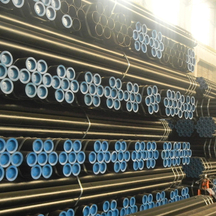
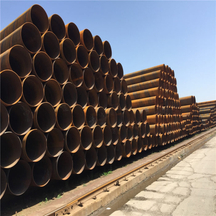
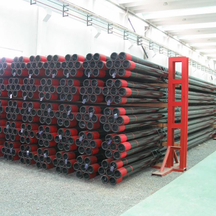
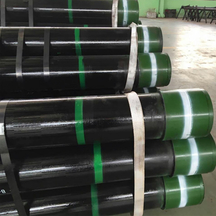
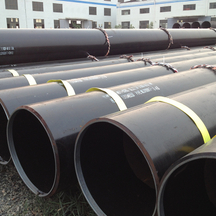
Supplies steel pipe sheet piles for foundation support, cofferdams, bridge works, and marine structures. Available products include large-diameter pipes, thick-wall pipes, welded and seamless pipes, and customized piles manufactured to project drawings. Options for connecting structures and interlocking components can be considered for continuous retaining systems. Quality control covers outside diameter, wall thickness, length tolerance, straightness, weld quality, mechanical properties, and chemical composition, with ultrasonic, radiographic, and hydrostatic testing available as required. Products can be supplied according to ASTM, API, EN, or other applicable standards, with mill test certificates and inspection reports provided. We support protective packaging, sea freight, container or breakbulk shipping, export documentation, and delivery coordination. To request a quotation, please provide the pile diameter, wall thickness, length, steel grade, applicable standard, quantity, and destination port.
Conclusion:
Selecting the right installation method is essential for safe, efficient steel pipe sheet pile construction. Vibratory driving offers fast installation in soft to medium soils but requires vibration control near sensitive structures. Hammer driving provides strong penetration for dense or hard ground, though noise and vibration limits must be managed. Static pressure delivers low-noise, low-disturbance installation, making it suitable for urban sites and vibration-sensitive facilities, while equipment capacity and soil resistance should be verified. Method selection should consider ground conditions, pile depth, surrounding structures, environmental restrictions, equipment availability, schedule, and project budget. Steel pipe sheet pile quality is equally important; pipe diameter, wall thickness, steel grade, connection design, and manufacturing standards affect structural stability and installation reliability.
FAQ:
Q1. What is the best method for installing steel pipe sheet piles?
There is no universally best method. Vibratory driving is suitable for efficient installation in softer soils, hammer driving works well in dense ground, and static pressure is preferred for low-noise, low-vibration construction.
Q2. Are vibratory pile drivers suitable for steel pipe sheet piles?
Yes. Vibratory pile drivers are widely used for steel pipe sheet pile installation, especially in sand, silt, and other relatively soft soils.
Q3. When should hammer driving be used instead of vibratory driving?
Hammer driving is preferable when piles need to penetrate dense soil, compacted gravel, or ground with high penetration resistance.
Q4. Is static pressure suitable for steel pipe sheet piles?
Yes. Static pressure is suitable for projects near residential buildings, hospitals, and other vibration-sensitive structures, provided soil conditions and equipment capacity allow penetration.
Q5. Which steel pipe sheet pile installation method produces the least vibration?
Static pressure generally produces the least ground vibration because it pushes piles into the soil using hydraulic force rather than repeated impacts or high-frequency vibration.

About Us / News / Product / Project / Quality Assurance / Service / Contact Us
