Views: 0 Author: Site Editor Publish Time: 2026-10-15 Origin: Site
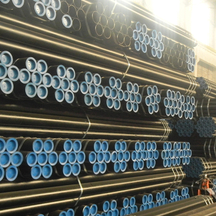
Straight seam and spiral steel pipes are common welded pipes for oil and gas transmission, water supply, construction, and infrastructure. Straight seam pipes have a longitudinal weld parallel to the pipe axis and are commonly produced by ERW and LSAW processes, offering dimensional accuracy and consistent welding quality. Spiral steel pipes, produced by SSAW, form a helical seam from coiled strip, allowing flexible diameter production from the same strip width. Performance depends on steel grade, wall thickness, weld quality, inspection, and applicable standards rather than weld orientation alone.
The manufacturing process is a main difference between straight seam and spiral steel pipes. Both form steel into a cylinder and weld the joint, but they use different forming methods and weld orientations. These differences affect production flexibility, dimensional control, and inspection requirements.
Quick Comparison
Comparison Factor | Straight Seam | Spiral |
|---|---|---|
Weld orientation | Parallel to pipe axis | Helical along pipe body |
Common processes | ERW, LSAW | SSAW |
Raw material | Strip, coil, or plate | Strip or coil |
Production flexibility | Depends on method and equipment | Flexible diameter production |
Quality control | Weld integrity, dimensions, material | Weld integrity, forming accuracy |
Typical applications | Structural, industrial, specified pipelines | Water pipelines, infrastructure, piling |
2.1 Straight Seam Steel Pipe Manufacturing
Steel plates or strips are formed into a cylinder and joined with a longitudinal weld.
Method | Raw Material | Typical Use |
|---|---|---|
ERW | Steel strip or coil | Smaller and medium diameters, high volume |
LSAW | Steel plate | Large-diameter pipelines, specific wall thicknesses |
Advantages: Established technology, good dimensional control, suitable for various applications. Available dimensions depend on process and equipment.
2.2 Spiral Steel Pipe Manufacturing
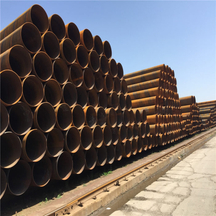
Steel strips or coils are continuously formed at a controlled angle, with edges welded along a helical line.
Feature | Detail |
|---|---|
Common process | Spiral Submerged Arc Welding (SSAW) |
Welding | Inside and outside of the seam |
Key advantage | Flexible diameter production |
Typical use | Large-diameter water, infrastructure, piling |
Note: Manufacturers must control strip alignment, forming accuracy, weld quality, and dimensional tolerances for consistent performance.
2.3 Comparison of Weld Types and Manufacturing Characteristics
Weld orientation alone does not determine pipe strength or service life.
Both types require:
Appropriate welding procedures
Dimensional inspection
Nondestructive testing per standard
Hydrostatic testing and other examinations where required
Stress distribution is an important factor when comparing straight seam and spiral steel pipes. Both must withstand loads from internal pressure, external forces, temperature changes, and operating conditions. Their weld orientations differ, which affects how the weld seam intersects the stresses acting on the pipe.
Neither pipe type is automatically stronger. Actual performance depends on steel grade, wall thickness, manufacturing quality, weld integrity, and standard compliance.
Quick Comparison
Performance Factor | Straight Seam | Spiral |
|---|---|---|
Stress orientation | Longitudinal weld parallel to pipe axis | Helical weld intersects both principal stress directions |
Pressure resistance | Depends on material, dimensions, weld quality, design | Depends on material, dimensions, weld quality, design |
Tensile strength | Per steel grade and manufacturing quality | Per steel grade and manufacturing quality |
Toughness | Per material properties and testing | Per material properties and testing |
Fatigue resistance | Influenced by weld quality and cyclic loading | Influenced by weld quality and cyclic loading |
Dimensional accuracy | Per forming process and production controls | Per forming process and production controls |
3.1 Stress Distribution in Straight Seam Steel Pipes
Straight seam pipes have a longitudinal weld parallel to the pipe axis. Under internal pressure, two primary stresses develop:
Stress Type | Direction | Relative Magnitude |
|---|---|---|
Hoop (circumferential) | Around pipe circumference | Generally larger in thin-walled pipes |
Longitudinal | Along pipe axis | Generally smaller |
The longitudinal weld is perpendicular to the principal hoop stress, making weld quality critical for pressure resistance.
Manufacturers must control welding parameters, material properties, and dimensional tolerances. Inspection may include ultrasonic testing, radiographic testing, and hydrostatic testing.
3.2 Stress Distribution in Spiral Steel Pipes
Spiral pipes have a helical weld at an angle to the pipe axis. The spiral seam intersects both circumferential and longitudinal stress directions.
Feature | Consideration |
|---|---|
Angled orientation | Changes how stresses act relative to the weld |
Not automatically better | Does not guarantee better stress distribution |
Actual stress | Depends on spiral angle, dimensions, material, pressure, loading |
Weld defects, residual stresses, and manufacturing variations can affect performance. Manufacturers must maintain consistent forming angles, strip alignment, welding parameters, and dimensional accuracy.
3.3 Key Technical Note
For thin-walled cylindrical pipes under internal pressure, hoop stress is approximately twice the longitudinal stress when closed-end conditions apply, and other effects are neglected. This explains why weld integrity is important in both designs. Actual stress analysis must account for specific geometry and loading conditions.
Selection Considerations
Before selecting a pipe, verify:
Required steel grade
Wall thickness
Design pressure and temperature range
Toughness requirements
Applicable product standards
Inspection requirements (ultrasonic, radiographic, hydrostatic, mechanical testing)
Straight seam and spiral steel pipes are widely used in industrial piping, oil and gas transportation, water supply, and construction. Both are welded pipes, but they differ in weld orientation, manufacturing methods, production flexibility, and typical applications. Choosing the right pipe requires evaluating these differences alongside material grade, wall thickness, pressure, standards, and cost.
Comparison Table
Comparison Factor | Straight Seam | Spiral |
|---|---|---|
Weld orientation | Parallel to pipe axis | Helical around pipe body |
Common methods | ERW and LSAW | SSAW |
Raw material | Strip, coil, or plate | Strip or coil |
Diameter flexibility | Depends on process and equipment | Flexible via strip width and forming angle |
Mechanical performance | Per material, dimensions, weld quality | Per material, dimensions, weld quality |
Typical applications | Structural, industrial, specified pipelines | Large-diameter water, infrastructure, piling |
Quality control | Dimensional and weld inspection | Dimensional and weld inspection |
Cost | Per dimensions, material, process, volume | Per dimensions, material, process, volume |
Actual capabilities must be verified against manufacturer specifications and applicable standards.
4.1 Manufacturing Process and Weld Orientation
Pipe Type | Weld Direction | Common Processes |
|---|---|---|
Straight seam | Parallel to pipe axis | ERW, LSAW |
Spiral | Helical around pipe body | SSAW |
The manufacturing process influences available dimensions, production efficiency, and inspection requirements. Neither weld configuration guarantees better quality without proper manufacturing controls.
4.2 Diameter Flexibility and Production Efficiency
Spiral pipes offer considerable flexibility in producing different diameters by adjusting forming angle and strip width.
Straight seam pipes have dimensional capabilities depending on whether ERW, LSAW, or another method is used. LSAW suits many large-diameter applications with specific wall thicknesses.
Production cost depends on material utilization, order quantity, steel prices, equipment, inspection, and delivery — not pipe type alone.
4.3 Stress Distribution and Mechanical Performance
Both pipe types experience hoop stress and longitudinal stress under internal pressure.
Pipe Type | Weld Orientation Relative to Stress |
|---|---|
Straight seam | Longitudinal weld parallel to pipe axis |
Spiral | Helical weld intersects both stress directions |
This difference does not mean one pipe type is inherently stronger. Pressure resistance and service life depend on steel grade, wall thickness, weld integrity, manufacturing quality, and operating conditions.
4.4 Which Type Should You Choose?
Pipe Type | Consider When |
|---|---|
Straight seam | Specific longitudinal-weld specs, controlled dimensions, ERW or LSAW characteristics |
Spiral | Large-diameter water, infrastructure, piling where dimensions meet design |
Confirm before ordering:
Pipe diameter and wall thickness
Steel grade
Working pressure
Transported medium
Corrosion protection
Inspection criteria
For oil and gas or pressure-sensitive applications, compliance with the specified product standard is essential.
Selecting between straight seam and spiral steel pipes requires evaluating operating conditions, technical specifications, and budget. Both types provide reliable service when manufactured to required standards. The best option depends on pipe dimensions, pressure requirements, material properties, weld quality, and intended application.
Quick Selection Guide
Project Scenario | Option to Evaluate | Main Consideration |
|---|---|---|
General structural | ERW or specified straight seam | Dimensions and structural requirements |
Large-diameter pipeline | LSAW or SSAW | Pressure design, standards, dimensions |
Municipal water | Spiral or straight seam | Hydraulics, corrosion protection, lifecycle cost |
Oil and gas | Compliant LSAW, ERW, or approved types | Standard, pressure, toughness, weld inspection |
Foundation piling | Spiral or straight seam | Load capacity, wall thickness, soil, installation |
General guidance only. Confirm suitability against engineering design and product standards.
5.1 When to Choose Straight Seam Steel Pipes
Process | Typical Use |
|---|---|
ERW | General industrial piping, building structures |
LSAW | Large-diameter pipelines, specific wall thicknesses |
Consider straight seam pipes when:
Specific longitudinal-weld specifications are required
Available ERW or LSAW dimensions match design requirements
Dimensional tolerances and material properties must meet defined criteria
Particular welding, inspection, or testing requirements apply
Base selection on manufacturer capabilities and verified product specifications — not weld orientation alone.
5.2 When to Choose Spiral Steel Pipes
Commonly used in large-diameter water transmission, municipal infrastructure, foundation piling, and selected industrial pipelines.
Consider spiral pipes when:
Large-diameter water supply or drainage is required
Project involves municipal infrastructure or foundation piles
Production flexibility helps meet required dimensions
Pressure rating, material grade, and inspection requirements can be satisfied
Note: Spiral pipes are not automatically the most economical or suitable choice for every large-diameter application. Confirm suitability for operating pressure, medium, installation, and standards.
5.3 Key Factors Before Making a Decision
Factor | Check |
|---|---|
Pressure and temperature | Wall thickness and material meet operating conditions |
Diameter and wall thickness | Dimensional requirements and availability |
Material grade | Tensile, yield, toughness properties |
Welding and inspection | NDT, hydrostatic testing, acceptance criteria |
Corrosion protection | External coatings, internal linings |
Cost and delivery | Material, lead time, transport, installation |
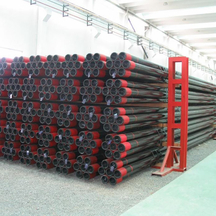
We supply ERW, LSAW, and SSAW welded steel pipes for oil and gas transmission, water supply, structural engineering, and piling. Straight seam ERW and LSAW pipes suit general industrial use and large-diameter pipeline projects, while spiral SSAW pipes offer flexible diameter options for municipal infrastructure and water transmission. Products can be specified by steel grade, outer diameter, wall thickness, length, coating, and applicable standard. Quality assurance includes material verification, dimensional inspection, ultrasonic or radiographic weld testing, hydrostatic testing, and material test certificates. For international orders, pipes are bundled, protected, and shipped by container or breakbulk with complete export documentation. To request a quotation, provide pipe type, grade, standard, dimensions, quantity, coating requirements, destination port, and delivery schedule.
Straight seam and spiral steel pipes are both widely used in oil and gas transmission, water supply, infrastructure, and structural projects. Straight seam pipes, produced by ERW or LSAW, have a longitudinal weld parallel to the pipe axis. Spiral pipes, produced by SSAW, have a helical weld and offer flexible diameter production. Weld orientation alone does not determine quality; pressure capacity, fatigue resistance, and service life depend on steel grade, wall thickness, weld integrity, and compliance with applicable standards. Selection should consider application, dimensions, operating pressure, temperature, corrosion protection, inspection requirements, and total project cost. Straight seam pipes may suit projects requiring ERW or LSAW specifications, while spiral pipes can be practical for large-diameter water transmission and piling.
FAQ:
Q1: What is the main difference between straight seam steel pipes and spiral steel pipes?
Straight seam pipes have welds running parallel to the pipe axis, while spiral steel pipes have helical welds formed as the steel strip is wound into a cylinder.
Q2: Are spiral steel pipes weaker than straight seam steel pipes?
Not necessarily. Their performance depends on material grade, wall thickness, welding quality, manufacturing process, and compliance with the required standards.
Q3: Which is better for large-diameter water transmission pipelines: straight seam or spiral steel pipes?
Both can be suitable. Spiral pipes offer production flexibility for large diameters, while the final choice should follow pressure requirements, applicable standards, project specifications, and lifecycle cost.
Q4: Which type of steel pipe is better for high-pressure oil and gas pipelines?
Neither type is automatically superior. Select a pipe that meets the required pipeline standard, pressure design, material grade, toughness, weld inspection, and testing requirements.
About Us / News / Product / Project / Quality Assurance / Service / Contact Us