Views: 0 Author: Site Editor Publish Time: 2026-08-25 Origin: Site
Carbon steel pipe deformation, including bending, denting, and ovality, can compromise structural integrity and installation accuracy. This issue typically arises from excessive external forces, improper handling, inadequate storage, or incorrect installation practices.
Preventing deformation is far more cost-effective than repairing damaged pipes. Key preventive measures involve managing the pipe throughout its entire lifecycle.
During transportation and storage, pipes must be properly supported and secured to prevent crushing or bending. Similarly, careful installation is crucial; avoiding forced alignment and allowing for thermal expansion will significantly reduce stress. By implementing proper handling, storage, and installation protocols, you can effectively prevent carbon steel pipe deformation, ensuring long-term structural performance and reliability.
What Causes Carbon Steel Pipes to Deform?
Carbon steel pipes are strong and durable, but they can still deform when subjected to forces or conditions beyond their intended limits. Deformation may appear as bending, denting, ovality, buckling, or crushing. Understanding the causes is the first step toward preventing damage and maintaining pipe quality.
Causes of Deformation
Cause | Description | Prevention |
|---|---|---|
Improper Storage & Stacking | Uneven ground, long-term storage without support, excessive stacking weight | Use racks at proper intervals; avoid stacking too high; distribute load evenly |
Impact During Transportation | Dropping, dragging, colliding with other objects during loading/unloading | Use proper lifting equipment; support long pipes at suitable points |
Inadequate Securing During Transport | Pipes roll, slide, or collide due to improper bundling | Bundle and secure properly per dimensions and transport method; use supports and protective materials |
Excessive External Loads | Heavy machinery, vehicles, materials placed near/above pipes; soil/traffic loads on buried pipes | Select pipe spec and installation method per expected loads |
Insufficient Pipe Support | Sagging under self-weight or medium weight; long unsupported sections | Determine support spacing per diameter, wall thickness, material, temperature, and design |
Improper Installation | Forced alignment, excessive bending, incorrect fittings, over-tightening | Follow engineering requirements; ensure alignment and support |
Temperature Changes | Expansion and contraction causing thermal stress | Use expansion allowances, suitable supports, and design measures for high-temperature systems |
Manufacturing & Material Factors | Wall thickness, material properties, dimensional accuracy, residual stress, manufacturing quality | Select quality pipes; verify specifications and inspection |
Common Deformation Types
Type | Description | Typical Cause |
|---|---|---|
Bending | Curved along length | Improper support, storage, or installation |
Denting | Localized indentation | Impact during handling or transport |
Ovality | Loss of round cross-section | Excessive external load or improper stacking |
Buckling | Collapse or crimping | Overloading or inadequate support |
Crushing | Flattening | Excessive stacking pressure |
Key Takeaway
Carbon steel pipe deformation can result from:
Improper storage – uneven ground, stacking pressure
Transportation impacts – dropping, dragging, collisions
Inadequate securing – rolling, sliding during transport
Excessive external loads – heavy equipment, soil pressure
Insufficient support – sagging during installation
Improper installation – forced alignment, over-tightening
Temperature changes – thermal stress
Manufacturing factors – poor quality or specifications
How to Prevent Carbon Steel Pipes from Deforming During Storage
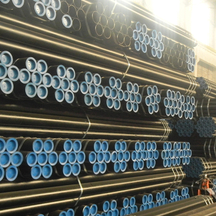
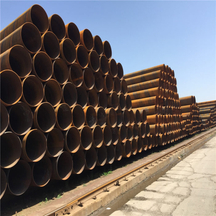
Proper storage is an important part of protecting carbon steel pipes from bending, denting, ovality, and other forms of deformation. Even pipes with good mechanical strength can change shape when stored under excessive loads, placed on uneven surfaces, or handled incorrectly. A suitable storage method should protect both the pipe's shape and surface condition.
Storage Best Practices
Practice | Key Actions | Why It Matters |
|---|---|---|
Choose Stable Storage Surface | Firm, level, well-drained ground; use foundations, racks, or sleepers | Prevents concentrated loads and bending; avoid standing water |
Use Proper Supports | Position sleepers or racks along pipe length; spacing depends on diameter, wall thickness, length, weight | Prevents sagging; keeps pipes stable |
Avoid Excessive Stacking | Limit stacking height based on pipe specs and safety; avoid unstable stacks | Prevents denting and deformation of lower layers (especially thin-wall pipes) |
Prevent Rolling | Use stoppers, chocks, racks, or retaining structures | Round pipes roll on sloped/uneven surfaces—keep stable |
Separate Different Pipe Sizes | Organize by diameter, wall thickness, length, grade; don't place heavy pipes on lighter/thinner ones | Prevents damage; easier loading/unloading |
Protect from Moisture & Corrosion | Use covers with ventilation; prevent standing water | Corrosion weakens pipes over time—doesn't directly deform but reduces strength |
Handle Carefully | Use proper lifting equipment; avoid dropping, dragging, rolling | Prevents impact damage; support long pipes during lifting |
Inspect Regularly | Check for bending, dents, ovality, corrosion, unstable stacking | Identifies problems early; separate damaged pipes |
Follow Supplier Recommendations | Consider manufacturer's storage instructions and project requirements | Different sizes/specs require different arrangements |
Key Storage Checklist
Item | Check |
|---|---|
Storage surface | Firm, level, well-drained |
Supports | Properly spaced sleepers or racks |
Stacking height | Within safe limits |
Rolling prevention | Stoppers or chocks in place |
Pipe separation | Sizes and weights organized |
Moisture protection | Covers with ventilation |
Lifting equipment | Suitable for pipe weight and length |
Inspection | Regular checks during long-term storage |
Key Takeaway
Preventing deformation during storage depends on:
Stable ground – firm and level
Adequate support – proper spacing
Controlled stacking – within safe limits
Secure positioning – prevent rolling
Careful handling – avoid impact
Regular inspection – detect problems early
How to Prevent Deformation During Transportation and Handling
Transportation and handling are important stages in protecting carbon steel pipes from bending, denting, and other forms of deformation. Even properly manufactured pipes can be damaged if they are dropped, dragged, poorly supported, or inadequately secured. A careful handling and transportation plan can significantly reduce these risks.
Transportation & Handling Best Practices
Practice | Key Actions | Why It Matters |
|---|---|---|
Inspect Before Loading | Check for bends, dents, cracks, corrosion; verify diameter, wall thickness, length, quantity | Identifies existing damage; separates unsuitable pipes before transport |
Use Suitable Lifting Equipment | Cranes, forklifts, slings with adequate capacity; support long pipes during lifting | Prevents concentrated force and bending |
Avoid Dropping or Dragging | Lift and place down in a controlled manner; use protective materials at contact points | Prevents dents, deformation, surface damage, and end damage |
Support Long Pipes Properly | Use suitable lifting points and supports to distribute weight | Long pipes are more susceptible to bending without adequate support |
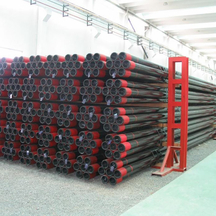
Secure Pipes During Transportation | Use restraints, supports, chocks—prevent rolling, sliding, movement | Sudden braking, turning, or vibration can shift unsecured pipes |
Distribute Load Evenly | Avoid concentrating heavy bundles; use separators between layers | Prevents overloading and damage to lower pipes |
Protect Pipe Ends & Surfaces | Use end protection for threads/bevels; avoid contact that damages coatings | Pipe ends and coatings are vulnerable during handling |
Handle Carefully During Unloading | Use lifting equipment; avoid throwing, dropping, dragging | Unloading is as important as loading—place on firm, level, supported surface |
Inspect After Transportation | Check for bending, dents, ovality, damaged ends, surface damage | Separate significant deformation before use |
Handling Checklist
Stage | Action |
|---|---|
Before loading | Inspect pipes for existing damage |
Lifting | Use suitable equipment; support long pipes |
Loading | Distribute weight evenly; use separators |
Securing | Restraints, chocks, supports in place |
Transport | Monitor load stability during transit |
Unloading | Controlled handling; place on stable surface |
After delivery | Inspect for damage before installation |
Key Takeaway
Preventing carbon steel pipe deformation during transportation depends on:
Proper lifting – suitable equipment and support
Adequate support – prevent bending
Careful loading – even weight distribution
Secure restraint – prevent movement
Balanced load – avoid over-concentration
Controlled unloading – careful handling
Regular inspection – before, during, and after transport
Combining these practices with regular inspection helps preserve the original dimensions and condition of the pipes from the supplier to the final installation site.
How to Prevent Deformation During Installation and Use
Proper installation and operation are essential for preventing carbon steel pipes from bending, denting, buckling, or developing other forms of deformation. Even a high-quality pipe can become damaged if exposed to excessive external loads, poor support, forced alignment, or unsuitable operating conditions. The following practices help maintain pipe integrity throughout its service life.
Installation & Use Best Practices
Practice | Key Actions | Why It Matters |
|---|---|---|
Select Correct Pipe Specification | Choose suitable grade, OD, wall thickness, and strength for the application | A pipe that is too thin or unsuitable is more vulnerable to deformation |
Check Before Installation | Inspect for bends, dents, ovality, damaged ends, corrosion | Damaged pipes should be separated and evaluated before installation |
Maintain Proper Alignment | Align pipes naturally before connecting; avoid forcing into position | Excessive force introduces stress and permanent deformation |
Use Adequate Pipe Supports | Support type and spacing per diameter, wall thickness, length, weight, temperature, design | Prevents sagging and bending of long unsupported sections |
Avoid Excessive External Loads | Do not place heavy equipment/materials on unsupported pipes; consider soil/traffic loads for buried pipes | Protect from loads exceeding design conditions |
Allow for Thermal Expansion | Use supports, expansion loops, joints as needed for high-temperature systems | Restricted thermal movement creates significant stress |
Use Suitable Connection Methods | Avoid excessive tightening, misalignment, improper fitting, and improper installation; control welding procedures | Reduces distortion and residual stress |
Control Operating Conditions | Operate within specified pressure and temperature limits; monitor for vibration, leakage, shape changes | Sudden changes increase deformation risk |
Perform Regular Inspections | Check for bending, dents, corrosion, wall loss, support failure, leakage, abnormal movement | Identifies problems early; critical systems may need NDT |
Key Installation Checklist
Item | Check |
|---|---|
Pipe specification | Grade, OD, wall thickness suitable for application |
Pre-installation inspection | No bends, dents, ovality, corrosion |
Alignment | Natural fit—no forced connections |
Supports | Proper type and spacing |
Thermal expansion | Design measures in place |
Connections | Correct methods; controlled welding |
Operating conditions | Within pressure and temperature limits |
Inspection schedule | Regular checks established |
Key Takeaway
Preventing deformation during installation and use requires:
Correct pipe selection – suitable grade and dimensions
Careful alignment – avoid forced connections
Adequate support – prevent sagging and bending
Controlled external loads – stay within design limits
Proper thermal management – accommodate expansion
Regular inspection – detect problems early
How Material and Manufacturing Quality Affect Pipe Deformation
A carbon steel pipe's resistance to deformation relies heavily on its material properties and manufacturing quality. Key factors include wall thickness, material grade (yield and tensile strength), and dimensional accuracy. Pipes with consistent outside diameters and uniform wall thicknesses are better equipped to withstand external loads and pressure.
Manufacturing processes and heat treatment also play a critical role in controlling residual stresses and ensuring structural stability. Additionally, rigorous quality testing—such as hydrostatic testing, non-destructive testing, and surface inspections—is essential to identify defects that could compromise the pipe's integrity.
However, high-quality manufacturing does not guarantee universal suitability. Choosing a properly manufactured pipe that perfectly matches the actual application is the most effective way to prevent deformation and ensure long-term reliability.
Our Carbon Steel Pipe Products, Customization & Shipping
We supply premium carbon steel pipes engineered to resist deformation and ensure structural integrity in demanding industrial applications. Our comprehensive product range includes standard and heavy-wall pipes in various sizes, material grades, and lengths, all manufactured to exact specifications.
Quality and customization are at the core of our services. We manufacture pipes to your precise outside diameter, wall thickness, and end preparation requirements. Rigorous quality inspections and comprehensive documentation are provided to guarantee compliance with your project standards.
Beyond manufacturing, we provide end-to-end global shipping solutions. We understand that timely delivery is critical to maintaining project schedules. Our logistics team manages secure packaging and flexible transportation options—including container shipping—to prevent transit damage and ensure your pipes arrive safely and on time.
Conclusion
Preventing carbon steel tube deformation is essential for maintaining structural integrity and long-term performance. Effective prevention requires a comprehensive approach across every stage of the pipe's lifecycle.
It begins with correct product selection based on actual operating conditions, including material grade, wall thickness, and expected external loads. Manufacturing quality and rigorous dimensional inspections further ensure predictable performance.
During transportation and storage, proper handling is critical. Pipes must be lifted with suitable equipment, securely fastened to prevent impact, and stored on firm, level surfaces with adequate support to avoid crushing or bending.
Proper installation and regular maintenance are equally vital. Pipes should never be forced into position, and routine inspections can help identify early signs of damage, such as dents or corrosion. Partnering with an experienced supplier simplifies this process, providing the right specifications, quality documentation, and secure shipping. Ultimately, managing these factors ensures the reliability and safety of your piping system.
FAQ:
1. Why do carbon steel pipes deform?
Common causes include improper storage, transportation impacts, excessive external loads, insufficient support, forced installation, and temperature changes.
2. How can carbon steel pipes be stored to prevent deformation?
Store them on a firm, level surface with suitable supports. Avoid excessive stacking, uneven loading, and placing heavy pipes on thinner ones.
3. Does thicker wall thickness prevent pipe deformation?
Generally, a thicker wall can provide greater resistance to certain external loads, but the correct thickness depends on the application, pressure, loads, and applicable standards.
4. How can carbon steel pipes be protected during transportation?
Use suitable lifting equipment, provide adequate support, secure the pipes properly, distribute loads evenly, and avoid dropping or dragging them.
5. Can a deformed carbon steel pipe still be used?
It depends on the severity and location of the deformation and the pipe's intended application. Significantly deformed pipes should be evaluated before installation or continued use.

About Us / News / Product / Project / Quality Assurance / Service / Contact Us
