Views: 1 Author: Site Editor Publish Time: 2026-07-23 Origin: Site
Seamless steel pipes are essential in high-pressure industries like oil and gas, power generation, and petrochemicals due to their superior strength and reliability. However, manufacturing imperfections can compromise their performance and safety. This article explores the most common seamless steel pipe defects, their root causes during production, and effective prevention strategies.
What Are Seamless Steel Pipes?
Seamless steel pipes are manufactured without welded seams, offering a uniform, continuous structure that provides excellent strength, pressure resistance, and reliability. They are produced from solid billets through a piercing and rolling process, eliminating weak points common in welded pipes.
Key Manufacturing Methods
Method | Description | Best For |
|---|---|---|
Hot-Rolled | Pierced and rolled at high temperature; economical for larger diameters | Structural and general pipeline projects |
Cold-Drawn / Cold-Finished | Further processed for tighter tolerances and smoother surfaces | Precision engineering, hydraulic systems, automotive components |
Material Types & Applications
Material | Key Properties | Common Applications |
|---|---|---|
Carbon Steel | High strength, cost-effective | General industrial use, pipelines, structural supports |
Alloy Steel | Enhanced mechanical properties and heat resistance | High-temperature, high-pressure environments |
Stainless Steel | Excellent corrosion resistance | Chemical processing, food/pharma, marine applications |
Key Selection Factors
Factor | Why It Matters |
|---|---|
Material grade | Determines strength, corrosion resistance, and temperature tolerance |
Pipe dimensions (diameter, wall thickness) | Affects pressure capacity and system compatibility |
Pressure rating & operating temperature | Ensures safe performance under working conditions |
Compliance with standards (ASTM, API, EN, ISO) | Guarantees quality, safety, and international acceptance |
How Do Defects Form in Seamless Steel Pipes?
Defects can occur during various manufacturing stages, affecting appearance, dimensional accuracy, mechanical properties, or service life. Understanding their root causes helps improve production quality and supports better product selection.
Common Defects by Manufacturing Stage
Stage | Potential Defects | Cause | Prevention |
|---|---|---|---|
Raw Material | Surface cracks, non-metallic inclusions, gas porosity, inconsistent composition | Poor billet quality or chemical imbalances | Use high-quality billets; perform thorough raw material inspections |
Heating | Excessive oxidation, scale formation, uneven deformation | Incorrect temperature (too high or too low) | Precise temperature control and monitoring |
Piercing & Rolling | Wall thickness variation, eccentricity, folds, surface scratches | Worn tooling, improper settings, or incorrect rolling forces | Maintain equipment; optimize process parameters |
Heat Treatment & Cooling | Residual stress, distortion, internal cracking | Improper heating/cooling rates | Apply consistent, controlled heat treatment procedures |
Handling, Finishing & Transportation | Scratches, dents, corrosion, impact damage | Poor handling, inadequate packaging, or unprotected storage | Use protective coatings, careful storage, and secure packaging |
Key Inspection Methods to Detect Defects
Inspection Method | Purpose |
|---|---|
Ultrasonic Testing (UT) | Detects internal flaws and wall irregularities |
Hydrostatic Testing | Verifies pressure resistance and leaks |
Eddy Current Testing | Identifies surface and near-surface defects |
Dimensional Measurement | Checks diameter, wall thickness, and straightness |
Visual Inspection | Identifies surface damage and coating quality |
Key Takeaway: Manufacturing defects in seamless steel pipes can arise from raw materials, heating, rolling, heat treatment, or handling. Strict quality control—combined with advanced inspection methods—ensures that pipes meet international standards and perform reliably in demanding applications.
How to Prevent Defects in Seamless Steel Pipes
Prevention Stage | Key Actions & Technologies | Quality & Safety Benefits |
|---|---|---|
Raw Material Selection | Strict inspection of steel billets for cracks, inclusions, porosity, and chemical composition. | Ensures a flawless foundation and compliance with industry standards before production. |
Precise Process Control | Accurate heating temperatures, regular equipment calibration, and real-time automated monitoring. | Guarantees uniform deformation, consistent wall thickness, and minimizes oxidation or cracking. |
Heat Treatment | Controlled heating, holding, and cooling processes tailored to material and size. | Improves mechanical properties, ensures uniform strength, and reduces residual stress. |
NDT & Quality Inspection | Ultrasonic testing (UT), eddy current testing (ECT), hydrostatic testing, and dimensional checks. | Detects internal/surface flaws and verifies pressure resistance and size accuracy before shipping. |
Handling & Packaging | Application of protective end caps, anti-corrosion coatings, and secure wooden cases/straps. | Prevents scratches, dents, and moisture-induced corrosion during storage and transportation. |
Supplier Certification | Partnering with manufacturers adhering to ASTM, API, EN, or ISO standards. | Guarantees consistent product quality, reliable technical support, and dependable long-term performance. |
Our Seamless Steel Pipe Products and Global Shipping
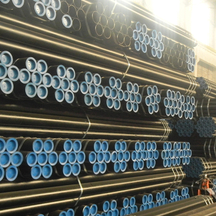
We supply high-quality seamless steel pipes for oil and gas, petrochemical, power generation, construction, machinery, and automotive industries—backed by strict quality control and reliable logistics.
Product Range: Carbon steel, alloy steel, stainless steel, and precision seamless tubes. Available in multiple sizes, wall thicknesses, and material grades to meet diverse project needs.
Quality Assurance: Every pipe undergoes dimensional checks, visual inspection, non-destructive testing, and pressure testing—complying with international standards.
Customization: Specific dimensions, steel grades, surface treatments, and packaging available per project requirements.
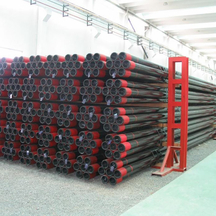
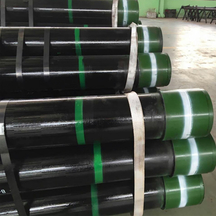
Packaging: Bundling with steel straps, wooden cases, end caps, anti-rust coatings, and waterproof wrapping to prevent damage during transit.
Global Shipping: Sea freight, air freight, rail, and express courier options. Full documentation and customs coordination ensure smooth delivery worldwide.
From selection to delivery, our team provides technical support and responsive service. Choose us for reliable seamless pipes, competitive pricing, and dependable global logistics.
Conclusion
Seamless steel pipes offer exceptional strength and reliability for demanding applications—but their performance depends on rigorous quality control throughout manufacturing. Defects can arise from raw materials, heating, rolling, heat treatment, or handling. Without proper inspection, these issues may compromise mechanical properties and service life.
Key Quality Measures:
High-quality steel billets
Precise production parameters
Proper heat treatment
Advanced non-destructive testing (NDT)
Comprehensive quality assurance ensures pipes meet international standards and perform safely in oil and gas, power generation, construction, and machinery applications.
FAQ:
Q 1: What is the most common defect found in seamless steel pipes?
Explain that surface cracks, wall thickness variations, and internal inclusions are among the most common defects, typically caused by raw material issues or improper manufacturing parameters.
Q 2: How can manufacturers reduce defects in seamless steel pipes?
Discuss the importance of high-quality raw materials, precise process control, heat treatment, and non-destructive testing throughout production.
Q 3: Are seamless steel pipes stronger than welded steel pipes?
Compare strength, pressure resistance, and application suitability while noting that the best choice depends on operating conditions.
Q 4: What quality tests should seamless steel pipes undergo before shipment?
Cover hydrostatic testing, ultrasonic testing, dimensional inspection, chemical analysis, mechanical property testing, and visual inspection to ensure compliance with customer and industry requirements.
About Us / News / Product / Project / Quality Assurance / Service / Contact Us