Views: 6 Author: Site Editor Publish Time: 2026-05-15 Origin: Site
Steel pipe piles are a vital deep foundation solution in modern infrastructure engineering, widely used for bridges, ports, high-rise buildings, and offshore platforms.
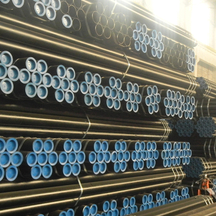
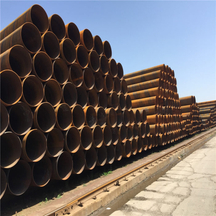
Manufactured from high-strength carbon steel (seamless or welded, like SSAW) and adhering to international standards such as ASTM A252 and API 5L, they offer remarkable versatility. They function effectively as end-bearing or friction piles and can be filled with concrete post-installation for enhanced load-bearing capacity.
Types of Piling Options Used in Modern Construction
Ø Steel Pipe Piles
As one of the most widely used solutions, steel pipe piles (including seamless, SSAW, ASTM A252, or API 5L grades) offer exceptional load-bearing capacity and penetration ability. Installed via driving or drilling, their hollow structure allows for concrete filling, making them ideal for deep foundations and demanding offshore projects.
Ø Concrete Piles
Available as factory-manufactured precast piles or cast-in-place shafts, concrete piles are renowned for their durability and high compressive strength. They are commonly selected for bridges, high-rise buildings, and infrastructure requiring long-term stability, though installation often takes longer than steel alternatives.
Ø Timber & Composite Piles
Timber piles remain a cost-effective option for light-load or temporary structures in soft soil, though they have lower durability. For specialized applications, composite systems like steel-concrete or fiber-reinforced polymer (FRP) piles provide enhanced strength and superior corrosion resistance in aggressive marine or chemical environments.
Key Comparison: Steel Pipe Piles vs Other Piling Options
Comparison Factor | Steel Pipe Piles | Concrete Piles | Timber Piles |
Strength & Load Capacity | Superior tensile and compressive strength; excels at penetrating dense soil for heavy structures. | Strong compressive strength, but limited in handling dynamic or lateral loads compared to steel. | The weakest option, suitable only for light-duty or temporary structures. |
Installation & Speed | Highly efficient and fast installation via driving or vibration; ideal for tight project schedules. | Slower process; cast-in-place types require complex site prep and longer curing times. | Quick and easy to install, but strictly limited to simple, low-load applications. |
Durability & Resistance | Excellent long-term durability; can be coated or cathodically protected for harsh environments. | Good long-term stability, though prone to cracking over time without proper design and maintenance. | Lowest durability; highly susceptible to decay, moisture damage, and biological degradation. |
Cost & Lifecycle Value | Higher upfront cost, but offers excellent long-term value through reusability and low maintenance. | Moderate initial cost; a standard choice for many permanent infrastructure projects. | Lowest initial cost, but limited lifespan makes it a short-term or budget-restricted solution. |
Factors to Consider When Choosing the Right Piling System
Selecting the optimal piling system is a critical step in foundation engineering that directly impacts structural safety and project efficiency.
Key Consideration | Evaluation Details |
Soil & Geotechnical Conditions | Different soils (soft clay, dense gravel, or rock) demand specific solutions. Steel pipe piles excel at penetrating dense or deep layers, while concrete piles suit uniform soils, and timber is limited to soft, low-load ground. |
Load & Structural Requirements | Projects must account for axial, lateral, and dynamic forces (wind, seismic). Steel pipe piles are highly effective for heavy-load structures like bridges and high-rises, whereas composite systems are often chosen for specialized engineering needs. |
Environmental Exposure | In marine or chemically aggressive soils, corrosion resistance is vital. Steel piles can be protected with coatings or cathodic systems, while timber is prone to biological decay, and concrete may require extra reinforcement against cracking. |
Budget & Construction Timeline | Balancing upfront costs with speed is crucial. Steel piles typically have higher material costs but offer rapid installation, reducing overall project time. Concrete requires longer curing periods, while timber is cheaper but application-limited. |
Standards & Regulatory Compliance | Strict adherence to engineering codes (such as ASTM or API) and local building regulations is mandatory. Proper testing, inspection, and quality control ensure the selected system meets all safety and reliability standards. |
Our Recommended Steel Pipe Pile Products and Global Shipping Services
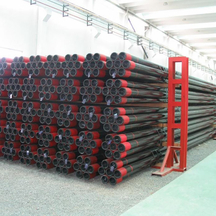
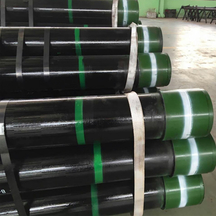
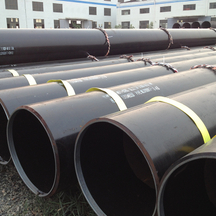
We supply a comprehensive range of high-quality steel pipe piles designed for bridges, ports, offshore platforms, and heavy industrial foundations. Our core products include ASTM A252 (Grade 2 & 3) and high-strength API 5L (X42-X65) pipe piles, alongside large-diameter SSAW piles ideal for major infrastructure projects.
Available in various diameters and wall thicknesses, our piles can be customized with beveling and anti-corrosion coatings (epoxy, 3PE). We ensure strict quality control through ultrasonic and hydrostatic testing, providing full Mill Test Certificates (MTC) and third-party reports (SGS/BV).
Backed by extensive export experience across Asia, Europe, the Middle East, and the Americas, our professional logistics team offers efficient global shipping via container or bulk vessel. Partner with us for reliable steel pipe pile solutions and dependable international delivery.
Steel Pipe Piles: Advantages vs. Limitations
Key Factor | Advantages | Limitations |
Strength & Capacity | Superior tensile and compressive strength; ideal for heavy structures. | Higher initial material and fabrication costs compared to timber or concrete. |
Installation & Efficiency | Rapid installation via driving or drilling significantly reduces construction time. | Driving piles generates noise and vibration, requiring mitigation in urban areas. |
Soil Adaptability | Excellent penetration through dense soil and bedrock; allows concrete filling. | Susceptible to corrosion in moisture or aggressive soil without proper protective coatings. |
Durability & Lifespan | Highly durable in harsh marine environments when equipped with anti-corrosion systems. | Requires careful long-term maintenance planning to ensure extended service life. |
Conclusion
Steel pipe piles are a cornerstone of modern foundation engineering, providing unmatched strength and stability for demanding projects like bridges, ports, offshore platforms, and high-rise buildings. Compared to concrete, timber, and composite alternatives, steel pipe piles excel in load-bearing capacity, installation efficiency, and adaptability to complex soil conditions.
Their versatility allows them to penetrate deep into the ground and be filled with concrete for added reinforcement, making them ideal for heavy infrastructure and marine environments. While they may have a higher upfront cost, proper corrosion protection (such as epoxy coatings) ensures exceptional long-term durability and lifecycle value.
FAQ:
(1) Are steel pipe piles stronger than concrete piles?
Comparison of load capacity and structural performance
(2) When should steel pipe piles be used instead of concrete piles?
Suitable soil and project conditions
(3) How long do steel pipe piles last in marine environments?
Corrosion protection and service life factors
(4) What standards are used for steel pipe piles?
Overview of ASTM A252, API 5L, and related standards
About Us / News / Product / Project / Quality Assurance / Service / Contact Us