Views: 1 Author: Site Editor Publish Time: 2026-06-10 Origin: Site
Pipeline transportation is a vital infrastructure method for continuously moving liquids and gases, such as crude oil, natural gas, water, and chemicals, over long distances. Driven by pumps or compressors, these enclosed systems provide a highly efficient alternative to road or rail transport.
Key advantages include massive transport capacity, low operating costs, and reduced environmental impact due to fewer vehicle emissions. Pipelines also offer superior safety through secure, continuous flow. However, maintaining these networks requires careful management of corrosion, pressure control, and regular inspections to ensure reliability.
As the backbone of modern energy and industrial supply chains, pipeline transportation delivers essential resources safely and cost-effectively across global markets. Understanding its principles highlights its critical role in today's interconnected world.
What Is Pipeline Transportation and How Does It Work?
Pipeline transportation is a highly efficient system used to move liquids and gases continuously through enclosed pipes over short or long distances. Driven by pressure generated from pumps (for liquids) or compressors (for gases), this method ensures a steady, uninterrupted flow of materials from production sites to end users.
A complete pipeline system relies on several key components working in harmony:
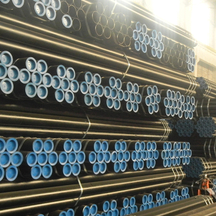
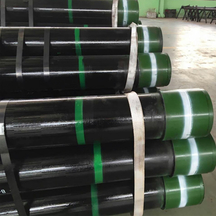
(1) Steel Pipes: The primary conduit, typically utilizing durable carbon steel line pipes.
(2) Pumping & Compressor Stations: Facilities that maintain the necessary pressure to keep fluids moving across vast distances.
(3) Valves & Fittings: Essential for controlling flow direction, regulating pressure, and isolating specific sections.
(4) Monitoring Systems: Advanced sensors and control units that track flow rates and detect potential leaks to ensure safety.
Based on the transported medium, pipelines are categorized into various types, including oil, natural gas, water supply, chemical, and slurry pipelines. Each type requires specialized design considerations regarding pipe material, wall thickness, and pressure ratings to safely handle different substances.
By combining engineered steel infrastructure with precise pressure management, pipeline transportation offers a stable, cost-effective, and safe alternative to road or rail freight. It serves as a critical backbone for modern energy and industrial supply chains worldwide.
Key Advantages of Pipeline Transportation
Advantage Category | Core Benefits & Details |
High Efficiency | Operates continuously without interruption, unlike batch transport (trucks/trains). Ideal for high-volume, constant-demand transmission. |
Cost-Effectiveness | Despite higher initial construction costs, long-term operating expenses are significantly lower due to reduced labor and fuel consumption. |
Safety & Stability | Enclosed steel pipes minimize exposure to traffic accidents, weather, and human error. Advanced monitoring systems quickly detect leaks or pressure changes. |
Environmental Impact | Reduces greenhouse gas emissions and traffic congestion by replacing multiple vehicles. Sealed systems prevent product loss and environmental contamination. |
Reliable Operation | Provides predictable, stable performance unaffected by road conditions or seasonal disruptions, ensuring uninterrupted supply chains. |
Key Steel Pipes Used in Pipeline Transportation
Pipe Type | Description & Manufacturing Process | Primary Applications |
The industry standard for oil and gas transmission. Available in various strength grades (e.g., X42 to X70) to meet strict international specifications for harsh environments. | Long-distance oil and natural gas transmission systems. | |
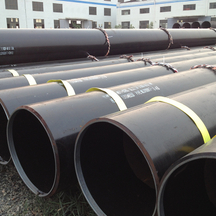
Longitudinal Submerged Arc Welded pipes made from steel plates. They feature a straight seam, uniform weld quality, and excellent structural strength. | Large-diameter, high-pressure pipelines, offshore projects, and critical infrastructure. | |
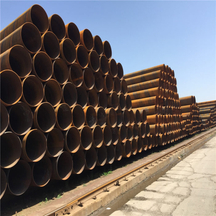
Spiral Submerged Arc Welded pipes are formed from spirally coiled steel. This manufacturing method allows for cost-efficient production of large diameters. | Water transmission, piling projects, and low-to-medium pressure pipeline networks. | |
Electric Resistance Welded pipes are produced efficiently from steel coils. They offer smooth surfaces and highly accurate dimensions. | Small to medium-diameter water pipelines, gas distribution networks, and industrial fluid transport. | |
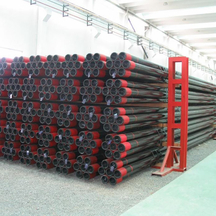
Steel pipes are protected with specialized coatings like 3LPE or FBE to prevent degradation from soil, moisture, and chemicals. | Buried pipelines and offshore environments require an extended service life. |
Challenges and Considerations in Pipeline Projects
While pipeline transportation is highly efficient, its design and operation present several critical challenges that require careful engineering.
(1) Corrosion Protection: Steel pipes are constantly exposed to soil, moisture, and chemicals, which can lead to structural failure. To mitigate this, pipelines must be protected using anti-corrosion coatings like 3LPE or FBE, combined with cathodic protection systems and regular inspections to ensure long-term durability.
(2) Pressure & Safety: Pipelines must withstand high internal pressures. Incorrect material selection or wall thickness can cause ruptures or leaks. Engineers must strictly calculate pressure ratings and utilize high-grade materials (such as API 5L X-grade) alongside advanced welding inspections to guarantee safety.
(3) Terrain & Environment: Routes often cross complex landscapes like mountains, deserts, or offshore areas. Each environment demands specific adaptations, such as flexible designs for ground movement or specialized resistance against seawater corrosion and extreme temperatures.
(4) Construction Quality: Installation requires precise welding and alignment. Weld defects can create severe weak points, making non-destructive testing methods, such as ultrasonic or radiographic testing, essential to verify joint integrity.
(5) Monitoring & Maintenance: Continuous operation relies on modern SCADA systems and sensors to track flow rates and detect leaks. Routine maintenance and cleaning operations are necessary to extend the pipeline's service life.
Successfully navigating these challenges through proper planning and rigorous quality control is vital for safe and reliable pipeline infrastructure.
Future Trends in Pipeline Transportation
The future of pipeline transportation is being reshaped by digital innovation, clean energy transitions, and sustainability goals.
Smart Monitoring & Automation: Traditional inspections are being replaced by IoT sensors and real-time data analytics to instantly detect leaks or pressure drops. AI-driven predictive maintenance and digital twins optimize operations, prevent equipment failures, and significantly reduce downtime.
Advanced Corrosion Protection: To extend service life and lower maintenance costs, the industry is adopting high-performance coatings (like 3LPE/3LPP) alongside emerging self-healing nanomaterials that automatically repair micro-cracks.
Clean Energy Adaptation: As global energy shifts, existing infrastructure is being repurposed for hydrogen transport. Additionally, pipelines are increasingly adapted for Carbon Capture and Storage (CCS) projects, including specialized supercritical CO₂ transport systems, playing a vital role in achieving carbon neutrality.
Sustainable Development: Environmental concerns are driving the use of recyclable materials and eco-friendly construction methods to minimize carbon footprints. By focusing on longer lifespans and operational efficiency, modern pipelines are evolving into intelligent, green arteries that safely support global industrial growth.
Conclusion
Pipeline transportation is a cornerstone of modern industrial infrastructure, providing an efficient and reliable method for moving essential resources like oil, natural gas, and water over long distances. Its continuous flow operation ensures supply chain stability while offering superior safety and lower environmental impact compared to road or rail transport.
However, building a successful pipeline requires more than just laying steel; it demands a comprehensive engineering approach. Success depends heavily on selecting the appropriate materials, such as API 5L, LSAW, SSAW, or ERW pipes, and applying robust anti-corrosion coatings like 3LPE or FBE to withstand harsh environments and extend service life. Proper planning and rigorous maintenance are critical to mitigating operational risks.
Looking ahead, the industry is rapidly evolving toward intelligent infrastructure. Innovations in smart monitoring systems, AI-driven automation, hydrogen energy compatibility, and sustainable practices are transforming traditional networks. These advancements will enhance safety, reduce costs, and support global energy transition goals.
FAQ:
(1) What are the main advantages of pipeline transportation?
Pipelines offer continuous operation, high capacity, lower operating costs, and reliable long-distance transportation.
(2) Which steel pipes are commonly used in pipeline transportation?
API 5L line pipes, LSAW pipes, SSAW pipes, ERW pipes, and coated steel pipes are commonly used.
(3) Why are pipeline coatings important?
Coatings help prevent corrosion, extend service life, and reduce maintenance costs.
(4) Is pipeline transportation safer than road or rail transportation?
In many applications, pipelines provide a safer and more reliable method for transporting liquids and gases over long distances.
About Us / News / Product / Project / Quality Assurance / Service / Contact Us