Views: 0 Author: Site Editor Publish Time: 2026-11-19 Origin: Site
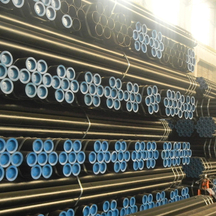
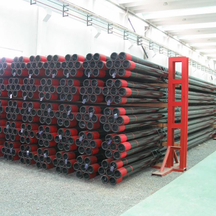
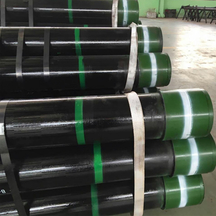
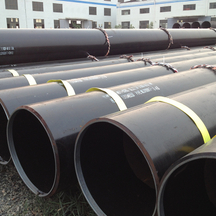
Straight-seam steel pipes are welded with a longitudinal seam and mainly include ERW and LSAW types. ERW pipes, formed from steel strips by resistance welding, are suitable for building structures and general engineering. LSAW pipes, produced from steel plates by submerged arc welding, are preferred for large-diameter, heavy-wall structural and pile-foundation applications. They offer good structural strength, dimensional accuracy, flexible specifications, and convenient fabrication. In construction, they serve as columns, trusses, and supports; in foundation engineering, large-diameter LSAW pipes function as driven steel pipe piles transferring loads through end bearing and skin friction. Selection should consider steel grade, diameter, wall thickness, welding quality, installation method, and corrosion protection.
Main Types and Manufacturing Processes of Straight-Seam Steel Pipes
Straight‑seam steel pipes are produced by rolling flat steel into cylindrical shape and welding longitudinal edges. The two primary categories are ERW (Electric Resistance Welded) and LSAW (Longitudinal Submerged Arc Welded) pipes. Both serve construction and infrastructure projects but vary in raw materials, workflows, size ranges and use cases. Clear knowledge of these differences supports proper material selection for building structures and pipe‑pile foundations.
ERW Straight‑Seam Steel Pipes
ERW pipes adopt hot‑rolled steel coils / strips as raw material. Steel strip passes through forming rollers, then edges are heated by high‑frequency current and pressure‑welded to form longitudinal seams.
Production Step | Brief Description |
|---|---|
Raw coil inspection | Check surface, chemical composition and mechanical properties |
Uncoiling & leveling | Unwind and flatten steel strip for stable forming |
Roller forming | Gradually bend strip into circular tubular profile |
High‑frequency welding | Heat and squeeze edges to complete longitudinal weld |
Sizing & straightening | Tune diameter, roundness and pipe straightness |
Cutting & final inspection | Cut to fixed length and perform quality checks |
ERW features high‑volume continuous production, stable dimensions and cost advantages. Typical applications include building frames, structural columns and general construction components. For pile foundations, feasibility depends on diameter, wall thickness, steel grade and design loads.
LSAW Straight‑Seam Steel Pipes
LSAW pipes are fabricated from discrete hot‑rolled steel plates, fit for large‑diameter, heavy‑wall high‑performance scenarios. JCOE and UOE are the mainstream forming techniques.
Production Step | Brief Description |
|---|---|
Plate inspection | Verify plate size, surface quality and material performance |
Edge preparation | Mill and bevel plate edges for welding |
Mechanical forming | Press plates into cylinder via JCOE / UOE equipment |
Tack welding | Temporary spot‑welding to lock tubular geometry |
Submerged‑arc welding | Complete internal and external longitudinal SAW welds |
Mechanical expansion | Improve roundness and dimensional accuracy |
NDT inspection | UT / RT testing for weld seam integrity |
Final inspection | Check dimension, appearance and mechanical properties |
LSAW pipes are widely applied in heavy‑load structures, bridge projects and large‑diameter steel pipe piles.
Core Comparison: ERW vs LSAW Steel Pipes
Comparison Item | ERW Steel Pipes | LSAW Steel Pipes |
|---|---|---|
Raw material | Hot‑rolled steel coils / strips | Separate hot‑rolled steel plates |
Welding technology | High‑frequency electric resistance welding | Longitudinal submerged arc welding |
Forming method | Continuous roller forming | Discrete mechanical plate forming (JCOE / UOE) |
Dimension scope | Small‑to‑medium diameter | Large‑diameter availability |
Wall thickness | Thin‑to‑medium wall | Heavy‑wall capability |
Production feature | Fast continuous mass production | Batch production based on single plates |
Typical uses | General building structures & ordinary engineering | Heavy structures, large‑size steel pipe piles |
Neither type is absolutely superior. ERW fits cost‑sensitive regular‑size projects; LSAW is preferred for large‑diameter and heavy‑wall requirements.
Selection Guidance Between ERW and LSAW
Selection shall follow actual engineering requirements rather than manufacturing processes alone.
Building structures: Evaluate structural loads, pipe geometry, steel grade, connection details and applicable standards. ERW works for most conventional structures; LSAW for over‑size heavy members.
Pipe pile foundations: Focus on pile diameter, wall thickness, driving conditions, geology, bending/axial loads and weld inspection rules. Heavy‑duty large‑size pipe piles normally choose LSAW.
Applications of Straight-Seam Steel Pipes in Building Structures
Straight‑seam steel pipes deliver high structural strength, precise dimensions and flexible production for modern building construction. ERW and LSAW types are widely adopted for industrial workshops, warehouses and large‑span buildings. Material selection depends on structural design, size specifications and load conditions.
Building Columns and Load‑Bearing Members
Straight‑seam steel pipes are frequently used as building columns to carry loads from beams, floors and roofs. Hollow tubular sections feature excellent strength‑to‑weight ratio to resist axial compression and bending force.
Typical Application Scenarios | Notes on Material Selection |
|---|---|
Factory support columns & frames | Choose Q235B, Q355B, ASTM A500 based on design codes |
Warehouse and logistics building structures | Diameter and wall thickness determined by structural calculation |
Multi‑story commercial building steel columns | ERW for medium‑size members; LSAW for heavy‑load large‑diameter columns |
Equipment and platform supporting components | Verify weld quality and dimensional tolerances |
Concrete‑filled tubular columns can further boost compression performance for heavy‑duty projects.
Steel Trusses and Roof Support Systems
Tubular straight‑seam pipes are core components for roof trusses and large‑span frameworks. Hollow profiles reduce dead weight while maintaining mechanical performance.
Key advantages: high structural efficiency, easy cutting & welding, create large clear interior space, consistent dimensions simplify site installation.
Quality focus points: pipe straightness, roundness, wall thickness and weld integrity.
Common projects: industrial workshops, warehouses, stadiums and exhibition halls.
Industrial Buildings and Large‑Span Structures
Project Type | Main Usages | Preferred Pipe Type |
|---|---|---|
Industrial factories | Main frames, roof supports, equipment platforms | ERW for regular members; LSAW for heavy‑wall large‑size parts |
Warehouses & logistics parks | Tubular columns, roof trusses, bracing systems | ERW for most conventional structures |
Stadiums & exhibition halls | Space frames, long‑span roof trusses | LSAW for large‑diameter heavy‑load components |
Transport terminals & stations | Building frame bracings and supporting members | ERW / LSAW per design dimension requirements |
Core Benefits for Building Construction
Stable load‑bearing capacity: matched steel grade and dimension meet structural load demands
Production flexibility: customizable diameter, wall thickness and length for project specs
Easy fabrication: convenient for cutting, welding and different connection forms
High material efficiency: hollow design saves steel compared with solid sections
Wide adaptability: fit columns, trusses, bracings and equipment supports
Note: Final performance relies on steel quality, weld standard and fabrication accuracy. Anti‑corrosion treatments such as painting or galvanizing shall be applied according to service environment.
Key Selection Considerations
Engineers shall evaluate below parameters before procurement:
Steel grade and corresponding mechanical properties
Outside diameter, wall thickness and length tolerances
Weld seam quality and mandatory inspection scope
Fabrication technique and connection scheme
Surface anti‑corrosion requirements and applicable industry standards
Applications of Straight-Seam Steel Pipes in Pile Foundation Engineering
Straight‑seam steel pipes are widely used for pile foundations thanks to high strength, flexible sizes and strong adaptability to complex ground. Steel pipe piles transfer superstructure loads down to deep stable soil or rock via end bearing, skin friction or both. Engineers choose ERW or LSAW pipes based on diameter, wall thickness, steel grade and construction methods.
Steel Pipe Piles for Building Foundations
Driven steel pipe piles are the most common solution for high‑rises, industrial plants and large commercial buildings where shallow foundations cannot carry heavy loads. Piles can be open‑ended or closed‑ended and driven by hammer impact.
Core Advantages | Practical Notes |
|---|---|
High axial and lateral load capacity | Size calculated by foundation design |
Customizable diameter, wall thickness and length | LSAW preferred for large heavy‑duty piles |
Easy extension by on‑site circumferential welding | Weld quality requires NDT inspection |
Adaptable to different soil layers | Suitable for most inland building sites |
Deep Foundation Projects
Deep foundations carry heavy loads for critical infrastructure. LSAW pipes are normally selected for large‑diameter and heavy‑wall requirements.
Project Type | Main Application | Recommended Pipe Type |
|---|---|---|
High‑rise buildings | Deep load‑bearing pipe piles | ERW for medium size; LSAW for large piles |
Bridge piers | Supporting foundation piles near rivers | LSAW |
Ports & marine structures | Wharf and berth foundation piles | LSAW with anti‑corrosion coating |
Power plants & heavy industrial facilities | Heavy equipment foundation piles | LSAW |
Marine and coastal environments require reliable corrosion protection to extend service life.
Driven Piles vs Drilled Casing Piles
Pile Type | Construction Method | Features |
|---|---|---|
Driven steel pipe piles | Impact hammer, vibratory hammer or static pressing | Fast installation; suitable for bridges, ports and industrial foundations |
Drilled casing piles | Used as temporary or permanent borehole casing | Prevents bore collapse; follows separate drilled pile QC rules |
The construction method is determined by soil resistance, surrounding buildings, noise limits and design requirements.
Benefits of Straight‑Seam Pipes for Pile Foundations
High structural strength: Resists compression, bending and driving impact stress
Large‑diameter availability: LSAW meets heavy foundation demands
Easy field splicing: Pipe sections can be welded to reach designed pile length
Traceable quality: MTC, dimension check and weld NDT support quality verification
Pile performance also relies on geology, installation quality, corrosion allowance and joint design.
Key Selection Criteria for Pile Pipes
Buyers and engineers shall check these factors before ordering:
Steel grade: Match yield strength, toughness and relevant standards
Diameter & wall thickness: Calculated from loads, soil resistance and driving stress
Weld quality: Longitudinal welds must pass specified NDT requirements
Splice connection: Confirm on‑site welding procedure and joint strength
Corrosion protection: Apply coatings or corrosion margin for underground and marine service
Site conditions: Soil type, groundwater, driving equipment and risk of impact damage
Straight-Seam Steel Pipes vs. Other Steel Pipe Types in Construction
Steel pipes are widely used for buildings, pile foundations and infrastructure. Straight‑seam, spiral welded and seamless pipes differ in production process, size range and mechanical performance. Clear comparison helps engineers and buyers select pipes based on structural demands, budget and site conditions.
Straight‑Seam vs Spiral Welded Steel Pipes
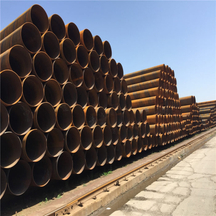
The core difference lies in weld orientation and forming method. Straight‑seam pipes (ERW / LSAW) have longitudinal welds parallel to the pipe axis. Spiral welded pipes feature helical seams formed by spirally rolling steel coils.
Comparison Item | Straight‑Seam Steel Pipes | Spiral Welded Steel Pipes |
|---|---|---|
Weld direction | Longitudinal, parallel to pipe axis | Helical / spiral seam |
Production process | ERW or LSAW | Spiral submerged arc welding (SSAW) |
Typical uses | Building columns, pipe piles, structural frames | Water pipelines, large‑diameter piling |
Size feature | Controlled dimensions for structural design | Flexible large‑diameter production |
Key checkpoints | Longitudinal weld quality, roundness | Spiral weld inspection, wall thickness |
Straight‑seam pipes are preferred for structural projects with strict weld control. Spiral welded pipes are cost‑effective for large‑diameter pipeline works. Neither is universally superior; performance depends on steel grade, wall thickness and fabrication quality.
Straight‑Seam vs Seamless Steel Pipes
Seamless pipes are produced by piercing solid steel billets, with no weld seam. Straight‑seam pipes are formed from coils or plates and joined by longitudinal welding.
Comparison Item | Straight‑Seam Steel Pipes | Seamless Steel Pipes |
|---|---|---|
Manufacturing | Forming + longitudinal welding (ERW / LSAW) | Piercing and rolling solid billets |
Weld condition | With longitudinal weld; NDT inspection required | No weld seam |
Cost | More economical for large structural sizes | Higher unit cost |
Main applications | Building structures, steel pipe piles | High‑pressure piping, special mechanical systems |
For building columns and pile foundations, straight‑seam pipes are a practical economical option if weld quality meets design specs. Seamless pipes are specified when weld‑free construction is mandatory.
Pipe Selection Guide by Construction Scenarios
Project Application | Recommended Pipe Type | Core Selection Factors |
|---|---|---|
Building columns & structural supports | ERW / LSAW | Size, strength, weld inspection standard |
Large‑diameter pipe piles | LSAW / SSAW | Driving load, wall thickness, diameter |
General industrial piping | ERW / seamless | Working pressure, temperature, codes |
High‑pressure mechanical systems | Seamless or approved welded pipe | Design specification and safety requirements |
Water transmission pipelines | Straight‑seam / SSAW | Diameter, pressure grade, anti‑corrosion |
ERW is popular for regular structural jobs thanks to stable supply and high productivity. LSAW fits heavy‑wall large‑diameter structural members.
Key Material Selection Factors
Evaluate these points before finalizing pipe types:
Structural requirements: strength, stiffness and load capacity
Dimensions: outer diameter, wall thickness and length tolerance
Quality records: surface condition and weld NDT reports
Compliance: match relevant standards and contract specs
Site conditions: transport, lifting, welding and pile driving
Total cost: consider material, fabrication, testing and installation, not only unit price
Key Factors in Selecting Straight-Seam Steel Pipes for Construction Projects
Proper selection of straight‑seam steel pipes guarantees safety, durability and cost efficiency for buildings, steel columns, bridge and pile foundations. Multiple technical factors must be reviewed before procurement to match product performance with project specs.
Steel Grade and Mechanical Properties
Steel grade determines yield strength, tensile strength, toughness and weldability. Common structural grades include Q235B, Q355B and ASTM A36. Higher‑strength grades are adopted for heavy‑load conditions.
Key Items to Verify |
|---|
Yield strength, tensile strength and elongation |
Impact toughness and carbon equivalent (if required) |
Chemical composition and weldability |
Grades from different standards cannot be swapped without technical validation. Pile pipes must withstand stresses during lifting, transport and driving, besides service loads.
Pipe Diameter and Wall Thickness
Outer diameter and wall thickness control stiffness, load capacity and deformation resistance. For pipe piles, they also resist soil pressure and driving impact. Considerations:
Structural calculation results and bearing demands
Pile driving and installation limits
Connection, lifting and transport constraints Thicker walls improve impact resistance but raise weight and cost. Dimensions must be confirmed by engineering calculation instead of experience alone.
Manufacturing Route: ERW vs LSAW
Item | ERW Steel Pipes | LSAW Steel Pipes |
|---|---|---|
Welding method | High‑frequency electric resistance welding | Longitudinal submerged arc welding |
Typical size range | Small & medium diameters | Large diameter, heavy wall |
Core strengths | High output, stable dimensional accuracy | Suitable for heavy‑duty structural piles and columns |
Common uses | General building frames | Large pipe piles, heavy structural members |
Pick ERW for regular structures; choose LSAW when large diameter and heavy wall are required.
Weld Quality and Inspection Requirements
The longitudinal weld is a critical quality control point. Required inspections usually include:
Visual check of weld and pipe surface
Dimensional and wall thickness measurement
UT / RT nondestructive testing (per specs)
Mechanical weld tests and hydrostatic test (if specified) MTC and inspection reports are necessary for full traceability.
Corrosion Protection and Surface Treatment
Underground, coastal and outdoor pipes face corrosion from moisture, soil chemicals and saltwater. Available protection options:
Hot‑dip galvanizing
Epoxy anti‑corrosion coating
Extra corrosion allowance on wall thickness The coating system is selected based on service environment, design lifespan and maintenance plan.
Applicable Standards and Supplier Qualification
Confirm the required standard, tolerance, testing scope and documentation before purchase. Evaluate suppliers by: production capacity, internal QC system, past project experience, inspection records and delivery stability. Trusted suppliers reduce risks of defective welds, out‑of‑tolerance sizes and shipment delays.
Total Cost, Transport and Lead Time
Unit price is not the only cost factor. Budget should cover coating, inspection, packaging and freight. Large‑diameter long pipes have special lifting and transport limits. Delivery schedules need to align with construction plans to avoid stockout or idle storage.
Installation and Quality Control of Straight-Seam Steel Pipes
Strict installation and quality control are critical to guarantee safety, stability and service life for straight‑seam steel pipes used in buildings, industrial frames, bridge and pile foundations. Even premium pipes may lose structural performance due to improper handling, welding or installation. The full QC workflow covers incoming check, transport, storage, erection, welding and final acceptance.
Pre‑Installation Inspection
All pipes must be checked against purchase specs and design requirements before erection.
Inspection Item | Main Check Content |
|---|---|
Material verification | Steel grade, standard, heat number and MTC |
Dimension check | OD, wall thickness, length, straightness and ovality |
Surface inspection | Cracks, dents, corrosion and deformation |
Weld review | Longitudinal weld appearance and NDT records |
Coating check | Coating thickness, continuity and surface integrity (for coated pipes) |
Non‑conforming pipes shall be marked and disposed of per project quality procedures.
Transportation, Storage and Handling
Large and heavy straight‑seam pipes are prone to deformation and coating damage.
Transport: Secure pipes firmly; use proper lifting points to avoid impact and bending.
Storage rules:
Support pipes off the ground with stable brackets
Use separators to prevent collision scratches
Protect anti‑corrosion coatings
Keep material marks and traceability labels visible
Avoid long‑term soaking and corrosive exposure These rules are especially important for large‑diameter LSAW pipes and coated pipe piles.
Installation Methods for Different Scenarios
Application Type | Installation Method & Key Control Points |
|---|---|
Building structural columns & supports | Lift, align, temporary bracing, fix and weld / bolt; check verticality and alignment |
Steel pipe piles | Impact driving, vibratory driving or static pressing; control pile position, verticality, penetration depth and splice weld quality |
Drilled casing systems | Install as temporary or permanent casing; monitor position, depth, verticality and casing integrity |
Construction methods are selected based on soil conditions, pipe size, surrounding structures and design limits.
Welding Quality Control
Field splicing and structural connection welding are high‑risk links.
Prepare joint surfaces and clean impurities before welding
Adopt approved WPS (Welding Procedure Specification) and qualified welders
Control preheating, filler material and welding parameters
Carry out visual inspection after welding
Perform UT / RT NDT as required by specs Defects like cracks, incomplete fusion and lack of penetration must be repaired following approved procedures.
Final Inspection and Acceptance
Final inspection verifies compliance with design and construction standards.
For building structures: Check geometry, alignment, joints, welds and coating condition
For pipe piles: Review driving logs, pile position, penetration depth, pile integrity test or static load test results
Required documents for acceptance: MTC, dimension reports, WPS & welder qualifications, NDT reports, coating records, installation records and acceptance forms.
Common Installation Defects and Prevention
Typical Problems | Preventive Measures |
|---|---|
Pipe deformation | Use matched lifting tools; avoid overload and sharp impact |
Misalignment & verticality deviation | Set positioning markers; real‑time monitoring during installation |
Weld defects | Follow WPS strictly; carry out post‑weld inspection and timely repair |
Coating damage | Protect coating during lifting and stacking; repair damaged areas with approved coating materials |
Pile depth deviation | Track driving parameters and penetration in real time |
Our Recommended Straight-Seam Steel Pipe Products and Global Shipping Services
Supplies ERW and LSAW straight-seam steel pipes for building structures, industrial facilities, bridge construction, and pile foundation engineering. ERW pipes, made by resistance welding steel strip, suit columns, frameworks, and general fabrication, while LSAW pipes, produced from steel plates by submerged arc welding, fit large-diameter and heavy-wall pile and infrastructure applications. Buyers should confirm manufacturing process, steel grade such as Q235B, Q355B, or ASTM A36, outside diameter, wall thickness, length, applicable ASTM, EN, or GB standard, surface treatment, and inspection scope before ordering. We coordinate dimensional checks, mechanical testing, and weld NDT as required. Export services cover protective packaging, secure loading, shipping coordination, and documentation, including commercial invoices and packing lists. Clear specifications help ensure accurate quotations and reliable global delivery.
Conclusion:
Straight-seam steel pipes are essential for building structures, industrial facilities, bridges, and pile foundations. ERW pipes suit general structural supports, while LSAW pipes fit large-diameter, heavy-wall pile and infrastructure applications. Selection should balance steel grade, dimensions, weld quality, surface protection, and applicable ASTM, EN, or GB standards rather than price alone. Verify material certificates, dimensional reports, and nondestructive testing records to reduce risk. Proper installation, alignment, connection, and corrosion protection are critical for underground, coastal, and marine environments.
FAQ:
Q1: What are the main applications of straight-seam steel pipes in building structures?
They are commonly used for structural columns, support members, roof trusses, industrial buildings, and large-span steel structures.
Q2: Can straight-seam steel pipes be used as foundation piles?
Yes. They are widely used as driven steel pipe piles in building, bridge, port, and industrial foundation projects.
Q3: What is the difference between ERW and LSAW steel pipes?
ERW pipes use high-frequency resistance welding, while LSAW pipes use longitudinal submerged arc welding. They differ in manufacturing processes and typical dimensional ranges.
Q4: Which is better for pile foundations, ERW or LSAW pipes?
The choice depends on pile diameter, wall thickness, load requirements, and installation conditions. LSAW pipes are often considered for large-diameter, heavy-wall piles.
Q5: What steel grades are commonly used for straight-seam steel pipes?
Common options include Q235B, Q355B, and ASTM A36, depending on the applicable product standard and project specifications.
About Us / News / Product / Project / Quality Assurance / Service / Contact Us