Views: 1 Author: Site Editor Publish Time: 2026-08-11 Origin: Site
Seamless steel pipes are essential in shipbuilding, providing unmatched strength and reliability for demanding marine environments. Unlike welded pipes, their seamless structure ensures uniform pressure resistance, making them ideal for high-pressure and high-temperature systems like boilers, hydraulics, and fuel lines.
Built to withstand harsh conditions, including saltwater exposure and extreme temperature fluctuations, these pipes guarantee long-term vessel safety and efficiency. Selecting the right seamless steel pipe requires careful consideration of international standards, classification society requirements, and specific mechanical properties.
Whether for shipyards or marine equipment manufacturers, choosing high-quality seamless steel pipes is crucial for optimal system performance.
What Are Seamless Steel Pipes?
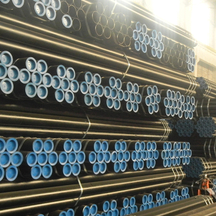
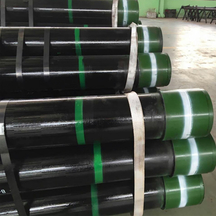
Seamless steel pipes are tubular products made without any welded joint. They are produced from solid round billets, giving them a continuous, uniform structure. This makes them ideal for high‑pressure, high‑temperature, and mechanically demanding applications—including marine and shipbuilding systems.
How Are Seamless Pipes Made?
Step | Process |
|---|---|
1. Billet heating | Solid steel billet is heated to forging temperature. |
2. Piercing | Billet is pierced to form a hollow tube. |
3. Rolling & elongating | The tube is rolled and stretched to target diameter and wall thickness. |
4. Sizing | Final dimensions are precisely adjusted. |
5. Heat treatment | Normalizing, annealing, or quench‑tempering to achieve required mechanical properties. |
6. Finishing | Straightening, cutting, and dimensional inspection. |
7. Quality testing | Chemical, tensile, hardness, visual, and NDT checks (plus class‑society certification for ships). |
Key Characteristics
Feature | Benefit |
|---|---|
No weld seam | Uniform performance – no weak point along the pipe body. |
High strength | Reliable under extreme pressure and temperature. |
Dimensional accuracy | Consistent OD and wall thickness for tight fittings. |
Wide grade range | Available in many steel grades for different media (fuel, water, steam, hydraulic fluids). |
Seamless vs. Welded – Quick Comparison
Aspect | Seamless Pipes | Welded Pipes |
|---|---|---|
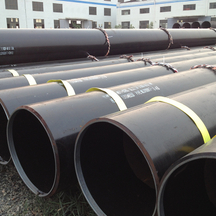
Construction | One continuous piece | Rolled plate/strip with a longitudinal weld |
Best for | High pressure, high temperature, critical systems | General service, lower pressure, non‑critical lines |
Cost | Higher | More economical |
Availability | Moderate (longer lead times) | Widely available |
Marine use | Preferred for fuel, steam, hydraulic systems | Used for cooling water, drainage, less demanding services |
Key Details and Specifications of Seamless Steel Pipes for Shipbuilding
1. Steel Grade & Material Chemistry
Factor | Why It Matters |
|---|---|
Grade selection | Matches service (boiler, steam, fuel, hydraulic, etc.) |
Carbon (C), Mn, Si | Affect strength and hardenability |
Cr, Ni, Mo | Improve corrosion resistance and high‑temp performance |
Compliance | Must meet ASTM, EN, or other applicable standards |
2. Diameter & Wall Thickness
Dimension | Key Consideration |
|---|---|
Outside diameter (OD) | Based on flow rate, system design, and installation space |
Wall thickness | Critical for pressure rating – too thin = weak, too thick = added weight & cost |
Tolerances | Must comply with the relevant standard and project specs |
3. Mechanical Properties (Critical for Marine Use)
Property | What It Tells You |
|---|---|
Yield strength | Resistance to permanent deformation under load |
Tensile strength | Maximum stress before fracture |
Elongation | Ductility – ability to bend without breaking |
Hardness | Wear resistance |
Impact toughness (if required) | Performance under sudden shock or low temperatures |
4. Applicable Standards & Certification
Requirement | Details |
|---|---|
Common standards | ASTM, EN, API, or other specified norms |
Class society rules | ABS, DNV, LR, etc. – mandatory for many marine systems |
Documentation | Material test certificates, heat numbers, inspection reports |
Traceability | Full chain from billet to finished pipe |
5. Inspection & Testing (Before Delivery)
Test Type | Purpose |
|---|---|
Dimensional check | Verify OD, wall thickness, length, straightness |
Visual inspection | Detect surface defects |
Chemical analysis | Confirm composition matches grade |
Tensile & hardness tests | Validate mechanical strength |
Hydrostatic / NDT | Leak and flaw detection (critical for pressure systems) |
Extra tests | May be required by class or purchaser for critical services |
6. Surface Condition & Corrosion Protection
Aspect | Action |
|---|---|
As‑rolled surface | May be acceptable for some internal systems |
Coating/oiling | Protects during storage and transport |
Cleaning/pickling | Removes scale and rust before installation |
Marine environment | Extra protection often needed – saltwater accelerates corrosion |
Applications of Seamless Steel Pipes in Shipbuilding
Seamless steel tubes are widely used across vessels because they handle pressure, temperature, vibration, and harsh marine conditions reliably. Their actual application depends on grade, dimensions, standards, and certification – not all pipes suit all systems.
Below is a quick reference to the main shipboard uses.
Quick Application Table
System | Media | Key Requirement |
|---|---|---|
Boiler/superheater | Steam, hot water | Heat + pressure resistance |
Fuel & oil | Fuel, lube oil | Pressure integrity |
Hydraulic | Hydraulic fluids | High burst strength |
Steam lines | Steam | Thermal stability |
Water/ballast | Freshwater, seawater | Corrosion protection |
Structural | Loads | Strength & straightness |
Details by System
System | Critical Factors |
|---|---|
Boiler | Grade must match temp/pressure; heat treatment required |
Fuel/oil | Chemically compatible; correct sizing avoids pressure drop |
Hydraulic | Must withstand max system pressure |
Steam | Needs creep resistance at high temps |
Water/ballast | Coating or treatment essential against rust |
Structural | Dimensional accuracy and mechanical strength |
Selection Reminder
Always Check | Why |
|---|---|
Grade | Matches service conditions |
Dimensions | OD, wall thickness, tolerances |
Standards | ASTM, EN, or class rules (ABS, DNV, LR) |
Tests | Tensile, hardness, NDT, hydrostatic |
Surface | Coated/oiled for marine storage |
How to Choose the Right Seamless Steel Pipe for a Shipbuilding Project
Selecting the right seamless steel pipe is critical for marine safety and efficiency. To ensure optimal performance, buyers should evaluate the following key factors:
Identify the Application: Match the pipe to the specific system (e.g., boiler, hydraulic, or fuel lines) and the medium being transported, as different fluids have unique pressure and temperature requirements.
Select the Steel Grade: Choose a material that provides adequate strength, toughness, and corrosion resistance based on the system's operating pressure and harsh marine environment.
Confirm Dimensions: Ensure the outside diameter and wall thickness align with engineering designs to guarantee proper flow capacity and pressure resistance.
Verify Standards & Certification: Check compliance with international standards and ship classification society requirements, ensuring all necessary inspection certificates and material test reports are provided.
Assess Corrosion Protection: Evaluate the need for surface treatments and protective coatings to defend against moisture and saltwater damage.
Evaluate Supplier Reliability: Partner with a supplier that offers proven quality control, technical documentation, and reliable delivery timelines to meet strict shipbuilding schedules.
Our Seamless Steel Pipe Products and Shipping Services
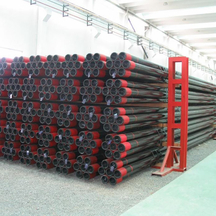
We supply high-quality seamless steel pipes tailored for shipbuilding and marine applications. Our customizable products are available in various steel grades, dimensions, and standards (ASTM/ASME, EN, API) to meet the specific needs of boiler, hydraulic, and fuel systems.
Quality and safety are our top priorities. Every pipe undergoes rigorous inspection, including hydrostatic and non-destructive testing, and is accompanied by comprehensive material certificates. To ensure safe transit in harsh conditions, we provide secure, marine-grade packaging and protective coatings.
Beyond manufacturing, we offer end-to-end global shipping solutions. Whether you require containerized or bulk vessel transport, our logistics team manages production scheduling, export documentation, and delivery coordination to meet your project deadlines.
From product selection to final delivery, we provide a comprehensive, reliable supply chain for new builds and ship repairs. Contact us today with your specifications and destination for a customized quote and seamless steel pipe solution.
Conclusion
Seamless steel pipes are essential for marine piping systems, offering unmatched strength and pressure resistance for critical applications like boilers, hydraulics, and fuel lines. However, selecting the right pipe requires more than just considering size or price.
To ensure vessel safety and efficiency, buyers must match the pipe’s steel grade, dimensions, and mechanical properties to specific operating conditions and international classification standards. Rigorous quality control, including hydrostatic and non-destructive testing, is vital to guarantee compliance and traceability. Additionally, proper surface treatments and packaging are necessary to protect against harsh marine corrosion and transit damage.
FAQ:
1. Why are seamless steel pipes used in shipbuilding?
Seamless steel pipes have no welded seam and offer good strength, pressure resistance, and reliability. They are commonly used in demanding applications such as boiler, steam, hydraulic, fuel, and other marine piping systems.
2. What standards apply to seamless steel pipes for ships?
The applicable standards depend on the pipe's application and project requirements. Common standards may include ASTM, EN, API, and the requirements of relevant ship classification societies. Buyers should confirm the required standard before ordering.
3. What is the difference between seamless and welded steel pipes?
Seamless pipes are manufactured from solid steel billets without a welded joint, while welded pipes are formed from steel plate or strip and joined by welding. Seamless pipes are often selected for applications requiring high-pressure or high-temperature resistance.
4. How do I choose seamless steel pipes for a shipbuilding project?
Consider the application, steel grade, pipe diameter, wall thickness, operating pressure, temperature, applicable standards, certification, and corrosion requirements. A qualified supplier can recommend a suitable product based on these factors.
About Us / News / Product / Project / Quality Assurance / Service / Contact Us