Views: 0 Author: Site Editor Publish Time: 2026-10-20 Origin: Site
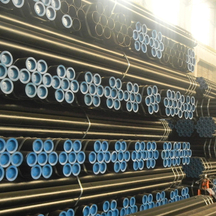
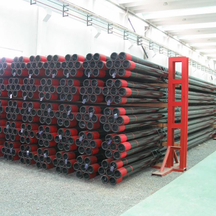
API 5L straight-seam welded steel pipes are widely used in oil and gas pipelines and industrial infrastructure. Buyers should first distinguish between PSL1 and PSL2: PSL1 provides baseline chemical, mechanical, and testing requirements, while PSL2 adds stricter controls on composition, toughness, nondestructive testing, and traceability. PSL level and steel grade are separate parameters, so a higher PSL does not automatically mean a higher strength grade. ERW pipes are typically suitable for small to medium diameters and thin to medium walls, while LSAW pipes are preferred for large-diameter and heavy-wall applications. Correct selection depends on operating pressure, temperature, transported medium, pipeline design, inspection requirements, and applicable codes. Confirming grade, PSL level, dimensions, manufacturing method, and documentation before ordering helps ensure compliance, reduce procurement risk, and support safe, cost-effective pipeline construction.
What Are API 5L PSL1 and PSL2?
API 5L defines technical requirements for line pipe used in oil and gas transportation. Within this specification, PSL1 (Product Specification Level 1) and PSL2 establish different levels of requirements for manufacturing, material properties, testing, and quality documentation.
Key point: PSL1 provides baseline requirements; PSL2 adds more stringent controls. The right choice depends on project specification, operating conditions, steel grade, and API 5L edition.
PSL1 vs. PSL2 Comparison Table
Item | PSL1 | PSL2 |
|---|---|---|
General requirements | Baseline product requirements | Additional or more stringent requirements |
Chemical composition | Basic limits per grade and specification | Tighter controls or additional limits for specified elements |
Mechanical properties | Required tensile properties | Additional or more stringent requirements may apply |
Impact toughness | Depends on requirements and order | Generally includes specified toughness requirements |
Inspection & testing | Required tests under the standard | Additional testing or stricter acceptance may apply |
Documentation & traceability | As specified by standard and purchase order | Generally more extensive requirements |
Cost | May be more economical where permitted | May involve higher inspection, testing, and production costs |
Typical selection basis | Projects permitting baseline requirements | Projects requiring enhanced verification or stricter controls |
General comparison only—verify exact requirements against the applicable API 5L edition, grade, dimensions, manufacturing process, and purchase order.
What Is API 5L PSL1?
PSL1 pipes meet the standard's basic product requirements—used where design and purchasing specs permit PSL1 and the selected grade/dimensions satisfy service conditions.
Covers chemical composition, tensile properties, manufacturing, dimensional tolerances, and specified inspection. Requirements vary by grade, manufacturing process, product form, and edition.
Advantage: Baseline requirements may make PSL1 cost-effective for projects not requiring PSL2 controls. However, PSL1 is not suitable for every pipeline simply because it meets the basic specification—the pipe must still satisfy engineering, safety, and regulatory requirements.
What Is API 5L PSL2?
PSL2 pipes are manufactured under more extensive requirements. Compared with PSL1, PSL2 generally places greater emphasis on:
Chemical composition control
Mechanical properties
Toughness
Testing
Manufacturing traceability
Depending on edition and purchase specification, PSL2 may require tighter chemical limits, additional mechanical testing, impact toughness verification, and more detailed inspection/documentation.
PSL2 is often selected for demanding technical specifications or stricter material verification. It does not automatically indicate a higher strength grade—strength is determined by the selected steel grade, not PSL level alone.
How to Choose Between PSL1 and PSL2
Step | Action |
|---|---|
1. Review pipeline design | Operating pressure/temperature, transported medium, strength/toughness requirements |
2. Check project specification | Does it permit PSL1 or require PSL2? |
3. Confirm pipe dimensions | Diameter, wall thickness, inspection requirements |
4. Verify manufacturing method | ERW or LSAW—these are manufacturing methods, not PSL levels |
5. Confirm documentation | Material verification and traceability requirements |
Both ERW and LSAW can produce PSL1 or PSL2 pipes when the specific product meets applicable requirements.
API 5L ERW vs. LSAW Steel Pipes: Manufacturing and Compliance Differences
API 5L straight seam welded pipes are commonly made using Electric Resistance Welding (ERW) or Longitudinal Submerged Arc Welding (LSAW). Both produce a longitudinal weld seam but differ in raw materials, forming, welding techniques, and typical dimensions.
When selecting ERW or LSAW pipes, consider more than manufacturing—the pipe must also comply with the required PSL level, steel grade, dimensions, testing, and project specifications.
ERW vs. LSAW Comparison Table
Item | ERW Steel Pipes | LSAW Steel Pipes |
|---|---|---|
Raw material | Commonly steel strip or coil | Commonly steel plate |
Welding method | Electric resistance welding | Longitudinal submerged arc welding |
Typical applications | Suitable pipeline sizes and pressure requirements | Often large-diameter and heavy-wall pipelines |
Production | Efficient for supported size ranges | Plate forming and welding suited to different size ranges |
Weld inspection | Required per applicable specification | Required per applicable specification |
PSL1 availability | Possible when compliant with API 5L | Possible when compliant with API 5L |
PSL2 availability | Possible when compliant with API 5L | Possible when compliant with API 5L |
Selection factors | Size, wall thickness, grade, weld quality, project requirements | Size, wall thickness, grade, weld quality, project requirements |
ERW Manufacturing Process
Made from steel strip or coil. The material is gradually formed into a cylinder, and edges are joined using electric resistance welding—heat generated through electrical resistance bonds the edges under pressure.
After welding: seam treatment, sizing, heat treatment (where required), NDE, and dimensional inspection. Specific steps depend on API 5L requirements and the manufacturer's process.
Common use: small-to-medium diameter applications. Production efficiency makes ERW economical for suitable pipeline projects.
LSAW Manufacturing Process
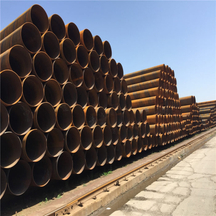
Made from steel plate. The plate is formed into a cylinder, and the longitudinal seam is welded using submerged arc welding. Common forming methods: UOE and JCOE, depending on the production line.
After welding: weld inspection, dimensional checks, hydrostatic testing, and other required examinations. Additional processes (e.g., mechanical expansion) may be used.
Often selected for: large-diameter or heavy-wall applications, including long-distance oil and gas pipelines and major infrastructure.
Compliance Differences
Manufacturing process alone does not determine PSL1 or PSL2 compliance. Both ERW and LSAW can comply with either level when the product and facility meet applicable requirements.
PSL2 Focus Areas | What to Verify |
|---|---|
Chemical composition | Tighter limits for specified elements |
Tensile properties | Additional or more stringent requirements |
Toughness | Specified impact requirements |
NDT | Weld acceptance criteria and testing scope |
Traceability | Documentation and material verification |
ERW requires appropriate control of the resistance-welded seam. LSAW requires appropriate control of the submerged arc weld and inspection.
Do not assume one process is automatically stronger or more reliable. Actual performance depends on material quality, manufacturing control, weld integrity, and verified test results.
Before Purchasing
Confirm:
Required PSL level
Steel grade
Outside diameter and wall thickness
Pipe length
Testing scope
Documentation requirements
Request inspection records and material test certificates.
How to Choose Between PSL1 and PSL2 for API 5L Straight Seam Steel Pipes
Choosing between API 5L PSL1 and PSL2 requires careful consideration of pipeline operating conditions, material requirements, inspection standards, and project costs. Both are used in oil and gas transportation but differ in technical requirements and quality controls. The right choice is the one that satisfies the project specification and delivers the required performance under actual service conditions.
PSL1 vs. PSL2: Selection Comparison
Selection Factor | PSL1 | PSL2 |
|---|---|---|
Project specification | Suitable when explicitly permitted | Required when specified by the project |
Material verification | Baseline requirements | Generally more extensive requirements |
Testing & inspection | As required by the applicable standard | Additional or stricter requirements may apply |
Documentation | According to applicable requirements | Generally enhanced controls and traceability |
Cost | May be lower where extra controls are unnecessary | May involve higher testing and production costs |
1. Evaluate Pipeline Operating Conditions
Identify the operating environment: pressure, temperature, transported medium, corrosion conditions, and mechanical stress.
PSL1 may suffice where the engineering specification permits baseline requirements
PSL2 may be necessary for stricter material controls, toughness verification, or additional testing
PSL2 alone does not guarantee suitability for every demanding environment. Low-temperature service, sour service, offshore conditions, and corrosive media may require additional material, testing, or manufacturing requirements beyond the basic PSL designation.
2. Compare Steel Grade and Mechanical Properties
Steel grade and PSL level serve different purposes:
Grade — specifies required strength and related material properties (e.g., X42, X52, X65)
PSL — defines the applicable product requirements
Select grade based on design pressure, pipe dimensions, stress calculations, and engineering codes.
Confirm both grade and PSL level—do not assume PSL2 automatically provides greater strength. Check tensile properties, yield strength, toughness, and other specified characteristics against the purchase specification.
3. Consider Testing and Traceability Requirements
PSL2 generally includes additional or more stringent requirements for material verification, mechanical testing, and quality control.
Inspection Item | What to Verify |
|---|---|
Chemical composition | Required analysis and limits |
Mechanical testing | Tensile and other specified tests |
Charpy impact testing | Where required |
Weld seam NDE | Specified examination methods |
Hydrostatic testing | Where applicable |
Documentation | Material test certificates and traceability |
Exact requirements depend on API 5L edition, grade, dimensions, manufacturing process, and purchase order. Confirm before production begins.
4. Balance Procurement Costs and Project Requirements
PSL1 — cost-effective when the project permits it, and all operating requirements are met
PSL2 — may involve additional testing, inspection, documentation, or production controls, affecting total cost
Do not select PSL1 solely to reduce purchase price—this creates compliance risks if the project requires PSL2. Evaluate total project costs, including inspection, transportation, installation, and potential costs of nonconforming materials.
5. Match PSL Level to ERW or LSAW Manufacturing
After determining PSL level, select the appropriate manufacturing process:
Process | Suitable For |
|---|---|
ERW | Efficient production within available size range |
LSAW | Large-diameter or heavy-wall applications |
Both ERW and LSAW can meet PSL1 or PSL2 when finished products comply with the specification. Verify manufacturing capabilities, weld inspection procedures, dimensions, and material documentation—not just the welding method.
Quality Inspection and Certification Requirements
Quality inspection and certification are essential when purchasing API 5L PSL1 and PSL2 straight seam welded steel pipes. These procedures verify chemical composition, mechanical properties, dimensional tolerances, weld quality, and other technical requirements—reducing the risk of material nonconformity, installation delays, and operational problems.
PSL1 and PSL2 share many basic requirements, but PSL2 generally includes additional or more stringent controls. Confirm the API 5L edition, steel grade, dimensions, manufacturing process, and project-specific inspection requirements before ordering.
PSL1 vs. PSL2: Inspection Considerations
Inspection Item | PSL1 | PSL2 |
|---|---|---|
Chemical analysis | Required per applicable requirements | Additional or stricter composition controls may apply |
Mechanical testing | Required specified tests | Additional or more stringent requirements may apply |
Impact toughness | As required by specification and order | Generally subject to specified toughness requirements |
Weld inspection | Per governing requirements | Additional or stricter controls may apply |
Documentation | Required records under standard and order | Enhanced requirements may apply |
General comparison only—the applicable edition and purchase order determine actual inspection scope.
1. Chemical Composition and Mechanical Testing
Chemical analysis verifies the steel meets composition limits—carbon, manganese, phosphorus, sulfur, and other specified elements.
Mechanical testing evaluates strength and ductility. Common tests include tensile testing (yield strength, tensile strength). Additional tests may apply per specification and purchase order.
PSL2 generally has tighter chemical limits or additional mechanical requirements. Exact differences depend on the API 5L edition and pipe grade—do not rely on a general comparison table alone when preparing purchasing documents.
2. Weld Seam Inspection for ERW and LSAW Pipes
Weld quality is key for straight seam welded pipes. Inspection must suit the manufacturing process.
Pipe Type | Inspection Focus |
|---|---|
ERW | Resistance-welded seam and overall conformity; examinations per specification |
LSAW | Longitudinal submerged arc weld; relevant discontinuities under specified acceptance criteria |
NDT methods — ultrasonic or radiographic testing (where applicable) evaluate weld integrity without damaging the pipe. Confirm method, coverage, and acceptance criteria against the governing specification and purchase order.
Hydrostatic testing (where required) checks the pipe's ability to withstand specified test pressure for the prescribed period. Passing hydrostatic testing does not replace other required inspections.
3. Dimensional Inspection and Surface Quality
Inspection Item | What to Check |
|---|---|
Dimensions | Outside diameter and wall thickness |
Length | Pipe length and dimensional tolerances |
Form | Straightness and end preparation |
Surface | Condition and visible defects |
Identification | Marking and product ID |
Incorrect dimensions can cause transportation, field welding, and installation problems. Ensure inspection records cover dimensions specified in the purchase order.
4. Material Test Certificates and Traceability
Material test certificates provide documented evidence of inspection and test results. Depending on the order, documentation may include:
Chemical analysis
Mechanical test results
Manufacturing information
Inspection records
Product identification
Typical Applications of PSL1 and PSL2 ERW/LSAW Pipes
API 5L PSL1 and PSL2 ERW/LSAW steel pipes are widely used in oil and gas transportation, pipeline infrastructure, and industrial fluid transmission. The right product depends on operating pressure, temperature, medium, dimensions, steel grade, and project requirements.
PSL1 and PSL2 define different product requirement levels; ERW and LSAW describe manufacturing processes. Understanding these distinctions helps buyers select suitable pipes without unnecessary procurement costs.
Application Overview
Product | Typical Applications | Key Selection Considerations |
|---|---|---|
PSL1 | Gathering pipelines, general pipeline transportation, industrial systems, infrastructure | Engineering design permits PSL1; baseline requirements met |
PSL2 | Long-distance pipelines, high-pressure systems, offshore/demanding projects, critical industrial systems | Enhanced material verification, tighter controls, additional testing |
ERW | Onshore pipelines, gathering systems, industrial fluid transportation | Available diameter, wall thickness, grade, weld quality |
LSAW | Large-diameter transmission pipelines, heavy-wall sections, major infrastructure | Plate quality, forming process, weld inspection, dimensions |
1. Typical Applications of PSL1 Pipes
Suitable where engineering design and purchase specifications permit PSL1 and the product meets all service requirements.
Oil and gas gathering pipelines — collecting production fluids from wells to processing facilities
General pipeline transportation — moving oil, natural gas, and other suitable fluids
Industrial pipeline systems — fluid transportation where design codes accept PSL1
Infrastructure projects — approved pipeline construction and distribution applications
PSL1 can be economical when its requirements satisfy technical and regulatory needs. However, do not assume every low-pressure or noncritical pipeline is automatically suitable for PSL1—follow the approved engineering design and purchasing specification.
2. Typical Applications of PSL2 Pipes
Often selected for projects requiring more extensive material verification, tighter controls, or additional testing.
Long-distance oil and gas pipelines — demanding technical specifications and detailed material verification
High-pressure pipeline systems — where grade, wall thickness, design calculations, and PSL2 requirements satisfy the design
Offshore and demanding projects — where PSL2 is required, potentially with additional toughness, corrosion, or environmental requirements
Critical industrial transportation systems — stricter material controls and documented inspection results
PSL2 does not automatically make a pipe suitable for sour service, offshore exposure, or low-temperature operation. Such applications may require additional standards, testing, or material controls beyond the PSL designation.
3. Typical Applications of ERW and LSAW Pipes
Pipe Type | Typical Applications | Key Selection Considerations |
|---|---|---|
API 5L ERW | Suitable for onshore pipelines, gathering systems, and industrial fluid transportation | Available diameter, wall thickness, grade, weld quality, service conditions |
API 5L LSAW | Large-diameter transmission pipelines, heavy-wall sections, major infrastructure | Plate quality, forming process, weld inspection, dimensions, design requirements |
ERW — commonly used within small-to-medium diameter ranges supported by the manufacturer.
LSAW — often considered for larger diameters and heavier wall thicknesses.
These are general trends, not absolute limits—verify actual manufacturing capabilities.
Both ERW and LSAW can be produced to PSL1 or PSL2 when finished products comply with the specification. The welding method alone does not determine PSL level or guarantee superior performance.
4. How to Select the Right Pipe for Your Project
Step | What to Confirm |
|---|---|
1. Standard & PSL | Required API 5L edition and PSL level |
2. Material | Steel grade and mechanical properties |
3. Dimensions | Outside diameter, wall thickness, pipe length |
4. Testing | Required inspection scope |
5. Service conditions | Operating pressure, temperature, medium, corrosion risks |
6. Project-specific requirements | Additional standards or controls |
Our Recommended API 5L ERW and LSAW Steel Pipe Products and Global Shipping Services
Supplies API 5L ERW and LSAW steel pipes for oil and gas pipelines and industrial fluid transportation. Product selection should be based on the required PSL level (PSL1 or PSL2), steel grade, outside diameter, wall thickness, pipe length, testing scope, and delivery schedule. ERW pipes are suitable for small to medium diameters, while LSAW pipes are preferred for large-diameter and heavy-wall applications. Buyers should confirm grade availability, weld inspection, hydrostatic testing, coating, end preparation, and material test certificates before ordering. For international procurement, we support export packing, loading coordination, shipping documentation, and global delivery based on the confirmed destination and agreed Incoterms. Providing complete technical specifications and inspection requirements early helps ensure compliance, reduce procurement risks, and support efficient project execution.
Conclusion:
Selecting the right API 5L straight seam steel pipe requires balancing PSL level, manufacturing process, and project requirements. PSL1 provides baseline compliance, while PSL2 adds stricter controls on chemical composition, toughness, testing, and traceability. PSL2 does not automatically mean a higher strength grade, so buyers should follow the approved pipeline specification rather than choosing a lower level solely to reduce cost. ERW pipes are typically suitable for small-to-medium diameters, while LSAW pipes are preferred for large-diameter and heavy-wall applications. Neither process is inherently superior; performance depends on grade, dimensions, weld quality, and verified test results. Buyers should confirm chemical analysis, mechanical testing, nondestructive examination, hydrostatic testing, material certificates, packaging, and export documentation.
FAQ:
Q1: What is the main difference between API 5L PSL1 and PSL2?
PSL2 includes additional or more stringent requirements in areas such as chemical composition, mechanical testing, toughness, manufacturing controls, and documentation, depending on the applicable specification.
Q2: Is PSL2 always better than PSL1 for API 5L steel pipes?
Not necessarily. PSL2 provides additional controls, but the appropriate level depends on pipeline design, operating conditions, project specifications, and applicable regulations.
Q3: Can both ERW and LSAW steel pipes meet API 5L PSL2 requirements?
Yes, where the manufacturing process, pipe product, and manufacturer meet the applicable API 5L requirements for the specified grade and PSL.
Q4: Are LSAW pipes stronger than ERW pipes?
Not automatically. Strength depends on the specified steel grade, dimensions, manufacturing quality, and verified mechanical properties rather than the welding method alone.
Q5: Does API 5L PSL2 always require Charpy impact testing?
Charpy impact testing is generally a key PSL2 requirement, but the exact applicability, conditions, and exceptions must be checked against the applicable API 5L edition and purchase specification.
Q6: How do I choose between ERW and LSAW pipes for an oil and gas pipeline?
Compare required diameter, wall thickness, grade, operating conditions, manufacturing capability, inspection requirements, and project specifications before selecting the process.
About Us / News / Product / Project / Quality Assurance / Service / Contact Us