Views: 3 Author: Site Editor Publish Time: 2026-07-09 Origin: Site
Welded steel pipes are essential in construction, oil and gas, and manufacturing. However, their structural integrity heavily relies on precise joint preparation, specifically the weld gap (root opening). This distance between pipe edges is critical: a gap that is too narrow can prevent proper penetration and cause lack of fusion, while an excessively wide gap may lead to burn-through, excessive reinforcement, and increased heat input. Both scenarios compromise the strength and service life of the welded joint.
Controlling the weld gap is essential for achieving complete penetration, stable arc performance, and uniform mechanical properties. Proper gap management significantly reduces welding defects, minimizes costly rework, and improves overall production efficiency. Key factors influencing this control include accurate pipe end preparation, proper alignment during fit-up, optimized welding parameters, and the use of precise measuring tools and fixtures. Adhering to established welding procedures ensures that carbon, stainless, and alloy steel pipes meet strict technical specifications.
Why Is Weld Gap Control Important?
The weld gap (root opening) is a critical factor in joint preparation that directly impacts the strength, quality, and production efficiency of welded steel pipes. Maintaining the correct gap ensures proper molten metal penetration and creates a reliable connection, while deviations can lead to severe defects and increased costs. Below are the key reasons why weld gap control is essential:
Impact of Incorrect Gap | Core Consequences & Mechanisms |
|---|---|
Gap Too Small | Prevents full joint penetration, leading to a lack of fusion or incomplete penetration. These hidden defects significantly weaken the pipe's ability to withstand pressure, vibration, and mechanical loads. |
Gap Too Large | Requires more filler material and higher heat input, increasing time and costs. It can cause burn-through, excessive weld reinforcement, distortion, and residual stress, compromising dimensional accuracy. |
Influencing Factors | The ideal gap depends on pipe diameter, wall thickness, material grade, bevel angle, and the welding process (e.g., TIG, MIG, SMAW). Strict adherence to the Welding Procedure Specification (WPS) is required. |
Preparation & Efficiency | Poor cutting or uneven bevels make consistent gap control difficult. Precision cutting and alignment fixtures improve fit-up, allow welders to work smoothly, and ensure uniform weld appearance across batches. |
Quality Compliance | Proper gap control supports compliance with industry standards and NDT requirements. It improves first-pass welding success, reduces rejection rates, and ensures the pipes meet safety and durability expectations. |
How To Control the Gap of a Welded Steel Pipe Weld?
Maintaining a consistent weld gap is essential for producing strong, reliable welded steel pipes. Proper gap control requires a systematic approach that begins before welding and continues throughout fabrication. Below are the key steps to effectively control the weld gap:
Weld Gap Control Steps | Core Actions & Best Practices |
|---|---|
Accurate Pipe End Preparation | Cut pipe ends squarely and machine to the required bevel angle. Remove all burrs, rust, and contaminants to ensure a clean fit. Verify dimensional tolerances to simplify the fit-up process. |
Proper Fit-Up Techniques | Align pipe ends carefully to prevent misalignment. Use gap gauges or spacers to verify the root opening. Apply evenly spaced tack welds to secure the joint without altering the gap. |
Suitable Fixtures & Clamps | Utilize internal/external clamps and precision fixtures to maintain alignment during welding. Automated positioning systems are recommended for large-scale production to reduce variation and improve consistency. |
Optimized Welding Parameters | Adjust current, voltage, travel speed, and heat input based on material and wall thickness. Strictly follow the approved Welding Procedure Specification (WPS) to prevent thermal distortion and ensure uniform weld beads. |
Pre- and Post-Weld Inspection | Measure the gap and verify alignment before welding to catch deviations early. After welding, conduct visual inspections, dimensional checks, and Non-Destructive Testing (NDT) to confirm weld integrity and compliance. |
By combining skilled personnel, standardized procedures, and precise equipment, manufacturers can minimize defects, lower production costs, and ensure welded steel pipes deliver dependable performance in demanding industrial applications.
Recommended Welded Steel Pipe Products and Global Shipping Solutions
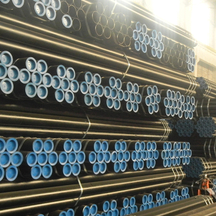
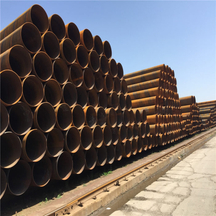
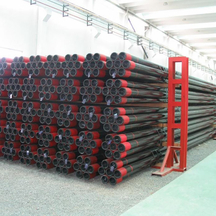
We supply premium welded steel pipes, including ERW, LSAW, SSAW, carbon, stainless, and galvanized pipes, alongside customized solutions for diverse industrial applications. Manufactured with strict quality control and advanced equipment, our pipes offer superior dimensional accuracy, consistent wall thickness, and smooth surfaces to facilitate precise weld gap control and enhance fabrication efficiency. To support international clients, we provide professional global shipping via sea, air, and rail, featuring secure, customized packaging to prevent transit damage. Our experienced export team handles comprehensive documentation and offers real-time tracking for seamless supply chain management. Partner with us for high-quality welded steel pipes, competitive pricing, responsive technical support, and reliable worldwide delivery to ensure the long-term performance and safety of your piping systems
Tips for Maintaining Consistent Weld Quality
Maintaining consistent weld quality is essential for producing safe, durable, and reliable welded steel pipes. High-quality base materials with accurate dimensions and uniform wall thickness provide the foundation for optimal welding conditions. Proper pipe preparation, including thorough cleaning and precise beveling, ensures correct weld gaps and promotes full penetration. Stable welding parameters—such as current, voltage, and travel speed—must be strictly controlled according to approved procedures to prevent defects like incomplete fusion or distortion.
Skilled personnel are equally critical; regular training and assessments empower welders to recognize and resolve issues promptly. Comprehensive quality control requires inspections at every stage, from pre-weld alignment checks to post-weld visual evaluations and Non-Destructive Testing (NDT) for critical applications. Additionally, regular calibration and maintenance of welding equipment and measuring tools guarantee operational accuracy and minimize downtime. By integrating premium materials, meticulous preparation, controlled parameters, expert operators, and rigorous testing, manufacturers can significantly reduce production defects and repair costs. These best practices ensure that welded steel pipes consistently meet industry standards and deliver dependable, long-term performance in demanding industrial applications.
Conclusion
Controlling the weld gap is critical for achieving strong, defect-free joints in welded steel pipes. Incorrect gaps can cause incomplete penetration, burn-through, and costly rework. Maintaining precision requires accurate pipe end preparation, proper alignment using specialized fixtures, optimized welding parameters, and rigorous pre- and post-weld inspections.
FAQ:
FAQ 1: What is the ideal weld gap for welded pipes?
Answer:
Explain that the recommended weld gap depends on factors such as pipe diameter, wall thickness, material grade, and welding process. Always follow the applicable welding procedure specification (WPS) and industry standards.
FAQ 2: What happens if the weld gap is too large?
Answer:
Discuss issues such as excessive weld metal consumption, burn-through, increased distortion, weaker weld strength, and higher repair costs.
FAQ 3: What happens if the weld gap is too small?
Answer:
Explain that an insufficient gap can result in poor penetration, lack of fusion, incomplete joint strength, and reduced weld quality.
FAQ 4: How can weld gap consistency be improved during production?
Answer:
Cover accurate pipe end machining, precision fixtures, alignment clamps, spacing gauges, qualified welders, and routine quality inspections.
About Us / News / Product / Project / Quality Assurance / Service / Contact Us