Views: 0 Author: Site Editor Publish Time: 2026-06-02 Origin: Site
In modern marine engineering, high-pressure dredging and cross-sea pipeline projects demand large-diameter steel pipes capable of withstanding complex ocean conditions. The two primary solutions are LSAW (Longitudinal Submerged Arc Welded) and SSAW (Spiral Submerged Arc Welded) pipes. While both serve large-scale applications, their manufacturing methods create distinct structural differences: LSAW features a single straight weld parallel to the pipe axis, whereas SSAW utilizes a continuous helical weld formed from coiled steel.
These differences directly impact stress distribution and weld integrity—critical factors for safety in demanding marine environments where corrosion and fatigue risks are high. This article provides a detailed comparison of LSAW and SSAW pipes, analyzing how weld orientation influences mechanical behavior, strength, and overall system reliability in high-pressure offshore applications.
What Is LSAW Pipe?
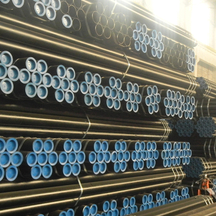
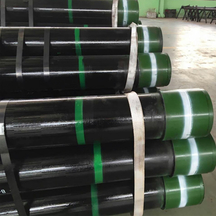
LSAW (Longitudinal Submerged Arc Welded) pipe is a high-performance, large-diameter steel pipe widely used in demanding high-pressure and long-distance pipeline systems. Manufactured from individual steel plates using advanced JCOE or UOE forming processes, LSAW pipes feature a single straight weld seam that runs parallel to the pipe axis. This precise production method ensures exceptional dimensional accuracy, uniform wall thickness, and predictable stress distribution along the pipe's length.
The defining straight-seam structure allows for rigorous quality control through advanced welding and inspection techniques, resulting in superior mechanical performance. LSAW pipes are renowned for their thick walls, large diameters, and outstanding ability to withstand high internal pressures and external environmental loads. Because of these structural advantages, they meet the strict safety standards required for critical infrastructure. Consequently, LSAW pipes are the preferred choice for challenging engineering environments, including offshore oil and gas pipelines, cross-sea transmission projects, high-pressure dredging systems, and strategic energy transportation networks.
What Is SSAW Pipe?
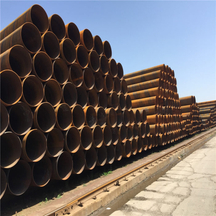
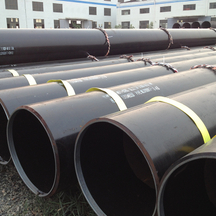
SSAW (Spiral Submerged Arc Welded) pipe is a cost-efficient, large-diameter steel pipe widely used in long-distance transportation and medium-pressure pipeline systems. Manufactured by continuously forming steel coils into a spiral shape, SSAW pipes feature a continuous helical weld seam that wraps around the pipe body. This unique production method allows for exceptional flexibility in controlling diameters and enables the highly efficient manufacturing of very large-diameter pipes with relatively thinner walls.
The defining spiral structure helps distribute stress along a longer path compared to a straight seam, which reduces localized stress concentration and provides uniform load distribution under certain conditions. Due to their continuous production process and efficient use of raw materials, SSAW pipes offer significant economic advantages and allow for fast installation of long pipe lengths. Consequently, they are an ideal practical choice for large-scale infrastructure projects where extremely high pressure is not the primary requirement, including dredging and river engineering, municipal water transmission and drainage systems, foundation piling, and general low-to-medium pressure transport lines.
Key Differences Between LSAW and SSAW Pipes
Comparison Aspect | LSAW Pipe (Longitudinal Submerged Arc Welded) | SSAW Pipe (Spiral Submerged Arc Welded) |
Weld Structure | Single straight longitudinal weld seam running parallel to the pipe axis. | Continuous spiral or helical weld seam wrapping around the pipe body. |
Pressure Resistance & Safety | High reliability in high-pressure, critical service conditions (e.g., offshore oil & gas). | Performs well in medium- and low-pressure systems; less suited for ultra-high-pressure offshore use. |
Dimensional Accuracy | Excellent control of wall thickness, roundness, and dimensional precision due to steel plate forming. | Greater flexibility in diameter range but slightly lower precision compared to LSAW pipes. |
Production Efficiency & Cost | Higher production costs and stricter process control, offering superior performance reliability. | Lower production costs and higher manufacturing efficiency are ideal for large-scale cost control. |
Typical Applications | Offshore pipelines, cross-sea projects, high-pressure oil & gas transmission, critical infrastructure. | Dredging, river engineering, municipal water systems, and large-diameter low/medium-pressure pipelines. |
How to Choose Between LSAW and SSAW for Marine Projects
Choosing between LSAW (Longitudinal Submerged Arc Welded) and SSAW (Spiral Submerged Arc Welded) pipes for marine projects requires a strategic balance of engineering safety, environmental conditions, and project economics. The selection should never be based solely on price but on specific operational demands.
For high-pressure or high-risk systems, such as offshore oil and gas transmission and deep-water cross-sea pipelines, LSAW pipes are the preferred choice. Their superior dimensional accuracy, stable structure, and rigorous non-destructive testing (NDT) standards ensure exceptional weld integrity under harsh offshore conditions and complex external forces.
Conversely, SSAW pipes offer significant advantages in cost-efficiency and manufacturing flexibility. They are ideal for medium- to low-pressure applications like large-scale dredging, sediment transport, and coastal water diversion. Additionally, SSAW pipes can be produced in longer lengths, which reduces field welding work and expedites installation timelines.
Ultimately, the decision hinges on risk tolerance and performance requirements. LSAW provides maximum reliability for critical strategic infrastructure where safety is paramount, while SSAW serves as an economical and practical solution for extensive coastal engineering projects operating under moderate stress levels.
Recommended LSAW & SSAW Pipe Products and Services
Product Category | Key Specifications & Features | Typical Applications |
LSAW Pipes | • API 5L grades (X42 to X80) | Offshore pipelines, deep-water transmission systems, high-pressure energy transport, and critical marine engineering. |
SSAW Pipes | • Large diameter capability for high-volume flow | Dredging and river engineering, municipal water transport, large-scale infrastructure, and coastal water diversion. |
Quality Assurance & Global Logistics Support
Service Category | Core Offerings & Standards |
Quality Assurance & Inspection | • Strict compliance with international standards (API 5L, ISO) |
Global Shipping & Logistics | • Sea freight and bulk vessel transportation for large orders |
Conclusion
Selecting between LSAW and SSAW pipes for high-pressure dredging and cross-sea projects is a critical technical decision that directly impacts pipeline safety, operational stability, and long-term performance. The choice hinges on the weld structure and its ability to handle specific marine conditions.
LSAW pipes, featuring a single straight longitudinal weld, offer superior dimensional precision and reliability. They are the preferred solution for high-pressure offshore oil, gas transmission, and critical infrastructure where strict quality control and safety margins are paramount.
In contrast, SSAW pipes provide a cost-effective and flexible alternative with their spiral weld structure. Ideal for large-diameter dredging, municipal water systems, and medium- to low-pressure applications, they deliver excellent value for large-scale projects prioritizing budget and efficiency.
Ultimately, successful engineering requires matching the pipe type to specific pressure requirements and environmental conditions. By making an informed selection, engineers ensure safer construction, improved efficiency, and extended service life for vital marine pipeline systems.
FAQ:
(1) Does weld location affect pipeline safety in high-pressure systems?
Explanation of stress distribution differences and engineering standards
(2) Which is stronger, LSAW or SSAW pipe?
Comparison based on pressure rating and application context
(3) Can SSAW pipes be used for offshore projects?
Yes, but depends on pressure level, coating, and design requirements
(4) What standards are used for LSAW and SSAW pipes?
API 5L, ASTM, ISO specifications, and project-based requirements
About Us / News / Product / Project / Quality Assurance / Service / Contact Us