Views: 2 Author: Site Editor Publish Time: 2026-07-22 Origin: Site
Oil casing requires precise pretreatment and heat treatment to ensure mechanical strength and durability in harsh drilling environments. Pretreatment removes surface contaminants for consistent processing, while heat treatment (normalizing, quenching, tempering) enhances strength, toughness, and corrosion resistance, meeting API 5CT standards. Advanced manufacturing ensures high performance for deep-well operations.
What Is Oil Casing Pretreatment?
Oil casing pretreatment is the surface preparation process applied before heat treatment or coating. It removes contaminants such as grease, rust, oxide scale, welding residues, and dust—ensuring a clean, uniform surface for consistent processing and long-term performance.
Common Methods: Surface cleaning, degreasing, pickling (acid-based rust removal), shot blasting (scale removal with surface profiling), and phosphating for enhanced corrosion resistance and coating adhesion.
Key Benefits:
Improves heat treatment uniformity
Increases coating bonding strength
Reduces surface defects like cracking or peeling
Extends casing service life and lowers maintenance costs
Quality Control: Manufacturers inspect surface cleanliness, monitor chemical concentrations, and control time and temperature to meet production standards.
As drilling conditions become more demanding, proper pretreatment is essential for reliable oil casing performance in high-pressure, high-temperature, and corrosive environments—making it a critical step in modern manufacturing.
Heat Treatment Technology for Oil Casing
Heat treatment is a critical manufacturing process that modifies steel microstructure to achieve required strength, toughness, hardness, and ductility—ensuring API 5CT compliance and reliable performance in demanding oil and gas wells.
Common Heat Treatment Processes
Process | Description | Effect on Casing |
|---|---|---|
Normalizing | Heated above critical temperature, cooled in air | Refines grain structure, improves uniformity, reduces internal stress |
Quenching | Heated and rapidly cooled in water or oil | Increases hardness and strength significantly |
Tempering | Reheated to lower temperature, then controlled cooling | Restores toughness, reduces brittleness after quenching |
Quenching + Tempering (Q&T) | Quenching followed by tempering | Offers excellent balance of strength and toughness for high-performance casing |
Key Control Parameters
Factor | Why It Matters |
|---|---|
Heating temperature | Determines phase transformation and final properties |
Holding time | Ensures uniform heating throughout the casing |
Cooling rate | Affects hardness, grain size, and internal stresses |
Furnace atmosphere | Prevents surface oxidation and decarburization |
Quality Inspection After Heat Treatment
Test Type | Purpose |
|---|---|
Hardness test | Verifies surface and core hardness levels |
Tensile & yield testing | Confirms strength and ductility |
Impact testing | Evaluates toughness under sudden loading |
Dimensional inspection | Checks for distortion and geometric accuracy |
Microstructure analysis | Validates grain structure and phase composition |
Factors Affecting Oil Casing Quality
Oil casing quality depends on multiple factors—from raw material selection to final inspection. Each stage influences strength, toughness, corrosion resistance, and dimensional accuracy, which are critical for reliable performance in demanding oil and gas wells.
Key Factors Overview
Factor | Description | Impact on Quality |
|---|---|---|
Raw Material Quality | Carbon/alloy steel with uniform composition and low impurities | Determines mechanical properties; ensures API 5CT compliance |
Manufacturing Process | Pipe forming, welding, threading, pretreatment, and heat treatment control | Reduces dimensional deviations; precision threads prevent leakage and maintain well integrity |
Heat Treatment Quality | Precise heating, holding time, and cooling rate control | Produces uniform microstructure; balances strength and toughness; prevents residual stress |
Corrosion Protection | Coatings, anti-rust treatments, dry storage, end caps | Reduces rust and damage during transport and storage; extends service life |
Quality Inspection | Dimensional checks, hardness, tensile/impact tests, NDT, thread inspection | Identifies defects early; verifies compliance with technical specifications |
Application Conditions | Well depth, pressure, temperature, sour service environments | Determines required steel grade and corrosion-resistant properties |
Critical Inspection Methods
Test Type | Purpose |
|---|---|
Dimensional measurement | Verifies geometry and threading accuracy |
Hardness testing | Confirms surface and core hardness |
Tensile & yield testing | Checks strength and ductility |
Impact testing | Evaluates toughness under sudden stress |
Non-destructive testing (NDT) | Detects internal and surface defects |
Visual inspection | Identifies surface flaws and coating quality |
Our Oil Casing Products and Global Shipping
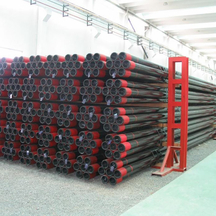
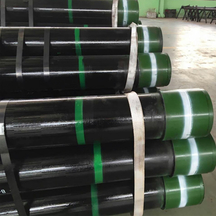
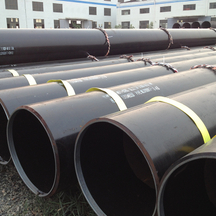
We supply premium API 5CT seamless, ERW, and premium threaded oil casing, offering custom sizes, grades, and special threads. Manufactured with advanced heat treatment and rigorous quality control, our casing ensures superior strength and durability. We provide secure, export-standard packaging and efficient global shipping via sea, air, or rail, with flexible terms (FOB, CIF, etc.). Backed by expert technical support, we deliver reliable, customized oil casing solutions worldwide. Contact us for dependable products and competitive pricing for your drilling projects.
Maintenance and Best Practices
Proper storage, handling, inspection, and maintenance are essential to maximize oil casing service life—even for high-quality products. Following best practices reduces damage, lowers costs, and improves operational safety.
Practice | Key Actions | Benefits |
|---|---|---|
Storage | Clean, dry, ventilated area; elevated supports; thread protectors; periodic rust checks | Prevents moisture, contamination, and thread damage |
Handling & Transport | Use proper lifting gear; avoid dragging; secure loads during transit | Prevents scratches, dents, bending, and coating damage |
Pre-Installation Inspection | Verify dimensions, wall thickness, threads, surface quality; remove contaminants | Identifies defects early; reduces failure risks and downtime |
In-Service Maintenance | Regular corrosion/wear inspections; apply inhibitors or coatings as needed | Extends service life; supports asset management |
Correct Grade Selection | Match steel grade to well depth, pressure, temperature, and corrosive gases | Ensures API 5CT compliance and reliable long-term performance |
Conclusion
Oil casing is essential for maintaining well integrity and safe production in high-pressure, high-temperature, and corrosive environments. Quality depends on every manufacturing stage—from pretreatment and heat treatment to final inspection.
Key Processes:
Pretreatment: Removes contaminants for uniform heat treatment and better coating adhesion
Heat Treatment: Optimizes microstructure to balance strength, toughness, and wear resistance
Together, these technologies ensure API 5CT compliance and reliable performance in demanding wells.
Quality Factors: Raw material selection, precision manufacturing, rigorous inspection, and proper storage and maintenance all contribute to longer service life and lower operating costs.
FAQ:
Q 1: Why is pretreatment necessary before the heat treatment of oil casing pipes?
Answer: Pretreatment removes contaminants such as oil, rust, and oxide scale, ensuring uniform heating, improving heat treatment effectiveness, and enhancing the casing's mechanical properties and corrosion resistance.
Q 2: Which heat treatment process is most commonly used for oil casing?
Answer: Quenching and tempering (Q&T) is widely used because it provides an excellent balance of strength, toughness, and wear resistance, enabling oil casing to withstand demanding drilling conditions.
Q 3: How do I choose the right oil casing grade?
Answer: The appropriate grade depends on factors such as well depth, pressure, temperature, corrosive environments, and applicable API specifications. Selecting the correct grade helps ensure safe operation and long service life.
Q 4: Can customized oil casing sizes and specifications be manufactured?
Answer: Yes. Many manufacturers offer customized dimensions, steel grades, thread types, surface treatments, and packaging to meet specific project requirements.
About Us / News / Product / Project / Quality Assurance / Service / Contact Us