Views: 2 Author: Site Editor Publish Time: 2026-06-25 Origin: Site
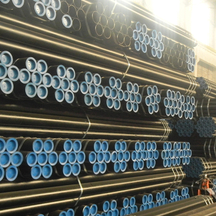
Seamless (SMLS) and welded steel pipes serve distinct industrial roles. SMLS pipes are formed from solid billets without weld seams, offering superior uniform mechanical properties and pressure-bearing capacity. They are mandatory for critical high-pressure, high-temperature, and sour service applications.
Conversely, welded pipes are manufactured by forming and welding steel coils. Modern techniques have significantly improved their reliability, making them suitable for most industrial applications. Welded pipes offer wider size availability and a substantial cost advantage, typically costing 20–40% less than seamless pipes of the same grade.
The choice depends on service conditions, not which is "better." Specifying seamless pipes for low-pressure applications adds unnecessary costs, while using welded pipes in critical high-pressure environments risks failure.
Performance Comparison—Strength, Pressure, and Corrosion
The most critical performance difference between seamless (SMLS) and welded steel pipes lies in pressure integrity and corrosion resistance. Because SMLS pipes lack a longitudinal weld seam, they achieve a weld joint efficiency factor (E) of 1.0, allowing the full allowable stress of the material to be utilized. In contrast, welded pipes typically have an E factor of 0.85, requiring approximately 18% thicker walls to withstand the same design pressure.
Corrosion resistance is another vital differentiator. The heat-affected zone (HAZ) around a weld seam can suffer from altered microstructures and residual stresses, making it a potential initiation point for corrosion and cracking. This makes seamless pipes highly preferred for sour service (H₂S) environments, where welded pipes face risks of sulfide stress cracking. Furthermore, SMLS pipes offer isotropic mechanical properties, ensuring consistent strength and toughness throughout the cross-section. For extreme temperature services—above 400°C or below -46°C—seamless alloy pipes are generally the standard specification to avoid weld-related failures, though modern welded pipes can meet acceptable standards with proper inspection.
Performance Comparison: SMLS vs. Welded Pipes
Factor | SMLS Pipe | Welded Pipe (ERW) |
Weld Joint Factor (E) | 1.0 (Full allowable stress) | 0.85–1.0 (Depends on NDE and code) |
Wall Thickness Requirement | Base thickness | Typically requires ~18% thicker wall |
Corrosion Uniformity | Excellent; no weld seam weak points | Good; HAZ is a potential initiation point |
Sour Service (H₂S) | Preferred; avoids SSC and HIC risks | Restricted due to HAZ cracking concerns |
Temperature Service | Preferred for extreme high/low temps | Acceptable with code limitations |
Mechanical Uniformity | Isotropic; consistent cross-section | Non-uniform properties at the weld |
Applications and Selection Criteria
Selecting the appropriate steel pipe depends on balancing service conditions, safety codes, and budget. Seamless steel (SMLS) pipes are mandatory for critical applications where weld seam integrity cannot be compromised. This includes high-pressure and high-temperature services (such as power generation boilers and refinery lines), lethal service involving toxic or highly corrosive fluids, and sour service (H₂S) environments where heat-affected zones in welded pipes risk cracking. SMLS is also the industry standard for small-bore piping (NPS 2 and below) and high-purity media handling.
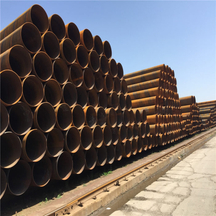
Conversely, welded pipes are the practical and economical choice for moderate-pressure and structural applications. They are standard for oil and gas gathering systems, municipal water transmission, fire protection, and structural supports, as there is no performance difference between ERW and seamless pipes in structural roles. For very large diameters (NPS 24+), welded pipes—including spiral welded (SSAW) variants—are the only feasible option. Modern high-frequency ERW manufacturing has significantly narrowed the historical performance gap, meaning engineers should avoid over-specifying seamless pipes for non-critical applications to prevent unnecessary costs, while ensuring welded pipes are not under-specified for extreme conditions.
Practical Selection Framework
Application Requirement | Recommended Pipe Type |
High pressure / E=1.0 required | SMLS |
Sour service (H₂S environments) | SMLS (Preferred) |
High temperature (> 400°C) | SMLS alloy (e.g., A335) |
Lethal service (per ASME B31.3) | SMLS (Mandatory) |
Small diameter (NPS ≤ 2) | SMLS (Industry standard) |
Utility water, air, and low-pressure steam | ERW welded |
Large diameter (NPS > 24) | Welded (ERW, SAW, or Spiral) |
Structural applications | Welded (ERW) |
Cost-sensitive, moderate service | ERW welded |
Product Recommendations and Shipping Information
Category | Details & Specifications |
Recommended SMLS Pipes | ASTM A106: High-temp service (refineries, power plants). ASTM A335: Chrome-moly alloy for >400°C (boilers, superheaters). API 5L: High-pressure oil/gas transmission. ASTM A333: Low-temp/cryogenic service (<-46°C). |
Recommended Welded Pipes | ASTM A53 ERW: Mechanical, structural, fire protection. API 5L ERW: Moderate-pressure oil/gas gathering. ASTM A500: Construction, piling, scaffolding. ASTM A671/A672 EFW: Large-diameter water transmission. |
Selection Guidance | High-Pressure/Temp: ASTM A106/A335 SMLS. Sour Service (H₂S): API 5L PSL2 SMLS. Low-Temp: ASTM A333 SMLS. Standard Utility: ASTM A53/API 5L ERW. Large Diameter (>NPS 24): EFW or SSAW. |
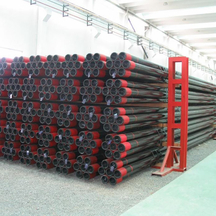
Packaging Standards | NPS ≤ 6: Hexagonal bundles, wooden separators. NPS 8–16: Bundled with PE film waterproof wrapping and end protectors. NPS 20+: Individual or small bundles on heavy-duty supports. Threaded ends: Plastic caps/sleeves. |
Lead Times | Standard Welded (stock): 7–14 days. Standard SMLS (stock): 10–20 days. ASTM A335 Alloy SMLS: 15–25 days. Large-diameter EFW: 20–30 days. Third-party inspection (SGS, BV): +5–7 days. |
Shipment Documentation | EN 10204 / 3.1B Mill Test Certificates, NDT inspection reports (UT, Hydrostatic, Radiographic), Heat treatment records, Certificate of Origin, Packing List. Third-party reports available upon request. |
Conclusion
Choosing between seamless (SMLS) and welded steel pipes depends on specific service conditions, not which is universally "better."
SMLS pipes offer superior pressure integrity, uniform corrosion resistance, and reliability, making them mandatory for high-pressure, high-temperature, sour (H₂S), and lethal service applications. However, they come with higher costs (20–40% more), longer lead times, and limited size ranges (max NPS 24).
Conversely, welded pipes provide significant cost advantages, faster delivery, wider size availability (up to NPS 80+), and tighter dimensional tolerances. Modern high-frequency ERW manufacturing has resolved historical seam integrity issues, making welded pipes highly reliable for water transmission, structural support, and moderate-pressure utility services.
The selection framework is straightforward: specify SMLS for critical, high-pressure, or small-bore (NPS ≤ 2) applications. Opt for welded pipes for large-diameter (NPS 24+), structural, or cost-sensitive projects. Where design codes permit, ERW pipes with full-body ultrasonic testing can achieve a weld joint efficiency factor (E=1.0), matching seamless pressure capacity at a fraction of the cost. Ultimately, aligning material selection with applicable design codes and project requirements ensures both safety and cost-efficiency.
FAQ:
FAQ 1: Can welded pipe replace seamless pipe in high-pressure applications?
Yes, in many cases—but with conditions. Modern ERW welded pipe can achieve a weld joint efficiency factor (E) of 1.0 when 100% nondestructive examination (ultrasonic testing) is performed per API 5L standards. This means the weld is not considered a pressure-reducing factor. However, many engineering codes and client specifications still mandate seamless pipe for high-pressure, high-temperature, and sour service applications.
The key difference is the heat-affected zone (HAZ) around the weld, which may have different mechanical properties and corrosion susceptibility. If the design pressure requires E=1.0 and the service is not critical, ERW with full NDT can substitute for seamless. For lethal service, temperatures above 400°C, or sour (H₂S) environments, seamless remains the required specification.
FAQ 2: Which pipe type has tighter dimensional tolerances—seamless or welded?
Welded pipe generally has tighter dimensional tolerances, particularly for wall thickness uniformity. Welded pipe is formed from steel coil or plate with consistent thickness, so the final pipe wall thickness tolerance is typically ±10% and uniform across the pipe circumference—there is no eccentricity.
Seamless pipe, manufactured by piercing and rolling a solid billet, has a wall thickness tolerance of ±12.5% per ASTM standards and can have eccentricity (wall thickness variation around the circumference) due to the manufacturing process. This eccentricity can affect weldability and fit-up in field welding operations.
For applications requiring precise wall thickness (such as orbital welding, subsequent welding processes, or tight connection fit-up), welded pipe's more consistent wall thickness is often advantageous.
About Us / News / Product / Project / Quality Assurance / Service / Contact Us