Views: 4 Author: Site Editor Publish Time: 2026-05-25 Origin: Site
Hollow section structural pipes are essential in modern construction and infrastructure due to their high strength, efficient load distribution, and lightweight design. Available in square (SHS), rectangular (RHS), and circular (CHS) shapes, they offer superior torsional resistance compared to traditional open steel profiles, making them ideal for buildings, bridges, and heavy industrial projects.
In global engineering, dimensional accuracy is critical. Precise manufacturing tolerances ensure components fit correctly during fabrication, preventing alignment issues and maintaining structural stability. Two of the most recognized international standards governing these pipes are ASTM A500 and EN 10219. ASTM A500 is widely used in North America for cold-formed welded and seamless carbon steel tubing, while EN 10219 is the primary European standard for cold-formed welded structural hollow sections.
Tolerances in Structural Hollow Sections
Tolerances in structural hollow sections refer to the allowable dimensional deviations during manufacturing, which are critical for ensuring product performance. These controlled limits cover key parameters including outside dimensions (width, height, diameter), wall thickness, straightness, and twist. Even minor variations can significantly impact fit-up accuracy, welding quality, and overall structural integrity.
In practical construction, tight tolerances are essential for smooth assembly, especially in prefabricated structures where off-site components must align precisely on-site. Loose tolerances often lead to installation difficulties, rework, and increased project costs. Furthermore, accurate dimensional control ensures optimal load distribution; uneven geometry can create stress concentrations that compromise the safety of load-bearing members like columns and trusses in high-rise buildings or bridges.
Manufacturing processes directly influence tolerance levels, with cold-formed sections generally offering better consistency than hot-formed products. International standards such as ASTM A500 and EN 10219 define strict requirements for this dimensional accuracy. Manufacturers utilize rigorous inspection methods, including laser measurement and ultrasonic testing, to verify compliance. Ultimately, precise tolerances are not just manufacturing details—they are vital for improving fabrication efficiency and guaranteeing the long-term safety of modern steel structures.
ASTM A500 vs. EN 10219: Key Technical Differences
Feature | ASTM A500 (North American Standard) | EN 10219 (European & International Standard) |
Dimensional Tolerance | Allows relatively broader tolerances in wall thickness and external dimensions; suitable for general structures. | Applies tighter control over dimensions, especially in wall thickness consistency and corner geometry for better fit-up accuracy. |
Mechanical Properties | Grades B and C provide good yield/tensile strength for standard structural use. | Offers a broader range of grades (S235, S275, S355) with detailed classification based on impact toughness and weldability. |
Testing Requirements | Focuses on structural strength with basic inspection requirements for cold-formed welded or seamless tubing. | Includes stricter testing procedures, such as detailed weld seam inspections, dimensional accuracy checks, and material traceability. |
Regional Application | Most commonly used in the United States, Canada, and parts of the Americas. | Widely adopted across Europe, the Middle East, and international infrastructure projects. |
Practical Use Case | Preferred for cost-effective, standard structural applications where minor variations are acceptable. | Chosen for precision engineering and complex systems requiring higher dimensional precision and strict quality control. |
ASTM A500 vs. EN 10219: Quick Project Selection Guide
Decision Factor | Choose ASTM A500 (North American Focus) | Choose EN 10219 (European & Global Focus) |
Project Location | U.S., Canada, and North American code regions. | Europe, the Middle East, and international projects. |
Dimensional Precision | Broader tolerances allow minor on-site adjustments. | Tighter tolerances ensure superior fit-up precision. |
Fabrication Method | Standard fabrication and large-volume production. | Automated welding, modular, and complex designs. |
Budget & Cost | Cost-effective for conventional, large-scale structures. | Higher precision reduces rework in complex engineering. |
Structural Application | Warehouses, frames, platforms (Cost-focused). | Bridges, architectural steelwork (Precision-focused). |
ASTM A500 is ideal for cost-efficient, conventional construction in North America, while EN 10219 is the best choice for global projects demanding high dimensional accuracy and strict quality control.
Our Recommended Hollow Section Pipe Products and Global Shipping Services
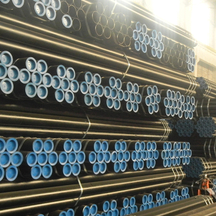
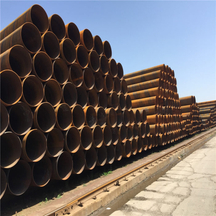
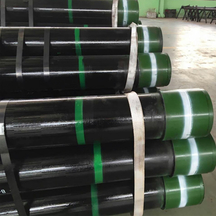
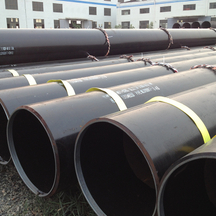
For structural projects, selecting hollow section pipes with precise dimensional tolerances is essential. We supply a full range of high-quality ASTM A500 Hollow Structural Sections and EN 10219 Hollow Section Pipes, including square, rectangular, and circular profiles. Manufactured using controlled cold-forming processes, our products are available in standard grades (A500 Gr B/C, S235/S275/S355) and support customized dimensions to meet specific engineering needs.
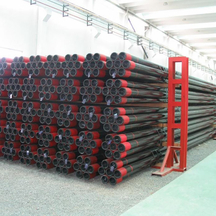
Quality control is strictly enforced through rigorous dimensional measurement and mechanical property testing. To support global infrastructure, we offer comprehensive international shipping services, including sea freight and bulk cargo solutions. Our professional export packaging ensures safe long-distance transportation, while complete documentation (mill test certificates, customs support) streamlines your procurement process for reliable project delivery.
Installation and Fabrication Considerations for Hollow Sections
Proper installation and fabrication of hollow section structural pipes are essential to ensure structural accuracy, safety, and long-term performance. Even with high-quality materials like ASTM A500 and EN 10219, poor fabrication practices can lead to misalignment, weak joints, and increased construction costs.
Cutting accuracy is a primary consideration. Hollow sections must be cut to precise lengths to prevent dimensional deviations from accumulating in large structural frames. Welding is equally critical; heat input must be carefully controlled to avoid warping or distortion, especially in thinner wall sections. Proper pre-weld preparation, including cleaning and edge treatment, ensures stronger and more reliable weld joints.
During assembly, strict tolerance control is necessary to maintain overall geometric accuracy. Structural frames should undergo regular alignment checks and use temporary supports before final welding or bolting. Additionally, proper storage and handling on level surfaces help prevent bending, twisting, or surface corrosion that could compromise welding quality. Routine inspections, including dimensional checks and non-destructive testing, allow for the early detection of errors. By combining accurate cutting, controlled welding, and strict tolerance management, engineers can maximize the efficiency and stability of hollow section structures.
Conclusion
Tolerances play a critical role in the performance and safety of hollow section structural pipes. While both ASTM A500 and EN 10219 meet structural demands, their priorities differ significantly. ASTM A500 offers practical strength and cost efficiency for general North American construction with slightly broader tolerances. In contrast, EN 10219 emphasizes tighter dimensional control and rigorous testing, making it ideal for high-precision prefabricated and modular systems.
The decision between these standards should be based on project suitability rather than quality alone. Engineers must weigh regional building codes, fabrication methods, and structural complexity. Ultimately, understanding these tolerance differences ensures optimal fabrication efficiency, installation accuracy, and long-term structural durability.
FAQ:
(1) What is the main difference between ASTM A500 and EN 10219?
Comparison of tolerance requirements and regional applications
Differences in mechanical property standards
(2) Which standard has stricter dimensional tolerances?
Explanation of EN 10219 precision requirements
Discussion of project types requiring tighter tolerances
(3) Can ASTM A500 and EN 10219 pipes be used interchangeably?
Engineering considerations and code compliance
Importance of project specifications
(4) Which hollow section standard is better for structural construction?
Application-based comparison for buildings, bridges, and infrastructure
About Us / News / Product / Project / Quality Assurance / Service / Contact Us