Project name: Wear-Resistant Lined Pipes for Mining Slurry and Tailings Applications
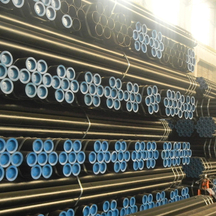
Product : Steel-lined polyurethane wear pipes, high-chromium bimetallic composite pipes, alumina ceramic-lined composite pipes, and matching elbows/tees
Specifications & Standards: Diameter range DN50–DN1200; outer base pipe in Q235B / 20# seamless steel or Q355; inner lining options include polyurethane (Shore hardness 85–95A), high-chromium alloy (Cr 23%–30%, hardness HRC58–65), and alumina ceramic (Al₂O₃ ≥95%, microhardness HV1000–1800); pressure rating 1.6–6.0 MPa; service temperature from -50°C to over 500°C depending on lining material; flanges conform to HG/T 20592 or customized drilling; non-standard fittings and long-length pipes available per customer drawings.
Country: Mining Regions in Central Asia and Africa
Mining slurry and tailings pipelines are continuously exposed to highly abrasive particles. Standard steel pipes and elbows wear rapidly under such conditions. In many tailings lines, elbows may require replacement every two months, and leakage caused by wear can account for around 12% of annual operating downtime due to material loss and maintenance. To address this, the project adopted a composite design principle: the inner lining resists wear, while the outer steel pipe provides structural strength.
The pipeline system was configured by wear severity zone:
Steel-lined polyurethane wear pipe: The polyurethane lining combines wear resistance with elastic recovery. Under high-velocity slurry impact, the lining absorbs impact energy through deformation, reducing wall wear. Pipe lengths can be customized to logistics and installation conditions; longer sections reduce the number of flanged joints, lowering leakage risk and site installation cost.
High-chromium bimetallic composite pipe: The inner layer uses KmTBCr26/Cr28 high-chromium cast iron with hardness HRC58–65 and M7C3 carbides measuring HV1600–2200. The outer layer of 20#/Q235 carbon steel provides toughness and structural support, forming a metallurgically bonded “hard inside, tough outside” structure. Wear life can reach 10–15 times that of ordinary steel pipe, making it suitable for coarse tailings and high-impact conditions.
Alumina ceramic-lined composite pipe: The lining contains ≥95% Al₂O₃ with HRA ≥90. Its wear resistance is more than ten times that of hardened medium-carbon steel, making it suitable for fine-particle slurry transport and high-wear elbow sections.
All fittings, including elbows, tees, and reducers, use the same lining system as straight pipes. Elbow geometry is optimized according to flow-path transition principles to reduce concentrated particle impact.
Production follows an ISO quality management system. Key control points include bond strength between the lining and steel substrate (ceramic bond strength ≥15 MPa), hardness and metallographic sampling, hydrostatic testing, and dimensional re-inspection. Finished lining surface roughness is controlled at Ra ≤1.0 μm to reduce slurry transport resistance. All pipes and fittings are packed with anti-rust, moisture-proof, and impact-resistant protection for export. Material certificates, third-party inspection reports, and complete export documents are provided. Before delivery, drawings are checked item by item with the customer to ensure flange alignment and site installation rhythm.
Wear-resistant mining pipelines are moving from “single-material hardness comparison” toward systematic solutions: material selection by wear class and pipe zoning by wear curve. We will continue to build application databases for polyurethane, high-chromium alloy, and ceramic linings in tailings transport, underground backfill, and concentrate pipelines, providing overseas mining projects with full-cycle wear-pipe solutions from selection calculation to installation guidance.