Views: 0 Author: Site Editor Publish Time: 2026-09-07 Origin: Site
ASTM A672/A672M is a critical specification for electric-fusion-welded (EFW) steel pipes designed for high-pressure service at moderate temperatures. Manufactured from pressure-vessel-quality plate, it is ideal for large-diameter applications (16 inches and larger) with wall thicknesses up to 3 inches.
This standard uses a system of grades and classes to define specific material, heat treatment, and inspection requirements, ensuring structural integrity and weld quality. While widely used in oil and gas facilities, tank farms, and processing infrastructure, it is distinct from line pipe standards like API 5L.
Key Features and Requirements of ASTM A672/A672M
ASTM A672/A672M establishes specific requirements for the manufacture, material quality, testing, and inspection of electric-fusion-welded steel pipe. Understanding these requirements is important when selecting A672/A672M pipe for oil pipelines and other high-pressure applications.
Key Features
Feature | Description | Key Point |
|---|---|---|
Manufacturing | Electric-fusion-welded (EFW) from pressure-vessel-quality steel plate | Controlled material base—large-diameter and heavy-wall pipe capability |
Size Range | Nominally 16 in. (400 mm) and larger—wall thickness up to 3 in. (75 mm) | Suitable for large flow capacity and high-pressure resistance |
Grade System | Grade = steel plate type and strength level | Defined chemical and mechanical requirements per grade |
Class System | Class = heat treatment, weld examination, pressure testing | Normalized, normalized-and-tempered, quenched-and-tempered—radiographic and hydrostatic requirements vary |
Requirements Overview
Requirement | Details | Why It Matters |
|---|---|---|
Material | Pressure-vessel-quality plate—carbon, manganese, phosphorus, sulfur, alloying elements per grade | Controlled material base for high-pressure service |
Dimensions | 16 in. (400 mm) and larger—wall thickness up to 3 in. (75 mm) | Large-diameter and heavy-wall capability |
Testing | Chemical analysis, tensile testing, transverse guided weld-bend testing | Verifies mechanical properties and weld integrity |
Radiographic Examination | Required per selected class | Evaluates weld quality |
Pressure Testing | Hydrostatic testing per specified requirements | Verifies pressure resistance |
Dimensional & Visual Inspection | OD, wall thickness, length, surface condition, workmanship | Confirms dimensions and finish |
Grade & Class – Ordering Requirement
Requirement | Action |
|---|---|
Complete designation | Specify both grade and class—not just "ASTM A672 pipe" |
Heat treatment | Per class—normalized, normalized-and-tempered, quenched-and-tempered |
Weld examination | Radiographic per class |
Pressure testing | Hydrostatic per specified requirements |
Why These Requirements Matter for Oil Pipelines
Factor | Why It Matters |
|---|---|
Consistent material properties | Reliable performance |
Reliable weld quality | Integrity of welded pipe |
Design pressure and temperature | Must match service conditions |
Corrosion and fluid characteristics | Material compatibility |
Installation conditions | Site-specific requirements |
Applicable codes and project specs | Compliance |
Key Takeaway
ASTM A672/A672M provides a framework for controlling material properties and weld quality in large-diameter welded pipe. Compliance alone does not determine suitability—engineers must also consider:
Design pressure
Operating temperature
Corrosion
Fluid characteristics
Installation conditions
Applicable codes
Establish the correct grade, class, dimensions, and testing requirements before procurement.
Applications of ASTM A672/A672M in Oil Pipelines
ASTM A672/A672M steel pipe is designed for high-pressure service at moderate temperatures and is primarily manufactured as large-diameter electric-fusion-welded (EFW) pipe. These characteristics make it suitable for certain oil transportation and processing applications where large pipe dimensions, controlled material properties, and reliable weld quality are required.
Applications Overview
Application | Typical Use | Key Considerations |
|---|---|---|
High-Pressure Oil Transportation | Moving crude oil or refined products under high pressure—large-diameter for high flow capacity | Select grade, class, wall thickness, diameter per design pressure, temperature, fluid properties, project/design code requirements |
Crude Oil Gathering & Transportation | Collecting crude oil from production areas—transport to processing, storage, or transmission | Large-diameter capability for high flow rates—evaluate corrosion, external loads, installation conditions, oil composition |
Pumping Stations & Pipeline Facilities | High-pressure piping in pumping stations, storage terminals, processing plants | Suitable for connections between pumps, storage systems, process equipment, pipeline networks—where specification meets engineering requirements |
Large-Diameter Pipeline Applications | 16 in. (400 mm) and larger—wall thickness up to 3 in. (75 mm) | Large flow capacity or substantial wall thickness—EFW from steel plate with controlled weld quality and inspection |
Oil Terminals & Storage Facilities | Transfer piping between pipelines, storage tanks, pumps, loading facilities | Consider pressure, temperature, product characteristics, corrosion protection, facility standards |
Important Limitations
Consideration | Action |
|---|---|
ASTM A672/A672M is not a universal standard for all oil pipelines | Confirm requirements for fracture toughness, sour service, corrosion resistance, welding, pressure testing, pipeline design |
Dedicated line-pipe standards may apply | Use A672/A672M only when explicitly permitted by project specification or applicable code |
Selection Factors
Factor | Why It Matters |
|---|---|
Grade and class | Material properties and manufacturing conditions |
Wall thickness and diameter | Pressure capacity and flow |
Design pressure and temperature | Service conditions |
Fluid properties | Corrosion and compatibility |
Installation conditions | Site requirements |
Applicable codes and project specs | Compliance |
Key Takeaway
ASTM A672/A672M can provide a suitable option for selected high-pressure oil pipeline and facility applications, particularly where large-diameter EFW pipe is required.
Proper grade, class, dimensions, testing, and inspection must always be determined according to the project's actual service conditions.
How to Select the Right ASTM A672/A672M Pipe for an Oil Pipeline Project
Selecting the right ASTM A672/A672M steel pipe requires more than choosing a suitable diameter and wall thickness. Oil pipeline conditions can vary significantly, so the pipe grade, class, dimensions, testing, and inspection requirements should all match the project's design and operating conditions.
Selection Factors
Factor | Key Considerations | Why It Matters |
|---|---|---|
Operating Conditions | Design pressure, temperature, pipe diameter, wall thickness, fluid characteristics | Determines required strength and wall thickness—A672 is for high-pressure at moderate temperatures |
Grade Selection | Yield strength, tensile strength, ductility, toughness—per grade | Must match pipeline design—not just nominal strength; may require impact testing or additional material properties |
Class Selection | Heat treatment, radiographic examination, pressure testing—per class | Complete grade + class must be clearly stated in purchase specification |
Pipe Dimensions | 16 in. (400 mm) and larger—wall thickness up to 3 in. (75 mm) | Flow requirements + pressure design—also consider flow efficiency, weight, installation, connections, tolerances |
Testing & Inspection | Chemical analysis, tensile, weld-bend, radiographic, pressure test, dimensional inspection, MTC | Verify material and manufacturing compliance—third-party inspection for critical projects |
Project Codes & Additional Requirements | Corrosion allowance, sour service, fracture toughness, welding, coating, environmental loads | ASTM A672 compliance ≠ automatic suitability—must also meet design codes, owner specs, additional requirements |
Selection Checklist
Item | Check |
|---|---|
Design pressure | Required strength |
Operating temperature | A672 moderate-temp range |
Fluid characteristics | Corrosion, sour service |
Grade | Yield, tensile, toughness |
Class | Heat treatment, testing, inspection |
Dimensions | Diameter, wall thickness, tolerances |
Testing | Chemical, tensile, weld-bend, radiographic, pressure |
Documentation | MTC, inspection reports |
Project codes | Design code, owner specifications |
Key Takeaway
Selecting ASTM A672/A672M pipe should be a systematic process:
Service conditions – pressure, temperature, fluid
Grade and class – material properties and manufacturing
Dimensions – diameter and wall thickness
Testing and documentation – quality verification
Project-specific requirements – codes, corrosion, sour service
Proper selection supports safe, reliable oil pipeline operation.
Our ASTM A672/A672M Steel Pipe Recommendations and Shipping Services
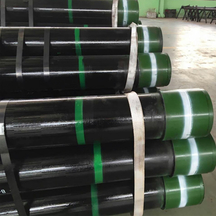
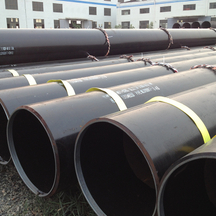
We supply premium ASTM A672/A672M electric-fusion-welded (EFW) steel pipes, engineered for large-diameter, high-pressure applications. We customize our pipes to your exact grade, class, and dimensional requirements.
Quality and compliance are paramount. We conduct rigorous inspections—including hydrostatic testing, weld verification, and dimensional checks—and provide comprehensive Mill Test Certificates (MTCs) to guarantee full adherence to ASTM A672 standards.
Beyond manufacturing, we provide end-to-end global shipping solutions. We understand that timely delivery is critical to maintaining project schedules. Our logistics team manages secure packaging and flexible transportation options (container and break-bulk freight) to prevent transit damage and ensure your pipes arrive safely and on time.
To receive a customized product and shipping quotation, please contact us today with your required grade, class, dimensions, testing requirements, quantity, and delivery destination. Our expert team will recommend the optimal high-pressure steel pipe configuration tailored to your exact needs.
ASTM A672/A672M vs. Other Steel Pipe Standards
Different steel pipe standards are designed for different service conditions and applications. When selecting pipe for oil pipelines, it is important to understand the differences between ASTM A672/A672M and other commonly specified standards. The correct choice should be based on the pipeline design, operating conditions, and project requirements.
Standard Comparison
Standard | Typical Focus | Key Consideration |
|---|---|---|
ASTM A672/A672M | EFW steel pipe—high-pressure, moderate-temperature service | Large-diameter pressure pipe |
ASTM A671/A671M | EFW steel pipe—high-pressure, lower-temperature service | Low-temperature conditions |
ASTM A691/A691M | EFW carbon/alloy steel pipe—high-pressure, high-temperature service | Elevated-temperature applications |
API 5L | Line pipe for pipeline transportation | Oil and gas transmission systems |
Detailed Comparison
Aspect | A672/A672M | A671/A671M | A691/A691M | API 5L |
|---|---|---|---|---|
Manufacturing | EFW—pressure-vessel-quality plate | EFW—pressure-vessel-quality plate | EFW—carbon/alloy steel plate | Seamless and welded—line pipe |
Temperature Focus | Moderate-temperature | Lower-temperature | High-temperature | Broad range |
Pressure Service | High-pressure | High-pressure | High-pressure | Pipeline service |
Primary Application | Large-diameter pressure pipe | Low-temperature pressure pipe | High-temperature pressure pipe | Pipeline transportation |
Size Range | 16 in. (400 mm) and larger | Varies | Varies | Wide range |
How to Choose the Right Standard
Condition | Recommended Standard |
|---|---|
High-pressure, moderate-temperature, large-diameter | ASTM A672/A672M |
High-pressure, lower-temperature | ASTM A671/A671M |
High-pressure, high-temperature | ASTM A691/A691M |
Oil/gas pipeline transportation | API 5L |
Key Takeaway
No single steel pipe standard is suitable for every oil pipeline project. Selection should consider:
Pressure – service conditions
Temperature – operating range
Pipe size – diameter and wall thickness
Material requirements – grade and properties
Corrosion conditions – environmental exposure
Welding requirements – fabrication
Testing – quality verification
Applicable design codes – compliance
Customer specifications – project requirements
Understanding these differences prevents selecting pipe based solely on material grade or strength—the complete service environment and applicable project standard should guide the final decision.
Conclusion
ASTM A672/A672M is a premier specification for electric-fusion-welded (EFW) steel pipes, engineered for high-pressure, moderate-temperature applications. Ideal for large-diameter systems (16 inches and larger), it is widely used in oil transportation and industrial piping.
Proper material selection requires careful evaluation of operating pressure, temperature, and specific grade/class requirements. It is crucial to note that A672 is distinct from other standards like API 5L (line pipe) or ASTM A691 (high-temperature service).
FAQ:
FAQ 1: What is ASTM A672/A672M steel pipe?
Answer: ASTM A672/A672M is a specification for electric-fusion-welded steel pipe made from pressure-vessel-quality plate and intended for high-pressure service at moderate temperatures. It provides multiple grades and classes covering different material and manufacturing requirements.
FAQ 2: Can ASTM A672/A672M pipe be used for oil pipelines?
Answer: It can be considered for suitable oil pipelines and related high-pressure applications when the pipe’s grade, class, dimensions, temperature, pressure, and other requirements meet the project design. It should not automatically be assumed to replace a line-pipe specification such as API 5L.
FAQ 3: What is the difference between ASTM A672 Grade and Class?
Answer: In A672/A672M, the Grade identifies the type of plate used, while the Class identifies manufacturing and inspection characteristics such as heat treatment, radiographic examination, and pressure testing.
FAQ 4: What sizes are covered by ASTM A672/A672M?
Answer: The specification nominally covers pipe 16 in. (400 mm) and larger, with wall thicknesses up to 3 in. (75 mm), although other dimensions may be supplied when they comply with the applicable requirements.
About Us / News / Product / Project / Quality Assurance / Service / Contact Us