Views: 2 Author: Site Editor Publish Time: 2026-09-22 Origin: Site
API 5L steel pipe is the global standard for oil, gas, and fluid transmission pipelines, developed by the American Petroleum Institute. It defines two Product Specification Levels: PSL1 for basic requirements and PSL2 with stricter controls on chemical composition, mechanical properties, impact toughness, and traceability. Common grades include Grade B, X42, X52, X60, X65, X70, and X80, where the number indicates minimum yield strength. Pipes can be seamless, ERW, LSAW, or SSAW, selected based on diameter, wall thickness, and pressure requirements. Proper selection requires reviewing PSL level, grade, manufacturing process, dimensions, testing, and service conditions together. Understanding full API 5L specifications ensures safe fabrication, installation, and long-term pipeline performance.
API 5L PSL1 vs. PSL2: What Is the Difference?
API 5L divides line pipe requirements into Product Specification Level 1 (PSL1) and Product Specification Level 2 (PSL2). Both cover many of the same pipe products, but PSL2 has additional and more stringent requirements for chemical composition, mechanical properties, testing, and production control. Understanding the difference is important when selecting pipe for oil and gas transmission projects.
Quick Comparison
Specification | PSL1 | PSL2 |
|---|---|---|
Quality requirements | Basic API 5L requirements | More stringent requirements |
Chemical composition | Controlled | Tighter limits for applicable elements |
Mechanical properties | Required | More closely controlled |
Impact testing | Generally less extensive | Additional requirements may apply |
Hardness control | More limited | Additional requirements |
Nondestructive testing | According to applicable requirements | More extensive requirements |
Traceability | Standard requirements | Enhanced production and documentation control |
API 5L PSL1
PSL1 provides the basic technical requirements for API 5L line pipe. It covers common grades such as Grade B, X42, X52, X60, X65, X70, and other applicable grades.
Manufacturers control chemical composition and mechanical properties within specified limits
Required inspections and testing verify compliance
Generally more flexible in certain manufacturing and testing requirements
PSL1 suits pipeline applications where the project specification does not require PSL2's additional controls. Selection should always follow the applicable pipeline design and purchasing specification.
API 5L PSL2
PSL2 adds requirements for tighter control over pipe quality and performance. It places stricter limits on certain chemical elements and requires more detailed control of mechanical properties.
PSL2 requirements can include:
Tensile testing
Impact testing at specified temperatures
Hardness control
Weld quality requirements
Additional nondestructive examination
Greater emphasis on production control and traceability
These requirements make PSL2 suitable for demanding pipeline applications where consistent mechanical properties and controlled manufacturing are important.
Important Note
PSL2 is not simply a higher steel grade than PSL1.
Term | Meaning |
|---|---|
PSL | Level of product requirements |
X52, X70, etc. | Steel grade and specified strength level |
For example, an API 5L X52 pipe may be manufactured to either PSL1 or PSL2 requirements, provided the applicable specification permits it.
How to Choose
When choosing between PSL1 and PSL2, review:
Pipeline design
Service conditions
Project standards
Testing requirements
End-user specifications
Confirm the correct PSL before ordering because it affects manufacturing, inspection, documentation, and overall procurement requirements.
API 5L Steel Grades and Mechanical Properties
API 5L steel grades define the strength and mechanical performance of line pipe used in oil and gas transportation. Common grades include Grade B, X42, X52, X60, X65, X70, and X80. The right grade depends on pipeline design, operating pressure, pipe dimensions, service conditions, and project specifications.
Common API 5L Grades
Grade | Typical Use |
|---|---|
Grade B | Conventional pipelines with moderate strength needs |
X42, X52 | Greater structural and pressure capacity |
X60, X65 | More demanding design conditions |
X70, X80 | High-strength applications |
Higher X-grade numbers generally indicate higher minimum yield strength, allowing engineers to consider higher-strength materials for demanding pipeline designs.
Minimum Yield Strength by Grade
API 5L Grade | Approx. Minimum Yield Strength |
|---|---|
Grade B | 35 ksi (241 MPa) |
X42 | 42 ksi (290 MPa) |
X52 | 52 ksi (358 MPa) |
X60 | 60 ksi (414 MPa) |
X65 | 65 ksi (448 MPa) |
X70 | 70 ksi (483 MPa) |
X80 | 80 ksi (552 MPa) |
These values are typical minimum specified yield-strength designations. Check the complete API 5L requirements for the specific product and PSL.
Key Mechanical Properties
Property | Meaning |
|---|---|
Yield strength | Stress at which permanent deformation begins |
Tensile strength | Maximum stress during a tensile test |
Elongation | Indicates ductility |
Grade Selection Notes
Higher strength does not automatically mean a grade suits every pipeline. Also evaluate:
Weldability
Toughness
Operating temperature
Corrosion environment
Pipe dimensions
Manufacturing process
PSL1 and PSL2 requirements can further affect applicable chemical, mechanical, and testing requirements.
API 5L Manufacturing Processes and Pipe Types
API 5L steel pipes can be produced through different processes depending on diameter, wall thickness, steel grade, and application. The main categories are seamless and welded pipe. Welded pipe can be made by high-frequency electric welding or submerged arc welding. The manufacturing process affects dimensional accuracy, weld quality, production capacity, and application suitability.
Pipe Types at a Glance
Pipe Type | Process | Typical Use |
|---|---|---|
Seamless | Billet pierced and rolled | Small to medium diameters |
ERW/HFW | Strip formed and electric welded | Specific diameter and wall ranges |
LSAW | Plate formed and longitudinally arc welded | Large-diameter, heavy-wall lines |
SSAW | Strip helically formed and arc welded | Large-diameter pipes |
Seamless API 5L Steel Pipe
Seamless pipe has no longitudinal weld seam. A solid steel billet is heated, pierced, rolled, and sized.
Uniform construction
Common for smaller and medium diameters
Suits applications where seamless is specified
Seamless is not automatically right for every pipeline. Diameter, wall thickness, grade, pressure, and project specs should decide.
ERW/HFW API 5L Pipe
Electric Resistance Welded (ERW) or high-frequency welded pipe is made by forming steel strip into a cylinder and welding the longitudinal edges.
Modern high-frequency welding gives controlled, consistent welds
Efficient for certain diameter and wall-thickness ranges
Requires monitoring of welding parameters and weld integrity
LSAW API 5L Pipe
Longitudinal Submerged Arc Welded (LSAW) pipe is made by forming steel plate into a cylinder and welding the longitudinal seam. UOE or JCOE forming methods may be used.
LSAW is widely used for large-diameter and heavy-wall pipelines. It gives good dimensional control and can produce large sizes not practical by other methods.
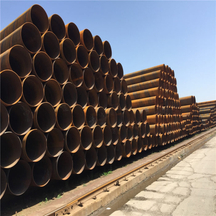
SSAW API 5L Pipe
Spiral Submerged Arc Welded (SSAW) pipe is made by helically forming a steel strip and welding the spiral seam. It is efficient for large-diameter pipes.
Applicability depends on API 5L product requirements and project specifications. Confirm that the grade, PSL, dimensions, testing, and manufacturing route are permitted.
Choosing the Right Process
Selection involves more than deciding between seamless and welded. Consider:
Diameter and wall thickness
Steel grade and PSL level
Operating pressure and temperature
Service environment
Welding requirements
Inspection standards
Application | Likely Pipe Type |
|---|---|
Large-diameter transmission | LSAW or other welded pipe |
Smaller-diameter applications | Seamless or ERW/HFW |
The final choice should follow the engineering design and purchasing specification.
API 5L Dimensions, Wall Thickness, and End Types
Dimensions are a key part of API 5L pipe specifications because they affect pipeline design, connection, installation, and pressure capacity. When purchasing, confirm outside diameter (OD), wall thickness, length, end type, and tolerances rather than specifying only the steel grade.
Key Dimensions at a Glance
Dimension | Main Influence |
|---|---|
Outside diameter | Physical size and connection fit |
Wall thickness | Pressure resistance, weight, material use |
Length | Field weld count and installation efficiency |
End type | Connection method and weld preparation |
Diameter and Wall Thickness
API 5L pipes come in a wide range of outside diameters and wall thicknesses.
Outside diameter: Determines physical size and is critical for connecting pipes, valves, and flanges
Wall thickness: Affects pressure resistance, weight, and material consumption
A thicker wall resists more internal pressure and external loading but adds weight and cost. Wall thickness should be set by design calculations and project specifications.
Note: Nominal pipe size, outside diameter, and actual wall thickness are related but not interchangeable. Confirm each when preparing a purchase specification.
Pipe Length
API 5L pipes can be supplied in different lengths:
Length Type | Consideration |
|---|---|
Single random | Standard production length |
Double random | Fewer field welds |
Fixed length | Project-specific requirement |
Longer sections reduce field girth welds and can improve installation efficiency. However, transportation, handling, and site conditions must also be considered.
End Types
End Type | Typical Use |
|---|---|
Plain end | Further machining or specific connection methods |
Beveled end | Butt welding |
Plain-end pipe has a relatively straight end. Beveled-end pipe is common for butt welding. The bevel creates the geometry for the weld joint and supports proper welding procedures.
Bevel angle, root face, and other end-preparation details should follow the applicable specification or project requirements. Confirm other end configurations against the API 5L product specification and project design.
Dimensional Tolerances and Inspection
API 5L establishes dimensional and manufacturing requirements to control pipe quality. Key inspection points include:
Outside diameter
Wall thickness
Length
Straightness
End condition
Dimensional consistency is critical because pipes must align and join efficiently during installation. Excessive variation can complicate welding, fitting, and inspection.
Purchase Specification Checklist
Clearly identify:
Grade
PSL
Manufacturing process
Outside diameter
Wall thickness
Length
End type
Testing requirements
Applicable tolerances
API 5L Chemical Composition, Testing, and Quality Requirements
Quality Requirements at a Glance
Requirement | Purpose |
|---|---|
Chemical composition | Controls strength, toughness, weldability |
Mechanical testing | Confirms strength and ductility |
Hydrostatic testing | Verifies pressure integrity |
Nondestructive examination | Detects defects without damage |
Documentation | Confirms compliance and traceability |
Chemical Composition
Chemical composition is closely controlled because it affects strength, toughness, weldability, and corrosion performance. API 5L limits elements such as:
Carbon
Manganese
Phosphorus
Sulfur
Silicon
Other alloying elements where applicable
PSL2 generally has tighter chemical requirements than PSL1. Carbon equivalent may also be considered for welding requirements, especially for higher-strength grades and large-diameter welded pipe.
Mechanical Testing
Mechanical testing confirms the finished pipe achieves required strength and ductility.
Property | Meaning |
|---|---|
Yield strength | Stress at onset of permanent deformation |
Tensile strength | Maximum stress during tensile test |
Elongation | Indicates ductility |
For applicable PSL2 products, impact testing is an important additional requirement. Charpy V-notch impact testing evaluates toughness at a specified temperature, which matters for low-temperature or demanding service.
Hydrostatic Testing
API 5L pipe is subject to hydrostatic testing per applicable requirements.
Step | Action |
|---|---|
1 | Fill pipe with water |
2 | Apply specified test pressure |
3 | Hold for a defined period |
This verifies pressure-containing integrity and identifies potential leakage or unacceptable defects.
Nondestructive Examination
Nondestructive testing (NDT) detects defects without damaging the pipe. Methods may include:
Ultrasonic testing
Radiographic testing
Magnetic testing
Other suitable techniques
For welded pipe, attention focuses on the weld area because weld integrity is essential. PSL2 generally includes more stringent inspection requirements than PSL1.
Quality Documentation and Traceability
Documentation is a key part of quality control. Buyers may require:
Material test certificates
Chemical analysis results
Mechanical test results
Hydrostatic test records
NDT reports
Dimensional inspection records
Heat or batch traceability
Traceability links each pipe or batch to its manufacturing and testing records. This is critical for major oil and gas projects where documentation is reviewed throughout procurement and installation.
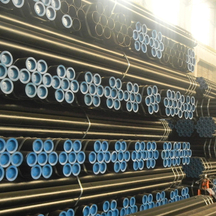
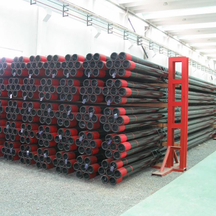
Our Recommended API 5L Steel Pipe Products and Global Shipping Services
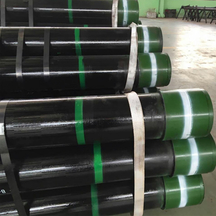
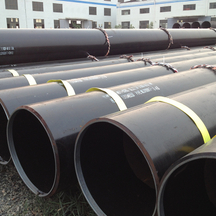
We supply API 5L steel pipes for oil, gas, and fluid transmission, covering grades B, X42, X52, X60, X65, X70, and more. Both PSL1 and PSL2 levels are available, with PSL2 meeting stricter chemical, mechanical, impact testing, and traceability requirements. Our product range includes seamless, ERW/HFW, LSAW, and SSAW manufacturing options to suit different diameters, wall thicknesses, and pressure needs. Customizable dimensions, end types (plain or beveled), and lengths ensure compatibility with pipeline design and installation. Strict quality control covers chemical composition, tensile properties, hydrostatic testing, nondestructive examination, and weld integrity, with material certificates and third-party inspection available. Our global shipping services include export packaging, container/bulk loading, and full logistics coordination. Share your grade, PSL level, size, wall thickness, process, quantity, inspection needs, and destination port for a tailored quotation and efficient delivery.
Conclusion:
Selecting the right API 5L steel pipe requires matching a complete specification to pipeline requirements. Start by determining the PSL level: PSL1 covers basic requirements, while PSL2 adds stricter controls on chemical composition, mechanical properties, impact testing, and traceability. Choose the appropriate steel grade (e.g., Grade B, X42–X80) based on strength, weldability, toughness, and operating temperature. Select the manufacturing process—seamless, ERW/HFW, LSAW, or SSAW—according to diameter, wall thickness, and application needs. Clearly specify dimensions, end preparation, and dimensional tolerances for proper installation. Quality verification through tensile, impact, hydrostatic, and nondestructive testing ensures compliance. Confirm all details—grade, PSL, process, dimensions, end type, testing, inspection, documentation, and delivery—before ordering to avoid mismatches and enable efficient production, inspection, and global shipping.
FAQ:
1. What is the difference between API 5L PSL1 and PSL2?
PSL2 has stricter requirements for chemical composition, mechanical properties, testing, inspection, and traceability than PSL1.
2. What are the common API 5L steel grades?
Common grades include Grade B, X42, X52, X60, X65, X70, and X80, with different specified strength levels.
3. What manufacturing processes are used for API 5L steel pipe?
API 5L pipe can be manufactured as seamless, ERW/HFW, LSAW, or SSAW pipe, depending on the applicable requirements.
4. How do I choose the correct API 5L pipe grade?
Consider pipeline pressure, temperature, dimensions, service conditions, PSL requirements, weldability, and the project specification.
About Us / News / Product / Project / Quality Assurance / Service / Contact Us