Views: 0 Author: Site Editor Publish Time: 2026-11-17 Origin: Site
Straight seam and spiral steel pipes are two major welded pipe types used in oil and gas, water supply, construction, and infrastructure projects. Both are formed by joining steel plate or coil edges, but they differ in forming method and weld orientation. A straight seam pipe has a longitudinal weld parallel to the pipe axis, produced by ERW, HFW, or LSAW processes. A spiral (SSAW) pipe is formed from a continuous strip with a helical weld seam. These differences affect production flexibility, dimensional specifications, weld inspection, and stress distribution. Under internal pressure, welds interact differently with hoop and longitudinal stress, though actual pipe strength also depends on steel grade, wall thickness, welding quality, and inspection standards. Selection should therefore be based on project requirements rather than weld direction alone, considering pipe diameter, operating pressure, transportation medium, installation conditions, applicable standards, and cost. This article compares the two types by weld type, stress distribution, and selection criteria, covering their manufacturing processes, advantages, limitations, and applications.
What Are Straight Seam Steel Pipes?
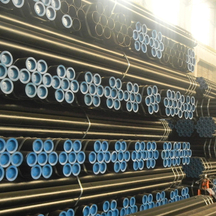
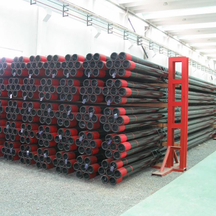
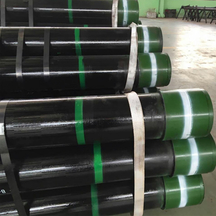
Straight seam steel pipes (longitudinally welded pipes) are formed from steel plates or strips and welded along the longitudinal direction. The weld runs parallel to the pipe axis. They are widely used for oil & gas transport, water supply, industrial piping, and structural and infrastructure projects. Multiple diameters, wall thicknesses and steel grades are available for different engineering demands.
Main Manufacturing Processes
Three mainstream production methods: ERW, HFW and LSAW.
ERW (Electric Resistance Welding) Steel coils are formed into tubes. Strip edges are resistance-heated and pressed together, no filler metal. Use: water delivery, low/medium-pressure fluid, general structures. Benefits: high output, stable dimensions, high material yield.
HFW (High-Frequency Welding) A high-frequency resistance welding process. High-frequency current heats strip edges for continuous welding. Use: structures, mechanical parts and some pipeline services. Quality relies on raw material, edge preparation and welding parameters.
LSAW (Longitudinal Submerged Arc Welding) Steel plates are formed via UOE / JCOE, then longitudinally welded by submerged arc welding. Use: large-diameter, heavy-wall pipelines for oil, gas, water and key structural works.
Key Features of Straight Seam Steel Pipes
Longitudinal weld: easy to locate and inspect
Precise OD, wall thickness and length control
Multiple process options (ERW / HFW / LSAW)
Various carbon steel & alloy steel grades available
Weld NDT: ultrasonic testing, radiographic testing Note: ERW, HFW and LSAW differ greatly in performance and scope.
Typical Applications
Industry | Typical Application |
|---|---|
Oil & Gas | Transmission pipelines, gathering lines |
Water Supply | Municipal & industrial water pipelines |
Construction | Building columns, structural supports |
Mechanical Engineering | Equipment frames and components |
Infrastructure | Bridge structures, pipeline networks |
Advantages & Limitations
Advantages: Controllable welding procedures, mature inspection standards, adaptable for pressure and structural scenarios.
Limitations: Specification range is restricted by production technology. Large-diameter LSAW requires special equipment and brings higher production costs.
What Are Spiral Steel Pipes?
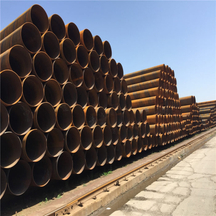
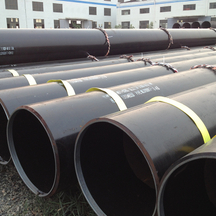
Spiral steel pipes, also called SSAW (spiral submerged arc welded) steel pipes or helical welded pipes, are formed from steel coils and welded along a continuous spiral seam. Unlike straight seam pipes, their weld runs at an angle around the pipe body. SSAW pipes are widely used for water transfer, oil & gas transport, pile foundations and municipal infrastructure. The process supports flexible diameter and length customization for large engineering projects.
SSAW Manufacturing Process
Steel Coil Preparation Select qualified coils matching steel grade, thickness and mechanical requirements; inspect surface and dimensions.
Edge Preparation & Forming Treat strip edges, then feed into spiral forming rollers. The forming angle controls the final pipe diameter.
Spiral Submerged Arc Welding Inner and outer submerged arc welding is applied to guarantee full penetration and weld integrity.
Cutting & Finishing Cut continuous pipe to required lengths, process pipe ends, then carry out dimensional and weld quality checks.
Key Features of Spiral Steel Pipes
Helical weld seam around the pipe body
Flexible diameter adjustment by changing forming angle with the same coil width
Continuous production, high material utilization
Ideal for large-diameter projects
Compatible with protective coatings: 3PE, FBE, epoxy lining Available size ranges are limited by production equipment, coil specs and standards.
Typical Applications
Industry | Typical Uses |
|---|---|
Water Transportation | Municipal & industrial water pipelines |
Oil & Gas | Transmission pipelines (must meet project specs) |
Pile Foundation | Piles for bridges, ports and buildings |
Structural Engineering | Support columns and steel structures |
Municipal Construction | Drainage and large-diameter pipeline networks |
For oil and gas service, verify pressure rating, steel grade, wall thickness and weld quality before adoption.
Advantages & Limitations
Advantages Flexible diameter production from steel coils, continuous fabrication and good material efficiency.
Limitations Longer weld seam than equivalent straight seam pipes, requiring more welding control and NDT inspection. Helical weld direction interacts with pipeline stress; engineers must assess design pressure, wall thickness and material performance comprehensively.
SSAW Quality Inspection Items
Chemical and mechanical property tests
OD, wall thickness and length measurement
Visual inspection of inner & outer welds
UT or RT weld inspection
Hydrostatic test (if required)
Coating thickness and holiday test for coated pipes
Differences in Manufacturing Processes and Weld Types
The core distinction between straight seam and spiral steel pipes lies in forming methods and weld orientation. Straight seam pipes are welded along the longitudinal direction; spiral pipes adopt continuous helical forming with spiral welds. These differences affect production flexibility, weld length, dimensional control and inspection plans, supporting buyers to select proper pipes for engineering projects.
Manufacturing Process of Straight Seam Steel Pipes
Straight seam pipes are mainly ERW, HFW or LSAW, selected by diameter, wall thickness, material grade and service conditions. Workflow:
Raw material inspection for steel plates or coils
Roll forming into cylindrical shape
Longitudinal edge welding
Sizing, cutting and pipe end finishing
Full quality inspection ERW & HFW use resistance heating and pressure welding. LSAW applies double-sided submerged arc welding after plate forming.
Manufacturing Process of Spiral Steel Pipes
Spiral pipes are produced by SSAW process. Steel strips are fed at an inclined angle for helical forming. Workflow:
Qualified steel coil preparation
Strip edge cleaning and treatment
Spiral forming, diameter adjusted by forming angle
Inner and outer submerged arc welding
Cutting to fixed length and weld inspection Its highlight: flexible diameter output with the same coil width by tuning forming angle.
Weld Type & Direction Difference
Straight seam weld: parallel to pipe axis (ERW, HFW, LSAW)
Spiral weld: continuous helical seam around pipe body (SSAW) For pipes with identical size, spiral weld length is longer. Strict welding parameter control and full-length NDT are mandatory. Weld direction changes stress distribution, which needs engineering assessment instead of simple judgment of strength.
Process Comparison Table
Comparison Item | Straight Seam Steel Pipes | Spiral Steel Pipes |
|---|---|---|
Main Processes | ERW, HFW, LSAW | SSAW |
Raw Material | Steel plates / coils | Steel coils |
Forming | Longitudinal cylinder forming | Helical forming |
Weld Direction | Parallel to pipe axis | Helical spiral |
Weld Length | Shorter | Longer |
Diameter Flexibility | Limited by equipment | High, adjustable by forming angle |
Welding Method | Resistance welding / SAW | Submerged arc welding |
Typical Uses | Oil & gas, industrial piping, structures | Water transfer, pile foundation, large-diameter pipelines |
Weld Quality & Inspection
Weld quality determines pipe safety. Key controlled parameters: edge preparation, welding current, voltage, speed and heat input. Standard inspection items:
Visual check of weld appearance
UT (Ultrasonic Testing)
RT (Radiographic Testing) on request
Hydrostatic pressure test
Dimensional check (OD, wall thickness, straightness) Inspection scope and acceptance criteria follow relevant standards and project specs.
Which Process Is Better?
No single process fits all scenarios. Straight seam pipes have different strengths among ERW, HFW and LSAW. Spiral pipes excel at flexible large-diameter production for water pipelines and piling. Buyers shall evaluate pipe size, working pressure, steel grade, inspection requirements, lead time and total cost. Weld seam direction alone is not a reliable selection standard.
Stress Distribution and Mechanical Performance
Stress distribution is a key comparison factor between straight seam and spiral steel pipes. Weld orientation changes how seams bear operating stress. Still, mechanical strength is not decided by weld direction alone. Steel grade, wall thickness, diameter, weld quality, fabrication process and inspection standards all govern reliability.
Primary Pipe Stresses Under Internal Pressure
Two main stresses act on thin-walled pressurized pipes:
Hoop (Circumferential) Stress: Acts around the pipe circumference, tending to split the pipe longitudinally. Formula: \(\sigma_h=PD/(2t)\)
Longitudinal Stress: Acts along the pipe axis, triggered by internal pressure, thermal load and bending. Formula: \(\sigma_l=PD/(4t)\) Under simplified conditions, hoop stress is roughly twice longitudinal stress. Real design needs extra analysis for external loads and temperature.
Stress Distribution of Straight Seam Steel Pipes
The longitudinal weld runs parallel to the pipe axis. Hoop stress loads perpendicular to this weld, which makes weld integrity critical against bursting risk. Key performance factors:
Base metal strength and toughness
Weld penetration and fusion quality
Heat-affected zone properties
Wall thickness accuracy and residual stress ERW, HFW and LSAW follow different QC rules and shall be checked against project service conditions.
Stress Distribution of Spiral Steel Pipes
The helical weld sits at an angle to the pipe axis. It crosses both principal stress directions. The stress components on the weld depend on the spiral forming angle. Key performance factors:
Spiral weld angle
Weld penetration and fusion
Forming precision
Welding and forming residual stress
Base material ductility The longer spiral weld requires continuous welding control and full-length NDT.
Stress & Mechanical Property Comparison
Comparison Item | Straight Seam Steel Pipes | Spiral Steel Pipes |
|---|---|---|
Weld Direction | Parallel to pipe axis | Helical spiral |
Weld vs Hoop Stress | Perpendicular | Crosses at an angle |
Weld vs Longitudinal Stress | Parallel | Crosses at an angle |
Weld Length | Shorter | Longer |
Main QC Focus | Longitudinal weld & HAZ | Helical weld & forming consistency |
Mechanical Performance | Determined by material, welding and testing | Determined by material, welding and testing |
General Factors Affecting Mechanical Performance
Steel grade: Higher strength steel improves load capacity with proper design
Wall thickness: Thicker walls boost pressure resistance within design limits
Weld quality: Incomplete penetration, poor fusion and cracks weaken reliability
Standards: API 5L, ASTM, EN and other governing specifications
Tests: UT, RT, hydrostatic test and mechanical property verification
Which Pipe Has Better Mechanical Performance?
Neither type is universally stronger. Well-made LSAW straight seam pipes fit high-demand large-diameter transmission pipelines. Qualified SSAW spiral pipes work well for water delivery, pile foundations and structural uses. Selection must follow engineering calculation, design pressure, material specs, weld inspection and applicable standards.
Advantages and Disadvantages of Straight Seam and Spiral Steel Pipes
Straight seam (ERW / HFW / LSAW) and spiral (SSAW) welded steel pipes are widely adopted in pipelines, construction, water supply and infrastructure. Their fabrication and weld layout create different strengths and weaknesses. This overview helps engineers, contractors and purchasers make project-based selections.
Advantages of Straight Seam Steel Pipes
Shorter weld seam, less total weld length for inspection
Stable dimensional control for OD, wall thickness and length
Multiple process options: ERW/HFW for general use; LSAW for large & heavy-wall specs
Mature, well-established NDT procedures for longitudinal welds
Disadvantages of Straight Seam Steel Pipes
Large-diameter heavy-wall LSAW needs special forming and welding equipment
Diameter range is limited by machinery; spec changes often need tooling adjustment
Higher cost for some large-diameter or custom specifications
Longitudinal weld sits perpendicular to hoop stress, so weld integrity is critical
Advantages of Spiral Steel Pipes (SSAW)
Flexible diameter output by adjusting the forming angle with the same coil width
Continuous coil feeding delivers high material utilization
Ideal for large-diameter water pipelines, drainage and foundation piles
Continuous production supports efficient long pipe fabrication
Versatile for municipal and structural projects when qualified properly
Disadvantages of Spiral Steel Pipes (SSAW)
Longer helical weld, increasing welding control and NDT workload
Strict, stable welding parameters are required to avoid hidden defects
Helical weld crosses main stress directions, requiring stress assessment in design
Needs precise strip alignment and forming control
Not all SSAW pipes qualify for high-pressure oil & gas service; must meet relevant specs
Comparison Table
Comparison Item | Straight Seam Steel Pipes | Spiral Steel Pipes |
|---|---|---|
Weld Length | Shorter | Longer |
Diameter Flexibility | Restricted by equipment | High, adjustable by forming angle |
Main Process | ERW, HFW, LSAW | SSAW |
Dimensional Control | Excellent | Good with precise forming |
Production Flexibility | Process-dependent | Wide diameter range from coils |
Inspection Scope | Longitudinal weld inspection | Full-length helical weld inspection |
Typical Applications | Oil & gas, industrial piping, structures | Water transfer, pile foundation, municipal pipelines |
Selection Guidance
Neither pipe type is universally superior. Choose straight seam pipes for tight dimensional tolerance, high-pressure oil/gas pipelines or specs that require LSAW/ERW longitudinal welds. Choose SSAW spiral pipes for cost-effective large-diameter water lines and piling projects where flexible diameter production is valuable.
Key buying factors: steel grade, OD, wall thickness, design pressure, weld inspection scope, standards and delivery cost.
Application Differences: Which Pipe Is Suitable for Different Projects?
Straight seam (ERW, HFW, LSAW) and spiral (SSAW) steel pipes serve different but sometimes overlapping engineering applications, and selection should be based on diameter, wall thickness, operating pressure, steel grade, environmental conditions, and applicable project standards rather than weld direction alone. For oil and gas transportation, LSAW and qualified ERW pipes suit high-pressure, large-diameter service, while SSAW applies where design and inspection requirements are met, with API 5L compliance, NDT, and hydrostatic testing verified. Spiral pipes are often chosen for large-diameter water transmission, drainage, and large-diameter foundation piles because of flexible diameter production, while straight seam LSAW pipes suit applications requiring specific wall thicknesses, tolerances, and mechanical properties. Both types support pile foundations, bridge and marine structures, industrial piping, and municipal infrastructure, with 3PE, FBE, or epoxy coatings specified by soil and water conditions. No universal rule favors one type over the other; both deliver reliable performance when correctly manufactured and inspected. Buyers should prioritize pipeline standards, load-bearing requirements, corrosion protection, and total project cost.
Conclusion
Straight seam (ERW/HFW/LSAW) and spiral (SSAW) steel pipes serve oil and gas, water supply, drainage, piling, and industrial infrastructure projects. Selection should be based on manufacturing process, weld orientation, diameter, wall thickness, operating pressure, steel grade, and applicable standards rather than weld direction alone. Under internal pressure, hoop and longitudinal stresses interact differently with longitudinal and helical seams, but pipe strength also depends on steel grade, welding quality, heat treatment, dimensional accuracy, and nondestructive testing. For oil and gas pipelines, verify qualified ERW, LSAW, or SSAW options against API 5L or project specifications; for water and drainage, compare diameter, corrosion protection, and installation needs; for piling and structural work, prioritize load-bearing capacity and wall thickness. Confirm manufacturing standards, chemical and mechanical test results, weld NDT, hydrostatic testing, and coating inspection where applicable. There is no universally superior type: straight seam pipes offer multiple manufacturing options, while spiral pipes provide diameter flexibility for large-diameter infrastructure. The best choice balances technical specifications, quality documentation, delivery schedule, and total project cost.
FAQ:
1. What is the main difference between straight seam and spiral steel pipes?
Straight seam steel pipes have longitudinal weld seams parallel to the pipe axis, while spiral steel pipes have helical weld seams formed around the pipe.
2. Which is stronger, straight seam or spiral steel pipe?
Neither is automatically stronger. Strength depends on steel grade, wall thickness, welding quality, manufacturing process, and compliance with project requirements.
3. What is the difference between LSAW and SSAW steel pipes?
LSAW pipes use longitudinal submerged arc welding, while SSAW pipes use spiral submerged arc welding. Their forming processes, weld orientations, and typical applications differ.
4. Are spiral steel pipes suitable for high-pressure oil and gas pipelines?
They can be suitable when manufactured, tested, and qualified to meet the applicable pipeline standards and project specifications.
5. Which steel pipe is more suitable for large-diameter water transmission projects?
Both LSAW and SSAW pipes can be suitable. SSAW pipes are commonly considered because of their production flexibility, while the final choice depends on diameter, pressure, wall thickness, and project requirements.
About Us / News / Product / Project / Quality Assurance / Service / Contact Us