Views: 0 Author: Site Editor Publish Time: 2026-11-16 Origin: Site
Welded steel pipes are widely used in oil and gas transportation, water supply, construction, and industrial applications. Based on manufacturing processes and weld configurations, they are mainly divided into straight seam steel pipes and spiral steel pipes. Straight seam pipes are formed from steel plates or coils and welded along the longitudinal direction, commonly through ERW or LSAW processes, making weld inspection relatively straightforward. Spiral steel pipes, also known as SSAW pipes, are formed at a spiral angle with helical submerged arc welds, and are often used in large-diameter water transmission, piling, and infrastructure projects. The key difference lies in weld orientation: straight seam pipes have longitudinal welds, while spiral pipes have helical welds, which affects stress distribution under internal pressure. However, pipe performance depends on more than weld direction; material grade, wall thickness, manufacturing quality, welding procedures, inspection results, and applicable standards are equally important. Selection should consider required diameter, operating pressure, transportation conditions, installation environment, and project specifications. This article compares both types to help engineers and buyers choose suitable welded steel pipes.
What Are Straight Seam Steel Pipes?
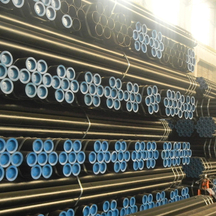
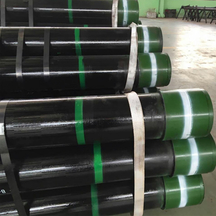
Straight seam steel pipes are welded steel pipes manufactured by forming a steel plate or coil into a cylindrical shape and joining the edges along the pipe's longitudinal direction. The resulting weld runs parallel to the pipe axis—also called longitudinally welded steel pipes. Widely used in oil and gas transportation, water supply systems, industrial piping, structural engineering, and infrastructure projects.
Mainly manufactured through two common processes: Electric Resistance Welding (ERW) and Longitudinal Submerged Arc Welding (LSAW)—although both produce longitudinal weld seams, their forming methods, welding principles, and typical applications differ.
Manufacturing Process
Step | Key Activities |
|---|---|
1. Raw material preparation | Steel coils or plates selected according to material grade, thickness, and project specifications |
2. Forming | Steel material shaped into a cylindrical or tubular form using appropriate forming equipment |
3. Welding | Longitudinal edges joined using ERW or LSAW technology |
4. Sizing and straightening | Pipe adjusted to achieve required diameter, roundness, and dimensional accuracy |
5. Inspection and testing | Welds and pipe bodies inspected according to applicable standards and customer requirements |
6. Finishing | End preparation, coating, marking, and packaging before delivery |
Weld Types and Characteristics
Process | Manufacturing Method | Key Characteristics | Typical Applications |
|---|---|---|---|
ERW | Steel coils formed; edges heated by electrical resistance and pressed together; no filler metal normally used | Widely used in general fluid transportation and structural applications | General fluid transportation, structural applications, industrial piping where specified grade and standard permit |
LSAW | Steel plates formed into cylindrical shapes; longitudinal joint welded by submerged arc welding (internal and external) | Suitable for large-diameter and relatively thick-walled pipes | Oil and gas transportation, water transmission, major infrastructure projects |
The two processes differ in welding technology and production capabilities—buyers should select the appropriate type according to required dimensions, pressure conditions, material grade, and project standards.
Common Applications
Application Area | Typical Use |
|---|---|
Oil and gas transportation | Suitable ERW and LSAW pipes in pipeline systems meeting API 5L grade, manufacturing, and inspection requirements |
Water transmission | LSAW pipes commonly selected for large-diameter water supply and municipal pipeline projects |
Structural engineering | Building structures, bridges, support columns, and other load-bearing applications |
Industrial piping | ERW and LSAW pipes for different industrial fluid transportation and mechanical applications |
Infrastructure and construction | Foundation engineering, piling, and other construction projects |
What Are Spiral Steel Pipes?
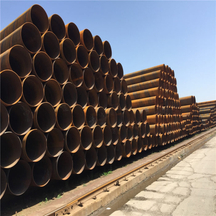
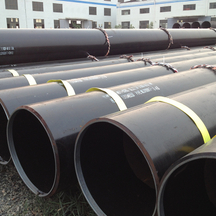
Spiral steel pipes, also known as spiral welded steel pipes or SSAW (Spiral Submerged Arc Welded) pipes, are welded steel pipes manufactured by forming steel coils into a cylindrical shape at a specified angle and joining the edges along a helical line. Unlike straight seam steel pipes, which have longitudinal welds parallel to the pipe axis, spiral steel pipes feature weld seams that wind around the pipe body.
Widely used in water transmission, oil and gas pipeline projects where permitted, foundation piling, port construction, and other infrastructure applications—their manufacturing process provides flexibility in producing different pipe diameters from steel coils of suitable widths.
Manufacturing Process
Step | Key Activities |
|---|---|
1. Raw material preparation | Steel coils selected according to material grade, thickness, and mechanical properties; coil edges inspected and prepared |
2. Edge preparation | Steel strip edges trimmed or milled to achieve suitable dimensions and welding conditions |
3. Spiral forming | Steel coil fed into forming equipment and shaped into a cylindrical pipe at a controlled spiral angle; forming angle and strip width influence pipe diameter |
4. Welding | Edges joined through submerged arc welding, generally internal and external, forming a continuous helical seam |
5. Cutting and sizing | Continuous pipe cut into specified lengths and adjusted to meet dimensional requirements |
6. Inspection and testing | Weld seams and dimensions inspected per applicable standards; required NDT and hydrostatic testing performed as specified |
7. Finishing and packaging | Pipe ends prepared, surfaces may receive protective coatings, finished pipes marked and packaged |
Weld Types and Characteristics
Characteristic | Key Points |
|---|---|
Helical weld orientation | Weld seam forms an angle with the pipe axis rather than running parallel to it |
Continuous welding process | Steel coils can be continuously formed and welded, supporting efficient production |
Weld inspection | Spiral seam requires appropriate inspection to verify weld integrity and compliance |
Dimensional flexibility | Pipe diameter can be adjusted through forming conditions and coil width, within production equipment limits |
SSAW manufacturing generally uses submerged arc welding for both internal and external sides of the joint—during welding, the arc is covered by a layer of granular flux, which helps protect the molten weld metal from atmospheric contamination.
Because the spiral seam is longer than a comparable straight longitudinal seam, weld quality and inspection planning are particularly important.
Common Applications
Application Area | Typical Use |
|---|---|
Water transmission | Large-diameter SSAW pipes in municipal water supply, irrigation, and water diversion projects |
Oil and gas transportation | Pipeline applications when manufacturing process and specifications meet applicable project requirements |
Foundation piling | Steel pipe piles for bridges, buildings, ports, and marine structures |
Port and coastal engineering | Structural piles and support components in waterfront and coastal construction |
Industrial infrastructure | Certain low-pressure fluid transportation and structural applications |
Straight Seam vs. Spiral Steel Pipes: Key Differences Compared
Straight seam steel pipes and spiral steel pipes are both widely used welded pipe products. Although they share similar basic manufacturing principles, their forming methods, weld seam orientations, production capabilities, and typical applications differ—understanding these differences helps buyers and engineering teams select suitable pipes for oil and gas transportation, water supply, foundation piling, and industrial construction.
Comparison Table
Comparison Factor | Straight Seam Steel Pipes | Spiral Steel Pipes |
|---|---|---|
Weld orientation | Longitudinal | Helical or spiral |
Common processes | ERW, LSAW | SSAW |
Forming method | Plate or coil formed into a cylinder | Coil formed at a spiral angle |
Weld seam length | Generally shorter | Generally longer |
Diameter flexibility | Depends on the manufacturing process | Flexible within equipment limits |
Common applications | Oil and gas, water transmission, structural use | Water transmission, piling, infrastructure |
Inspection requirements | Based on applicable standards | Based on applicable standards |
1. Manufacturing Process and Production Efficiency
Straight seam pipes – steel plates or coils formed into cylindrical shapes; edges welded along the longitudinal direction; common processes include ERW and LSAW; LSAW commonly manufactured from steel plates, ERW generally from steel coils
Spiral pipes – steel coils continuously formed into cylindrical shapes at a specified angle; edges joined through internal and external submerged arc welding, creating a helical seam; pipe diameter can be adjusted through forming parameters and coil width
Production efficiency depends on pipe dimensions, material thickness, equipment capacity, and manufacturing requirements—neither process is universally more efficient for every specification.
2. Weld Types and Weld Seam Distribution
Straight seam pipes – longitudinal weld running parallel to the pipe axis
Spiral pipes – helical weld winding around the pipe body at a specific angle
For the same pipe length, a spiral weld generally has a longer seam than a longitudinal weld—meaning total weld length and inspection workload may differ.
However, a longer weld does not automatically indicate lower strength or poorer quality—proper welding procedures, qualified personnel, manufacturing control, and inspection are essential for both types.
3. Stress Distribution and Mechanical Performance
Two principal stresses in a thin-walled cylindrical pipe under internal pressure:
Stress | Direction |
|---|---|
Hoop stress | Acts around the circumference of the pipe |
Longitudinal stress | Acts along the pipe axis |
Straight seam pipe – longitudinal weld approximately parallel to the pipe axis and perpendicular to the hoop stress direction
Spiral pipe – helical weld crosses both principal stress directions at an angle
This difference influences stress components acting across the weld—however, actual mechanical performance also depends on steel grade, wall thickness, weld integrity, pipe geometry, residual stress, and operating conditions. Weld orientation alone cannot determine which pipe is stronger.
4. Diameter, Wall Thickness, and Dimensional Range
Pipe Type | Dimensional Characteristics |
|---|---|
LSAW | Commonly selected for large-diameter and relatively thick-walled applications |
ERW | Generally used for smaller and medium-sized specifications, depending on production equipment |
SSAW | Considerable diameter flexibility—forming angle and steel coil width can be adjusted; frequently considered for large-diameter water transmission and foundation piling |
Available diameter and wall thickness ranges vary by manufacturer—confirm production capabilities before placing an order.
5. Cost, Quality Inspection, and Delivery
Cost comparisons should consider more than the initial purchase price—raw material utilization, production efficiency, pipe dimensions, welding requirements, inspection costs, coating, transportation, and delivery schedules can all affect final project cost.
Quality control for both types may include:
Chemical composition and mechanical property testing
Dimensional and visual inspection
Weld seam non-destructive testing (NDT)
Hydrostatic testing
Material identification and traceability
Stress Distribution and Weld Performance: Which Pipe Type Is More Suitable?
Key Comparison at a Glance
Factor | Straight Seam Steel Pipes | Spiral Steel Pipes |
|---|---|---|
Weld orientation | Longitudinal (parallel to pipe axis) | Helical (crosses both circumferential and longitudinal directions) |
Weld interaction with hoop stress | Weld approximately perpendicular to hoop stress direction | Stress perpendicular to weld is a combination of hoop and longitudinal components |
Weld length | Generally shorter | Generally longer—requires control and inspection throughout its length |
Typical applications | Large-diameter, thick-walled LSAW projects; ERW for smaller/medium sizes | Large-diameter water transmission, foundation piling, infrastructure where permitted |
Strength determination | Depends on material, wall thickness, weld quality, inspection, design | Depends on material, wall thickness, weld quality, inspection, design |
1. Hoop Stress and Longitudinal Stress in Steel Pipes
Stress Type | Direction | Effect |
|---|---|---|
Hoop stress | Circumferential direction around the pipe | Tends to split the pipe along a longitudinal line |
Longitudinal stress | Parallel to the pipe axis | Tends to separate the pipe across a circumferential section |
For a thin-walled cylindrical pipe under internal pressure:
Hoop stress ≈ PD/2t
Longitudinal stress ≈ PD/4t
Under these simplified conditions, hoop stress is approximately twice the longitudinal stress.
Note: actual pipeline design must consider applicable codes, wall thickness definitions, external loads, temperature, corrosion allowance, and other operating conditions.
2. How Longitudinal Welds Respond to Pipeline Stress
Straight seam pipes have welds running parallel to the pipe axis—the longitudinal weld is approximately perpendicular to the hoop stress direction.
Because hoop stress is generally the larger principal stress, the longitudinal weld requires careful control of weld integrity—any welding defects, incomplete fusion, or other discontinuities may affect pressure-containing performance.
However, modern ERW and LSAW processes can produce pipes suitable for demanding applications when products meet required manufacturing standards and inspection criteria.
3. How Spiral Welds Respond to Pipeline Stress
Spiral pipes have helical weld seams that cross both the circumferential and longitudinal directions—their orientation forms an angle with the pipe axis.
As a result, the stress acting perpendicular to the spiral weld is a combination of hoop and longitudinal stress components—the exact stress condition depends on the spiral angle and loading conditions.
The longer helical weld also requires appropriate welding control and inspection throughout its length—a longer weld does not necessarily mean lower strength, but it increases the total seam length that must be manufactured and evaluated.
4. Factors Affecting Weld Strength and Pipeline Safety
Factor | Key Points |
|---|---|
Steel grade and chemical composition | Must provide required strength, toughness, and weldability |
Wall thickness and pipe diameter | Influence pressure resistance and structural performance |
Welding procedures | Proper parameters, qualified personnel, and controlled manufacturing conditions |
Non-destructive testing | Ultrasonic testing, radiographic testing, and other applicable NDT methods |
Hydrostatic testing | Where required, verifies ability to withstand specified test pressure |
Operating conditions | Internal pressure, temperature, corrosion, external loads, and service environment |
5. Which Pipe Type Is More Suitable?
There is no universal answer—straight seam and spiral steel pipes can both be suitable for pressure-bearing applications when manufactured and qualified to required standards.
Straight seam LSAW pipes – often considered for large-diameter, thick-walled pipeline projects with demanding dimensional and quality requirements
SSAW pipes – frequently selected for large-diameter water transmission, foundation piling, and other applications where their manufacturing process is permitted by project specification
For oil and gas transportation: verify compliance with applicable API 5L requirements, including permitted manufacturing process, product specification level, and project-specific acceptance criteria.
How to Choose Between Straight Seam and Spiral Steel Pipes
Selecting between straight seam steel pipes and spiral steel pipes requires a comprehensive evaluation of project requirements, operating conditions, manufacturing standards, and procurement costs. Both types have advantages, but neither is suitable for every application—the correct choice should be based on engineering specifications rather than simply comparing weld seam orientations or initial purchase prices.
Selection Factors at a Glance
Factor | What to Evaluate |
|---|---|
Project application | Oil and gas, water transmission, foundation piling, or industrial piping; confirm permitted manufacturing process |
Pipe diameter and wall thickness | ERW for smaller/medium sizes; LSAW for large-diameter, thick-walled; SSAW flexible for large diameters |
Material grades and standards | API 5L, ASTM A53, ASTM A252, or project-specific standards |
Cost and delivery | Raw material, manufacturing, dimensions, inspection, coatings, transportation, installation; production capacity and schedules |
Quality inspection and certification | Chemical/mechanical reports, dimensional/visual records, weld NDT, hydrostatic records, MTCs, traceability |
1. Select According to Project Application
Application | Pipe Options | Key Considerations |
|---|---|---|
Oil and gas transportation | ERW, LSAW, or SSAW | Pipeline diameter, pressure, material grade, applicable project specifications; confirm permitted manufacturing process |
Water transmission | LSAW and SSAW | Large-diameter municipal water supply, irrigation, water diversion; coating and corrosion protection |
Foundation piling | SSAW and LSAW | Pile dimensions, installation methods, structural loading |
Industrial piping | ERW and LSAW | Required dimensions, pressure conditions, material specifications |
2. Consider Pipe Diameter and Wall Thickness
ERW – generally smaller and medium-sized specifications
LSAW – often large-diameter and relatively thick-walled applications
SSAW – flexible in producing different large pipe diameters by adjusting forming angle and coil width within equipment limits
Confirm before purchasing:
Required outside diameter and wall thickness
Pipe length and dimensional tolerances
Design pressure and expected external loads
Manufacturing capabilities and available specifications
The selected dimensions must satisfy engineering calculations and applicable standards.
3. Evaluate Material Grades and Applicable Standards
Standard | Main Application |
|---|---|
API 5L | Line pipes for oil and gas transportation |
ASTM A53 | General-purpose welded and seamless steel pipes |
ASTM A252 | Welded and seamless steel pipe piles |
Project-specific standards | Specialized industrial and infrastructure requirements |
For API 5L pipelines: confirm required grade, PSL1 or PSL2 level, manufacturing process, and additional project requirements.
For piling applications: ASTM A252 or other specified structural requirements may apply.
Select the standard according to intended service—do not assume all straight seam or spiral pipes meet the same requirements.
4. Compare Cost and Project Delivery Requirements
Procurement decisions should consider total project costs, not just unit price.
Cost Factor | Key Points |
|---|---|
Raw materials | Steel prices and availability |
Manufacturing | Process and dimensions |
Inspection | Welding and testing requirements |
Surface coatings | Protective treatment costs |
Transportation | Logistics and handling |
Installation | Field labor and equipment |
Delivery schedules also matter—confirm production capacity, material availability, inspection arrangements, packaging requirements, and transportation plans before ordering.
For large EPC projects: coordinating pipe deliveries with construction schedules helps reduce storage costs and prevent installation delays.
5. Confirm Quality Inspection and Certification
Quality control is essential for both types—before accepting an order, review required inspection and documentation arrangements.
Depending on applicable standards and project specifications:
Chemical composition and mechanical property test reports
Dimensional and visual inspection records
Weld seam ultrasonic or radiographic testing
Hydrostatic test records
Material test certificates and product traceability documentation
Conclusion:
Straight seam and spiral steel pipes are both widely used in oil and gas transportation, water supply, piling, structural engineering, and industrial infrastructure. Straight seam pipes, typically produced by ERW or LSAW processes, have longitudinal welds and are commonly selected for general industrial, structural, and large-diameter pipeline applications. Spiral steel pipes, also known as SSAW pipes, are formed through continuous spiral welding and offer flexible diameter production, making them suitable for large-diameter water transmission, piling, and infrastructure projects. Weld orientation affects stress distribution, but pipe performance also depends on material grade, wall thickness, welding quality, manufacturing control, inspection results, and operating conditions. Selection should be based on project requirements, including diameter, wall thickness, design pressure, steel grade, applicable standards, corrosion protection, installation conditions, quality inspection, and traceability. Buyers should also compare manufacturing costs, inspection requirements, transportation, and installation efficiency to determine the most economical solution.
FAQ:
Q1: What is the main difference between straight seam and spiral steel pipes?
Straight seam pipes have longitudinal weld seams parallel to the pipe axis, while spiral steel pipes have helical weld seams winding around the pipe body.
Q2: What are the weld types used in straight seam and spiral steel pipes?
Straight seam pipes commonly use ERW or LSAW processes. Spiral steel pipes generally use SSAW, with internal and external submerged arc welding.
Q3: How does stress distribution differ between longitudinal and spiral welded pipes?
Longitudinal welds are approximately perpendicular to hoop stress, while spiral welds cross both hoop and longitudinal stress directions at an angle.
Q4: Are straight seam steel pipes stronger than spiral steel pipes?
Not necessarily. Pipe strength depends on material grade, wall thickness, weld quality, manufacturing control, and applicable standards rather than weld orientation alone.
About Us / News / Product / Project / Quality Assurance / Service / Contact Us