Views: 4 Author: Site Editor Publish Time: 2026-05-13 Origin: Site
Welded steel pipes are essential in modern construction, offering strong structural performance, flexible sizing, and cost-effective production. Manufactured by forming steel coils into cylinders, they are primarily categorized into Spiral-Welded Pipes (SSAW) and Straight-Welded Pipes (ERW and LSAW).
In construction projects, selecting the right pipe depends on structural loads, pressure conditions, and budget. Large-diameter SSAW pipes are ideal for water transmission and bridge piling due to their production flexibility. Conversely, Straight-Welded pipes, particularly LSAW, are preferred for projects requiring high precision, thicker walls, and superior pressure resistance.
Compared to seamless pipes, welded options provide greater manufacturing efficiency and economic benefits. Their durability can be further enhanced with anti-corrosion treatments like galvanizing, making them suitable for harsh environments. Understanding the distinct advantages of spiral versus straight-welded pipes is crucial for engineers and contractors to ensure structural reliability and long-term project success.
What Are Spiral-Welded and Straight-Welded Pipes?
Spiral-welded and straight-welded pipes are two major categories of welded steel pipes widely used in construction, infrastructure, and industrial engineering. Although both are manufactured by welding steel into a pipe shape, their production methods and structural characteristics differ significantly, making them suitable for different project requirements.
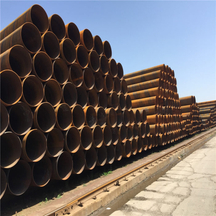
Spiral-welded pipes, also known as SSAW (Spiral Submerged Arc Welded) pipes, are produced by forming steel coils at a specific angle and welding a continuous seam along a spiral path. A major advantage of this method is the flexibility to produce various large diameters using the same coil width. Due to their cost efficiency and large-diameter capability, SSAW pipes are ideal for water transmission systems, drainage pipelines, bridge piling, and municipal infrastructure.
Straight-Welded Pipes (ERW & LSAW)
Straight-welded pipes feature a longitudinal seam parallel to the pipe length and mainly include:
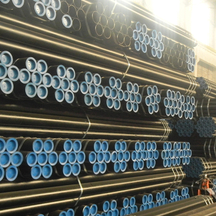
ERW (Electric Resistance Welded) Pipes: Produced from steel strips using electric resistance heating. They are commonly used for smaller diameters requiring precise dimensions and smooth surfaces.
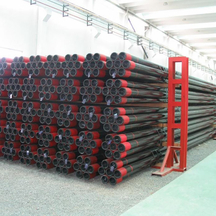
LSAW (Longitudinal Submerged Arc Welded) Pipes: Manufactured from steel plates welded along a straight seam. LSAW pipes are preferred for high-pressure and heavy-duty applications due to their thick walls and superior weld strength.
Key Differences and Applications
The primary structural difference lies in the weld seam design, which impacts stress distribution, manufacturing efficiency, and pressure performance. Spiral-welded pipes generally offer better cost efficiency for large-scale projects, while straight-welded pipes provide higher dimensional precision and are better suited for high-pressure systems. Selecting the right pipe type depends on specific project requirements, environmental conditions, and budget considerations.
Main Differences Between Spiral-Welded and Straight-Welded Pipes
Spiral-welded and straight-welded pipes are essential in construction and infrastructure, but they differ significantly in manufacturing, performance, and cost. Understanding these distinctions is vital for project safety, efficiency, and budget control.
Quick Comparison: Spiral-Welded vs. Straight-Welded Pipes
Feature | Spiral-Welded Pipes (SSAW) | Straight-Welded Pipes (ERW / LSAW) |
Manufacturing | Formed from steel coils with a continuous spiral seam. | Welded longitudinally using steel strips (ERW) or plates (LSAW). |
Diameter & Flexibility | Highly flexible; produces large diameters efficiently from the same coil width. | Excellent dimensional precision; best for small-to-medium sizes (LSAW handles large sizes at a higher cost). |
Stress & Performance | Distributes stress along the spiral seam, reducing localized concentration. | Longitudinal seam offers strong integrity; LSAW is ideal for high-pressure and heavy loads. |
Cost Efficiency | Highly cost-effective for large-diameter projects due to high material utilization. | Generally, higher manufacturing costs especially for LSAW plates and complex forming. |
Common Applications | Municipal water systems, drainage, bridge piling, and foundation engineering. | Precision industrial systems, high-pressure pipelines, and critical structural loading. |
Installation and Maintenance
Both pipe types require strict welding inspections, anti-corrosion treatments, and proper installation. Spiral-welded pipes are frequently chosen for buried or structural systems where large diameters and rapid installation are priorities. Conversely, straight-welded pipes are favored in precision industrial settings requiring tighter tolerances. Long-term maintenance needs will ultimately depend on coating quality, environmental exposure, and operating pressure.
Conclusion
Spiral-welded pipes provide excellent economic value and flexibility for large-scale infrastructure and foundation projects. Straight-welded pipes offer superior precision and strength for high-pressure or critical structural systems. Selecting the right pipe requires carefully balancing project technical conditions with long-term performance expectations.
Best Welded Pipe Selection for Construction Projects
There is no single welded steel pipe ideal for every construction project. The choice between spiral-welded and straight-welded pipes depends on specific engineering needs like diameter, pressure, and budget. Below is a breakdown to help you select the right pipe for your project.
Quick Comparison: Spiral vs. Straight-Welded Pipes
Feature | Spiral-Welded Pipes (SSAW) | Straight-Welded Pipes (ERW / LSAW) |
Best Applications | Large municipal infrastructure, water supply, drainage, bridge piling, and foundation engineering. | High-pressure oil/gas systems, precision industrial construction, and heavy-duty structural supports. |
Performance Strengths | Cost-effective for large diameters; excellent load-bearing for foundations; high material utilization. | Superior dimensional precision (ERW); strong weld integrity and thick walls for high pressure (LSAW). |
Ideal Project Conditions | Moderate pressure, long-distance installation, and strict budget control. | High operating pressure, heavy structural loads, and projects requiring strict dimensional tolerances. |
Spiral-Welded Pipes for Large Infrastructure
Spiral-welded pipes (SSAW) are highly valued in large-scale infrastructure due to their economical manufacturing process. Produced from continuously formed steel coils, they offer high material utilization and low production costs. Their circular structure provides excellent load-bearing performance, making them the preferred choice for municipal water transmission, sewage pipelines, harbor construction, and bridge piling where large diameters and budget efficiency are priorities.
Straight-Welded Pipes for Precision and Pressure
Straight-welded pipes are selected for projects demanding higher precision or pressure resistance:
ERW Pipes: Known for smooth surfaces and accurate dimensions, they are ideal for building structures, scaffolding, and medium-pressure fluid transportation.
LSAW Pipes: Manufactured from steel plates, these pipes offer strong weld performance and thicker walls, making them suitable for high-pressure oil and gas pipelines and heavy industrial engineering.
Key Selection Factors
Before finalizing a choice, engineers should evaluate pipe diameter, operating pressure, environmental conditions, corrosion resistance needs, and installation complexity. In many cases, applying proper anti-corrosion coatings and ensuring strict quality inspections are just as critical to long-term maintenance as the pipe type itself.
Conclusion: Choosing the Right Welded Pipe for Construction Projects
Selecting the right welded steel pipe is a critical decision in construction and infrastructure engineering. Different projects demand varying levels of strength, pressure resistance, and cost control. Understanding the core differences between spiral-welded and straight-welded pipes ensures engineers and contractors can choose materials that align with both technical specifications and project budgets.
Spiral-welded pipes (SSAW) are renowned for their economical production and flexibility in large diameters. Manufactured from continuously formed steel coils, they are highly suitable for large-scale infrastructure requiring long pipelines or high material volume. Their balanced structural performance and lower manufacturing costs make them widely used in municipal engineering, water transmission, drainage projects, and foundation piling.
Straight-welded pipes (ERW and LSAW) are typically selected for projects demanding higher dimensional precision, superior weld integrity, or higher operating pressure. ERW pipes are commonly used in mechanical structures and medium-pressure systems, while LSAW pipes are preferred for heavy-duty industrial projects and high-pressure pipelines due to their strong longitudinal weld structure.
Key Factors for Selection:
Project Size & Diameter: Large-scale projects often favor spiral-welded pipes for better production efficiency and lower overall costs, while smaller, precision-focused systems benefit from the dimensional consistency of straight-welded pipes.
Pressure & Structure: High internal pressure and heavy structural loads generally require the thick-wall capability of LSAW pipes. Spiral-welded pipes remain highly effective for low- to medium-pressure systems where cost efficiency is paramount.
Budget & Environment: Spiral-welded pipes reduce initial material costs for large developments, whereas straight-welded pipes may offer long-term value by reducing operational risks in critical applications. Regardless of type, proper anti-corrosion coatings and welding inspections are essential for long-term durability.
Ultimately, there is no universal solution. Spiral-welded pipes are ideal for large, cost-sensitive infrastructure, while straight-welded pipes excel in precision engineering and high-pressure systems. By carefully evaluating project conditions, technical requirements, and environmental exposure, construction professionals can ensure reliable performance and long-term economic value.
FAQ:
(1)What is the main difference between spiral-welded pipes and straight-welded pipes?
The main difference is the weld seam design. Spiral-welded pipes use a spiral seam formed from steel coils, while straight-welded pipes use a longitudinal straight seam formed from steel plates or strips.
(2) Which is more cost-effective for large construction projects?
Spiral-welded pipes are generally more cost-effective for large-diameter infrastructure and water transmission projects because their production process uses materials more efficiently.
(3)Are straight-welded pipes stronger than spiral-welded pipes?
Straight-welded pipes, especially LSAW pipes, are often preferred for high-pressure applications. However, spiral-welded pipes also provide strong structural performance for many construction and infrastructure projects.
(4) Where are spiral-welded pipes commonly used?
Spiral-welded pipes are commonly used in water supply systems, piling foundations, bridge construction, drainage systems, and oil and gas transportation projects.
About Us / News / Product / Project / Quality Assurance / Service / Contact Us