Views: 1 Author: Site Editor Publish Time: 2026-09-10 Origin: Site
ASTM A671 steel pipe is an electric-fusion-welded pipe manufactured from pressure-vessel-quality plate, engineered for high-pressure service at atmospheric and lower temperatures. Widely used in oil and gas, petrochemical, and power generation industries, it is ideal for demanding industrial piping systems.
The specification utilizes a dual classification system: the Grade identifies the steel plate type and mechanical properties, while the Class dictates the heat-treatment condition and testing requirements. Because of this flexibility, buyers must specify the exact Grade and Class alongside dimensions to ensure optimal performance.
Material Properties of ASTM A671 Steel Pipe
The material properties of ASTM A671 steel pipe depend on the steel plate grade and the specified pipe class. Unlike specifications that define a single steel composition, ASTM A671 covers pipes manufactured from different pressure-vessel-quality plate grades. Therefore, chemical composition, strength, ductility, and toughness can vary according to the selected grade.
Key Material Properties
Property | Description | Key Considerations |
|---|---|---|
Chemical Composition | Grade-specific limits for C, Mn, Si, P, S, and alloying elements | Affects strength, weldability, toughness, and service resistance—check against purchase specification grade—MTC should identify heat number |
Mechanical Properties | Tensile strength (max stress before fracture), yield strength (permanent deformation threshold), elongation (ductility) | Values depend on plate grade—tension testing and transverse guided weld-bend testing evaluate material and weld integrity |
Toughness & Low-Temperature Performance | Intended for atmospheric and lower-temperature service—resistance to brittle fracture | Confirm Charpy impact testing or other toughness requirements per grade, class, and project specifications |
Heat Treatment Effect | Stress relieving (reduces residual stress), normalizing (refines microstructure), tempering (improves toughness), quenching & tempering (higher strength) | Grade + heat-treatment class must be considered together—inappropriate treatment may not meet performance requirements |
Heat Treatment Methods
Method | Primary Effect |
|---|---|
Stress Relieving | Reduces residual stresses from welding |
Normalizing | Refines microstructure—balanced strength and ductility |
Tempering | Improves toughness—reduces excessive hardness |
Quenching & Tempering | Higher strength with controlled toughness and ductility |
Verification Checklist (MTC Review)
Item | Check |
|---|---|
Material grade and class | Per purchase specification |
Heat number and traceability | Material origin |
Chemical composition | Element limits |
Tensile and yield strength | Mechanical properties |
Elongation | Ductility |
Heat-treatment condition | Per class |
Impact test results | When applicable |
Weld and inspection test results | Quality verification |
Key Takeaway
ASTM A671 material properties are determined by more than the specification name alone. The:
Grade – steel plate type and composition
Class – heat-treatment and testing requirements
Heat treatment – mechanical properties
Testing requirements – quality verification
All should be confirmed to ensure the pipe is suitable for its intended pressure and temperature service.
ASTM A671 Heat Treatment Requirements
Heat treatment is an important part of ASTM A671 steel pipe production because it affects the pipe's strength, toughness, ductility, and residual stress. However, not every ASTM A671 pipe requires the same heat treatment. The required process is determined mainly by the pipe's class and the material grade.
Heat Treatment by Class
Class Group | Heat Treatment | Purpose |
|---|---|---|
Classes 10–13 | No heat treatment | As-produced condition |
Classes 20–23 | Stress relieved | Reduces residual stresses from forming and welding—improves dimensional stability |
Classes 30–33 | Normalized | Refines microstructure—improves balance of strength, ductility, and toughness |
Classes 40–43 | Normalized and tempered | Controlled balance of mechanical properties—improves toughness and ductility |
Classes 50–53 | Quenched and tempered | Higher strength with controlled toughness and ductility—for demanding service |
Heat Treatment Methods
Method | Process | Key Benefit |
|---|---|---|
Stress Relieving | Heat to specified temperature → hold → controlled cooling | Reduces residual welding stress—improves dimensional stability |
Normalizing | Heat to specified temperature → air cool | Refines microstructure—uniform material structure |
Normalizing & Tempering | Normalize → reheat for tempering | Improves toughness and ductility—reduces hardness and internal stresses |
Quenching & Tempering | Austenitize → rapid cool (water/oil) → reheat for tempering | Higher strength with appropriate toughness balance |
Why Heat Treatment Matters
Property Affected | Effect |
|---|---|
Tensile and yield strength | Mechanical performance |
Ductility | Deformation capacity |
Impact toughness | Brittle fracture resistance |
Hardness | Material condition |
Residual stress | Dimensional stability |
Microstructural uniformity | Consistent properties |
Welded-joint performance | Joint integrity |
Key Takeaway
ASTM A671 does not have one universal heat-treatment requirement. The required process depends on the:
Pipe class – 10–13, 20–23, 30–33, 40–43, 50–53
Material grade – steel plate type
Buyers should review the Mill Test Certificate (MTC) and heat-treatment documentation to verify the supplied pipe meets the specified grade and class. These details should be clearly specified when ordering ASTM A671 steel pipe.
ASTM A671 Testing, Inspection, and Quality Requirements
Quality control is essential for ASTM A671 steel pipe because these pipes are designed for pressure service, including atmospheric and lower-temperature applications. ASTM A671 specifies requirements for welding, mechanical testing, nondestructive examination, pressure testing, and material inspection. These procedures help confirm that the finished pipe has the required strength, weld integrity, and dimensional quality.
Testing & Inspection Overview
Area | Key Requirements | Why It Matters |
|---|---|---|
Welding Quality | Electric-fusion welding—full penetration longitudinal weld—qualified procedures and operators—controlled parameters | Weld quality directly affects pressure resistance and long-term service performance |
Mechanical Testing | Tension testing (yield, tensile, elongation), transverse guided weld-bend testing—impact testing where required | Verifies material properties and weld joint integrity |
Radiographic Examination (RT) | Per applicable class—detects internal weld discontinuities (lack of fusion, incomplete penetration, etc.) | Provides quality assurance for pressure-service pipe—detects defects not visible on surface |
Hydrostatic Pressure Testing | Fill with water—apply specified test pressure for required period—per class and purchase requirements | Verifies pressure integrity—identifies leaks or problems compromising service |
Dimensional & Visual Inspection | OD, wall thickness, length, straightness, weld appearance, end condition, surface defects, marking | Ensures pipe conforms to dimensions and can be properly installed |
Material Certificates & Traceability | MTC (grade, heat number, chemical composition, mechanical test results)—heat-treatment records, RT reports, hydrostatic records, weld inspection reports, impact test results, dimensional records, third-party certificates | Links each pipe/batch to original steel plate and manufacturing records |
Summary Table
Inspection Area | Purpose |
|---|---|
Welding | Weld integrity and penetration |
Mechanical testing | Strength, ductility, weld bend |
Radiographic examination | Internal weld quality |
Hydrostatic testing | Pressure integrity |
Dimensional/visual | Size and surface quality |
Documentation | Traceability and compliance |
What Should Buyers Check?
Item | Action |
|---|---|
Grade and class | Per project specification |
Dimensions | OD, wall thickness, length |
Heat-treatment condition | Per class |
Testing requirements | Mechanical, RT, hydrostatic, impact |
Inspection documentation | MTC, test reports, certificates |
Third-party inspection | If required by project |
Key Takeaway
ASTM A671 testing and inspection requirements provide a systematic way to verify:
Material quality – chemical and mechanical properties
Weld integrity – penetration and internal quality
Pressure resistance – hydrostatic testing
Dimensional accuracy – size and tolerances
Traceability – documentation and records
Proper inspection documentation gives buyers greater confidence that the supplied pipe is suitable for its intended service conditions.
Our ASTM A671 Steel Pipe Products and Shipping Services
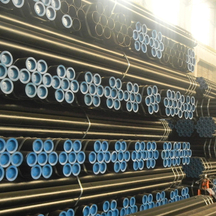
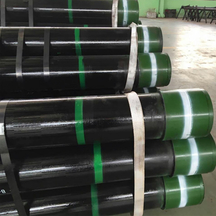
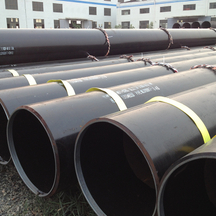
We supply premium ASTM A671 electric-fusion-welded (EFW) steel pipes, engineered for high-pressure and low-temperature industrial applications. We customize our pipes to your exact grade, class, and dimensional requirements.
Quality and compliance are paramount. We conduct rigorous inspections—including hydrostatic testing, NDT, and mechanical testing—and provide comprehensive Mill Test Certificates (MTCs) to guarantee full adherence to ASTM A671 standards.
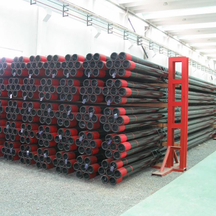
Beyond manufacturing, we provide end-to-end global shipping solutions. We understand that timely delivery is critical to maintaining project schedules. Our logistics team manages secure packaging and flexible transportation options (container and break-bulk freight) to prevent transit damage and ensure your pipes arrive safely and on time.
To receive a customized product and shipping quotation, please contact us today with your required grade, class, dimensions, testing requirements, quantity, and delivery destination. Our expert team will recommend the optimal ASTM A671 steel pipe configuration tailored to your exact project needs.
How to Choose the Right ASTM A671 Steel Pipe
Selecting the right ASTM A671 steel pipe requires more than choosing a pipe with the correct diameter. The material grade, class, operating conditions, testing requirements, and documentation should all be considered before placing an order. A suitable specification helps ensure reliable performance, safety, and compliance with project requirements.
Selection Factors
Factor | Key Considerations | Why It Matters |
|---|---|---|
Operating Conditions | Operating pressure and temperature—low-temp: toughness and impact properties; high-pressure: strength and weld integrity | ASTM A671 for high-pressure, atmospheric/lower-temperature service—grade/class depends on actual application |
Material Grade | Yield/tensile strength, ductility, low-temp toughness, weldability, operating environment, design code | Different pressure-vessel-quality plates—each grade has specific composition and mechanical properties—not based on pipe size alone |
Class | Heat-treatment condition + radiographic and pressure-testing requirements—no heat treatment, stress relieved, normalized, normalized & tempered, or quenched & tempered | Select per required mechanical properties, toughness, heat treatment, project requirements—state both grade and class when ordering |
Pipe Dimensions | OD, wall thickness, length, end preparation, tolerances | Wall thickness determined by design pressure, temperature, allowable stress, corrosion allowance, engineering code—confirm non-standard dimensions with supplier |
Inspection & Testing | Tensile, weld-bend, radiographic, hydrostatic, impact testing—third-party inspection if required | Establish before production—clearly defined requirements prevent delays and additional costs |
Documentation & Traceability | MTC, chemical analysis, mechanical test results, heat-treatment records, NDT reports, hydrostatic test results, third-party certificates—material markings and heat-number traceability | Essential for pressure-service pipe—links delivered pipe to manufacturing records |
Packaging & Shipping | Packaging, loading method, shipping terms, destination port, delivery schedule—special handling for large-diameter pipe | Prevents damage to pipe surfaces and ends—important for international projects |
Selection Checklist
Item | Check |
|---|---|
Operating pressure | Design conditions |
Operating temperature | Min and max |
Material grade | Strength, toughness, weldability |
Class | Heat treatment and testing |
Dimensions | OD, wall thickness, length |
Testing | Tensile, RT, hydrostatic, impact |
Documentation | MTC, inspection records |
Packaging & shipping | Delivery requirements |
Key Takeaway
Choosing the right ASTM A671 steel pipe involves evaluating:
Operating conditions – pressure and temperature
Material grade – strength and toughness
Class – heat treatment and testing
Dimensions – size and tolerances
Testing – inspection requirements
Documentation – traceability
Delivery – packaging and shipping
The best specification meets both the technical requirements of the application and the project's purchasing conditions.
Conclusion
ASTM A671 steel pipes are essential for high-pressure and low-temperature industrial applications. However, selecting the right pipe requires more than just the standard designation; it demands careful evaluation of the specific material grade, heat-treatment class, and testing requirements to ensure structural integrity and safety.
Buyers must clearly define their operating conditions, dimensions, and inspection needs to guarantee compliance. Comprehensive Mill Test Certificates (MTCs) are also crucial for verifying quality and traceability.
FAQ:
FAQ 1: What is ASTM A671 steel pipe used for?
ASTM A671 steel pipe is used for high-pressure applications at atmospheric and lower temperatures, including process piping, petrochemical facilities, power plants, and industrial pressure systems.
FAQ 2: Does ASTM A671 pipe require heat treatment?
Not always. The required heat treatment depends on the pipe class. ASTM A671 classes may require no heat treatment, stress relieving, normalizing, normalizing and tempering, or quenching and tempering.
FAQ 3: What is the difference between ASTM A671 Grade and Class?
The grade identifies the type of pressure-vessel-quality steel plate used, while the class indicates the heat-treatment condition and certain testing requirements, such as radiographic and pressure testing.
FAQ 4: What documents should I request when buying ASTM A671 pipe?
Buyers should typically request a Mill Test Certificate (MTC) showing chemical composition and mechanical properties, along with applicable heat-treatment records, NDT reports, pressure-test results, and inspection certificates.
About Us / News / Product / Project / Quality Assurance / Service / Contact Us