Views: 0 Author: Site Editor Publish Time: 2026-08-14 Origin: Site
In Engineering, Procurement, and Construction (EPC) projects, piping is critical infrastructure. Selecting the right piping material directly impacts system safety, operational efficiency, and long-term costs. Because different industries face unique operating conditions, a universal solution does not exist.
Stainless steel seamless pipes are widely preferred for demanding EPC applications due to their superior corrosion resistance, mechanical strength, and structural integrity. Manufactured without a longitudinal weld seam, they offer reliable performance under high pressure and temperature. Choosing the correct grade is essential: 304/304L suits general industrial use, while 316/316L provides enhanced resistance for highly corrosive environments.
When specifying materials, EPC contractors must evaluate factors beyond the initial purchase price. Lifecycle cost is a crucial metric; investing in durable, corrosion-resistant pipes reduces maintenance, unplanned shutdowns, and replacement expenses over the facility's lifespan.
Material selection should be strictly based on actual service conditions, applicable standards, and technical specifications rather than cost alone.
What Role Do Stainless Steel Seamless Pipes Play in EPC Projects?
Stainless steel seamless pipes play an important role in Engineering, Procurement, and Construction (EPC) projects. They are mainly used to transport fluids, gases, steam, and other process media between equipment and facility sections. Their strength, corrosion resistance, and reliable performance make them suitable for demanding operating conditions.
Key Roles in EPC Projects
Role | Explanation | Key Benefit |
|---|---|---|
Fluid Transportation & Process Piping | Transport water, chemicals, hydrocarbons, gases, high-temperature fluids | Corrosion/oxidation resistance; seamless construction for pressure-critical service |
Supporting Safety & System Reliability | Correctly specified pipes reduce failure risk under pressure, temperature, and mechanical loads | Prevents leaks, damage, and environmental risks; extends service life |
Meeting Engineering & Project Specifications | Comply with grade, dimensions, testing, and documentation requirements | Ensures traceability; confirms material and inspection compliance |
Typical Media Transported
Media | Industry Examples |
|---|---|
Water | Power generation, cooling systems |
Chemicals | Chemical processing, petrochemical |
Hydrocarbons | Oil and gas |
Compressed gases | Industrial utilities |
High-temperature fluids | Steam systems, heat transfer |
Key Specifications to Verify
Specification | Why It Matters |
|---|---|
Stainless steel grade | Determines corrosion resistance and mechanical properties |
Outside diameter & wall thickness | Affects pressure capacity and fit |
Pipe schedule | Standardized wall thickness |
Length | Matches project design |
Surface condition | Impacts weldability and corrosion resistance |
Applicable standards | ASTM, ASME, EN, or project-specific |
Quality Documentation
Document | Purpose |
|---|---|
Material Test Certificate (MTC) | Confirms chemical composition and mechanical properties |
Heat numbers | Enables traceability |
Inspection reports | Verifies dimensional and test compliance |
NDT reports | Confirms defect-free condition |
Key Advantages of Stainless Steel Seamless Pipes for EPC Projects
Stainless steel seamless pipes offer several advantages that make them suitable for demanding EPC projects. From corrosion resistance to long service life, their material and manufacturing characteristics help EPC contractors build reliable piping systems while managing maintenance and lifecycle costs.
Key Advantages
Advantage | Explanation | Benefit for EPC Projects |
|---|---|---|
Excellent Corrosion Resistance | Chromium forms a passive protective layer; resists water, chemicals, gases, and corrosive media | Extends pipe life; reduces corrosion-related maintenance |
High Strength & Pressure Resistance | Seamless construction—no longitudinal weld; reliable under pressure, temperature, vibration, and mechanical stress | Suitable for demanding high-pressure systems |
Good Performance at Elevated Temperatures | Certain grades maintain mechanical and corrosion-resistant properties at high temperatures | Ideal for power plants, refineries, chemical facilities |
Long Service Life & Lower Maintenance | Resists degradation and corrosion; reduces replacement frequency | Higher initial cost offset by lower lifecycle costs and fewer operational interruptions |
Hygienic & Easy-to-Maintain Surfaces | Smooth surface with suitable finish; easy to clean | Essential for food, beverage, pharmaceutical, and biotech industries |
Reliable Performance Across Applications | Available in various grades and specifications | Flexible for different pressure, temperature, and corrosion requirements |
Comparison – Stainless Steel vs. Carbon Steel in EPC Piping
Aspect | Stainless Steel Seamless | Carbon Steel |
|---|---|---|
Corrosion resistance | Excellent | Limited (requires coating) |
High-temperature performance | Good (selected grades) | Moderate |
Pressure resistance | High (seamless) | High |
Initial cost | Higher | Lower |
Lifecycle cost | Lower over time | Higher maintenance/replacement |
Hygienic applications | Suitable | Not recommended |
Common Applications in EPC Projects
Industry | Typical Use |
|---|---|
Chemical processing | Corrosive media transport |
Petrochemical | High-temperature and high-pressure systems |
Power generation | Steam and high-temperature fluid lines |
Food & beverage | Hygienic process piping |
Pharmaceutical | Clean and sanitary systems |
Marine/wastewater | Corrosion-resistant piping |
Key Takeaway
Stainless steel seamless pipes provide a combination of:
Corrosion resistance – long-term protection
Strength – reliable under pressure
Temperature performance – suitable for high heat
Durability – lower maintenance and replacement
Cleanliness – hygienic surfaces
How to Select Stainless Steel Seamless Pipes for an EPC Project
Selecting the right stainless steel seamless pipe is a critical part of EPC project procurement. The correct product must meet engineering requirements while providing reliable performance, reasonable cost, and timely delivery. Evaluation should go beyond price or availability.
Selection Factors
Factor | Key Considerations | Why It Matters |
|---|---|---|
Stainless Steel Grade | 304/304L for general use; 316/316L for chloride or aggressive media | Determines corrosion resistance, strength, and temperature performance |
Operating Pressure & Temperature | Design/operating pressure and temperature; wall thickness and schedule | Must meet pressure and mechanical load requirements; high-temp grades need suitable properties |
Pipe Dimensions | OD, wall thickness, schedule, length, tolerances | Must match engineering drawings, valves, fittings, and equipment |
Applicable Standards & Certifications | ASTM, ASME, EN, or project-specific; MTC and inspection reports | Ensures compliance, quality, and traceability |
Inspection & Testing | Chemical analysis, tensile/hardness, hydrostatic, dimensional, NDT; third-party if required | Critical for quality assurance; agree scope before production |
Supplier Capability | Manufacturing capacity, QC systems, experience, export ability | Affects product quality, compliance, and on-time delivery |
Delivery & Logistics | Lead time, packaging, shipping, documentation | Long-lead materials can delay construction schedules |
Lifecycle Value | Quality, corrosion resistance, maintenance, replacement costs | Lowest price ≠ best value; consider total lifecycle cost |
Common Stainless Steel Grades for EPC Piping
Grade | Key Properties | Typical Applications |
|---|---|---|
304 / 304L | Good general corrosion resistance; good weldability | General industrial and process piping |
316 / 316L | Improved chloride resistance; molybdenum added | Chemical, marine, and aggressive media environments |
Pre-Order Checklist
Item | Action |
|---|---|
Grade | Confirm based on fluid, temperature, and corrosion conditions |
Pressure & temperature | Verify design conditions and wall thickness calculations |
Dimensions | Match OD, schedule, length to engineering drawings |
Standards | Specify ASTM, ASME, EN, or project standard |
Testing | Define required inspections (NDT, hydrostatic, mechanical) |
Supplier | Evaluate capability, QC, and track record |
Delivery | Confirm lead time, packaging, and shipping arrangements |
Documentation | Request MTC, inspection reports, and traceability records |
Recommended Stainless Steel Seamless Pipe Products from Threeway Steel Co., Ltd.
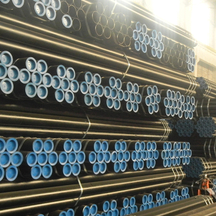
Threeway Steel Co., Ltd. is a trusted supplier of premium stainless steel seamless pipes tailored for demanding EPC projects. We offer a comprehensive range of materials, including 304/304L for general industrial applications and 316/316L for highly corrosive environments. Our pipes are widely used across the oil and gas, petrochemical, power generation, and water treatment industries.
We understand that EPC projects require strict adherence to technical specifications. Threeway Steel manufactures seamless pipes to exact outside diameters, wall thicknesses, and international standards. Every product is accompanied by comprehensive material certificates and inspection records to ensure quality and traceability.
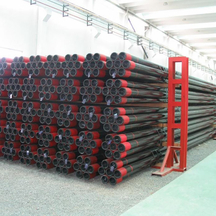
Logistics and safe transit are equally critical for international projects. We provide professional bundling, protective packaging, and customized labeling to prevent damage or contamination during transportation. Our logistics team coordinates global shipping to meet your exact delivery schedules.
From technical consultation to final delivery, Threeway Steel provides a complete, reliable supply chain for your EPC procurement needs. To receive a customized quotation and project-specific shipping plan, please provide your required steel grade, pipe dimensions, quantity, applicable standards, inspection requirements, destination, and delivery schedule.
Stainless Steel Seamless Pipes vs. Welded Pipes in EPC Applications
Key Differences
Aspect | Seamless Pipes | Welded Pipes |
|---|---|---|
Manufacturing | Formed from solid billet; no longitudinal weld seam | Formed from strip/plate; edges welded |
Pressure & Mechanical Performance | Preferred for high pressure, high temperature, and heavy loads | Can meet demanding requirements with proper quality control |
Corrosion Resistance | Determined by grade and surface condition | Grade + weld quality + post-weld treatment matter |
Cost | Higher | More economical, especially for large diameters |
Availability | Limited for some sizes | Wide range of sizes; efficient production |
Comparison Table
Factor | Seamless | Welded |
|---|---|---|
Weld seam | None | Present |
Structural continuity | Continuous | Weld area requires consideration |
Pressure capacity | High (when properly specified) | Good (with proper quality control) |
High-temperature service | Suitable | Suitable with correct grade and weld quality |
Corrosion resistance | Excellent (grade-dependent) | Excellent (grade + weld treatment) |
Cost | Higher | Lower |
Size availability | Limited for large diameters | Wide range |
Best for | Critical, high-pressure, demanding services | Standard applications; large diameters |
Selection Guide for EPC Projects
Project Requirement | Recommended Choice |
|---|---|
High pressure / critical service | Seamless |
High temperature / demanding mechanical loads | Seamless |
Large diameter / standard pressure | Welded |
Cost-sensitive general applications | Welded |
Corrosion-critical service (weld area concern) | Seamless or welded with post-weld treatment |
EPC Procurement Checklist
Item | Action |
|---|---|
Piping specification | Review project requirements |
Design code | Confirm applicable standard |
Operating conditions | Pressure, temperature, media |
Material grade | 304/304L, 316/316L, or other |
Dimensions | OD, wall thickness, schedule, length |
Testing requirements | NDT, hydrostatic, mechanical |
Supplier capability | Quality control and delivery record |
Budget | Balance cost and lifecycle value |
Conclusion
Piping is the backbone of any Engineering, Procurement, and Construction (EPC) project. For systems operating under extreme conditions, stainless steel seamless pipes are a top choice due to their superior corrosion resistance, mechanical strength, and durability across industries like oil and gas, petrochemicals, and power generation.
However, successful pipe selection requires more than just choosing a material type. EPC teams must evaluate specific service conditions, including operating pressure, temperature, fluid characteristics, and applicable industry standards. For instance, 304/304L is ideal for general use, while 316/316L is necessary for highly corrosive environments. Seamless construction is often preferred for critical high-pressure services.
Quality assurance is equally critical. Contractors must partner with suppliers who provide consistent products, rigorous inspections, and comprehensive material certificates to prevent compliance issues and project delays. Early coordination of procurement and logistics—including packaging, shipping, and delivery schedules—is also essential to keep the project on track.
FAQ:
FAQ 1: Why are stainless steel seamless pipes widely used in EPC projects?
They offer excellent corrosion resistance, high strength, durability, and reliable performance under demanding pressure and temperature conditions.
FAQ 2: What stainless steel grade is best for EPC piping applications?
It depends on the service conditions. 304/304L is suitable for many general applications, while 316/316L is often preferred for more corrosive environments.
FAQ 3: Are stainless steel seamless pipes suitable for high-pressure applications?
Yes. Properly specified seamless pipes can be suitable for high-pressure applications, provided their grade, wall thickness, dimensions, and applicable standards meet the project requirements.
FAQ 4: How should stainless steel seamless pipes be shipped for EPC projects?
They should be properly bundled, protected, labeled, and packaged to prevent damage and maintain material traceability during transportation.

About Us / News / Product / Project / Quality Assurance / Service / Contact Us
