Views: 0 Author: Site Editor Publish Time: 2026-08-06 Origin: Site
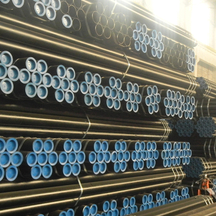
API 5L and ASTM A252 steel pipes serve distinct industrial purposes. API 5L, developed by the American Petroleum Institute, is designed for the transportation of fluids, including oil, natural gas, and water. It emphasizes pressure resistance, durability, and safe pipeline performance. In contrast, ASTM A252 is a structural specification primarily used for foundation piling in construction, bridges, and marine projects. It focuses on load-bearing capacity and structural stability rather than internal pressure.
The key differences lie in their applications, chemical composition, mechanical properties, and testing requirements. API 5L requires strict pressure and weld integrity tests, while ASTM A252 prioritizes axial strength and dimensional tolerances. Choosing the right standard ensures project safety and cost efficiency. For fluid transport, API 5L is ideal; for deep foundations, ASTM A252 is preferred.
What Is API 5L Steel Pipe?
API 5L steel pipe is a carbon steel pipe manufactured to strict standards set by the American Petroleum Institute (API). It is the industry standard for transporting oil, natural gas, water, and other fluids via pipelines. Thanks to its high strength, durability, and reliability, API 5L pipe is extensively used in the energy sector—particularly in oil and gas transmission systems, both onshore and offshore.
The API 5L specification governs every aspect of pipe production, including:
Chemical composition
Mechanical properties (yield strength, tensile strength, hardness)
Dimensional tolerances
Inspection, testing, and documentation
These requirements ensure that API 5L pipes perform safely under varying pressures, temperatures, and environmental conditions—from arctic cold to desert heat.
Key Specifications at a Glance
Parameter | Details |
|---|---|
Standard | API Specification 5L (46th Edition, current) |
Material | Carbon steel (micro-alloyed grades available) |
Pipe Types | Seamless (SMLS) and Welded (ERW, SAW, LSAW) |
Product Specification Levels | PSL1 and PSL2 |
Common Grades | Grade B, X42, X52, X60, X65, X70, X80 |
Diameter Range | 1/2" to 80" (DN15 to DN2000) |
Wall Thickness | Schedule 10 through Schedule 160, plus custom |
End Finishes | Plain end (PE), beveled end (BE), threaded & coupled (T&C) |
Coating Options | FBE, 3LPE, 3LPP, coal tar, epoxy (for corrosion protection) |
PSL1 vs. PSL2 – What’s the Difference?
API 5L pipes are divided into two product specification levels. The table below highlights the key distinctions:
Feature | API 5L PSL1 | API 5L PSL2 |
|---|---|---|
Quality Level | Standard/general purpose | Higher quality / stringent control |
Chemical Composition | Wider tolerances | Tighter limits (lower C, P, S, etc.) |
Carbon Equivalent (CE) | Not required | Mandatory calculation and limit |
Impact Testing | Not required (except by agreement) | Required at specified temperatures |
NDT (Non-Destructive Testing) | Optional | Mandatory (UT, MT, or RT) |
Hydrostatic Test | Required | Required (with higher stress level) |
Fracture Toughness | Not specified | Clearly defined |
Typical Application | Low-to-medium pressure, mild environments | High-pressure, sour service, offshore, arctic |
What Is ASTM A252 Steel Pipe?
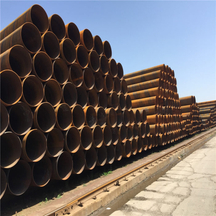
ASTM A252 steel pipe is a carbon steel pipe manufactured specifically for structural foundation piling. It complies with the ASTM A252 standard, which covers both seamless and welded steel pipe piles used in construction, marine, and civil engineering projects.
Key Specifications
Parameter | Details |
|---|---|
Standard | ASTM A252 |
Material | Carbon steel |
Pipe Types | Seamless (SMLS) and Welded (ERW, SAW, LSAW) |
Grades | Grade 1, Grade 2, Grade 3 |
Diameter Range | 6" – 120" (DN150 – DN3000) |
Wall Thickness | Varies by diameter and load |
Length | 20–40 ft (6–12 m), custom splices available |
End Finishes | Plain end, beveled end, or with driving shoes |
Primary Use | Load-bearing piles, foundation support |
Grade Comparison
Grade | Min. Yield Strength (ksi) | Min. Tensile Strength (ksi) | Best For |
|---|---|---|---|
Grade 1 | 30 | 50 | Light loads, temporary foundations |
Grade 2 | 35 | 60 | General building and bridge foundations |
Grade 3 | 45 | 65 | Heavy loads – high-rise buildings, offshore platforms |
Seamless vs. Welded
Type | Diameter Range | Cost | Typical Use |
|---|---|---|---|
Seamless | Up to 24" | Higher | Smaller diameters, high-stress zones |
Welded | Up to 120" | More economical | Large-diameter marine and heavy foundation piles |
Main Applications
Building foundation piles
Bridge piers and abutments
Marine structures (docks, wharves, jetties)
Offshore platforms
Retaining walls and cofferdams
Deep foundation engineering
Key Advantages
Advantage | Why It Matters |
|---|---|
High load capacity | Grade 3 supports extreme vertical and lateral loads |
Large diameters | Up to 120" enables single-pile heavy foundations |
Field spliceable | Sections can be welded on-site to reach required depth |
Durable | Withstands driving impact and corrosion (with coatings) |
Proven track record | Used worldwide in skyscrapers, ports, and offshore projects |
ASTM A252 vs. API 5L – Quick Comparison
Feature | ASTM A252 | API 5L |
|---|---|---|
Primary Use | Structural piling | Fluid transmission |
Key Property | Load-bearing strength | Pressure containment |
Grades | 1, 2, 3 | B, X42–X80 |
Hydrostatic Test | Optional | Mandatory |
Impact Testing | Not required | Required for PSL2 |
Industry | Construction, marine | Oil & gas, energy |
Selection Checklist
Factor | Consideration |
|---|---|
Grade | Choose Grade 3 for most heavy foundations |
Diameter/wall thickness | Match to axial capacity and drivability |
Soil conditions | Affects pile design and installation method |
Corrosion risk | Marine or acidic soils → apply coatings (FBE, epoxy, galvanized) |
Installation method | Impact driving needs thicker walls than vibratory |
Budget | Welded pipe is more cost-effective for large diameters |
API 5L vs. ASTM A252 Steel Pipe: Key Differences Comparison
Both API 5L and ASTM A252 are carbon steel pipes, but they serve entirely different purposes. Choosing the right one is critical for project safety, performance, and cost.
Quick Comparison Table
Aspect | API 5L | ASTM A252 |
|---|---|---|
Primary Use | Fluid transmission (oil, gas, water) | Structural piling & foundation support |
Main Application | Pipelines, refineries, petrochemical plants | Building foundations, bridges, marine structures |
Standard Body | American Petroleum Institute (API) | ASTM International |
Key Focus | Pressure resistance, strength, leak-proof operation | Load-bearing capacity, vertical support |
Common Grades | Grade B, X42, X52, X60, X65, X70 | Grade 1, Grade 2, Grade 3 (most popular) |
Product Levels | PSL1 and PSL2 (PSL2 = tighter quality control) | No sub-levels |
Design Pressure | High (designed for internal pressure) | Low (not pressure-rated) |
Typical Wall Thickness | Varies by pressure requirement | Usually thicker for soil/driving stress |
Testing Requirements | Hydrostatic, NDT, impact, tensile | Tensile, bending, flattening tests |
3 Key Differences Explained
1. Purpose & Application
API 5L = pipeline pipe → moves fluids under pressure over long distances.
ASTM A252 = pile pipe → supports heavy structures by transferring loads into the ground.
2. Grade & Strength
API 5L offers multiple strength levels (X42–X70) to match operating pressure.
ASTM A252 Grade 3 is the most common choice because it provides the best combination of strength and weldability for piling.
3. Selection Rule
Choose API 5L if your project involves transporting pressurized liquids or gases.
Choose ASTM A252 if your project requires deep foundation piles or structural columns.
Our API 5L and ASTM A252 Steel Pipe Products, Services, and Shipping Information
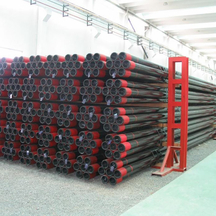
As a professional steel pipe supplier, we provide high-quality API 5L and ASTM A252 steel pipes for the energy, construction, and infrastructure sectors. Our API 5L seamless and welded pipes (Grades B to X65) are ideal for oil, gas, and fluid transportation pipelines. For structural needs, we supply ASTM A252 Grade 2 and 3 steel piles, perfect for building foundations, bridges, and marine projects.
We offer comprehensive customization services, including tailored dimensions, material selection, surface coatings, and third-party inspections. Every product undergoes strict quality control to ensure reliable performance. Additionally, we provide professional global logistics, offering container shipping for standard pipes and bulk vessel transport for large-diameter piles. With secure packaging and complete export documentation, we ensure efficient and safe delivery. Whether you need pipeline pipes or structural piles, we deliver reliable steel solutions tailored to your project requirements.
Conclusion: Choosing Between API 5L and ASTM A252 Steel Pipes
Choosing between API 5L and ASTM A252 steel pipes depends on project goals and operating conditions. Both are carbon steel standards but serve distinct industries.
API 5L is designed for pipeline transportation systems. It ensures safe, efficient movement of oil, gas, water, and other fluids under high pressure over long distances. With strict controls on chemistry, mechanics, and testing, it is ideal for energy, petrochemical, and industrial piping.
ASTM A252 is intended for structural and foundation support. It provides high load-bearing capacity and durability in construction projects like building foundations, bridges, marine structures, and offshore platforms. Grade 3 is often chosen for demanding structural roles.
Key selection factors include application type, pressure, strength needs, dimensions, and project standards. For fluid transfer, choose API 5L. For piling and support, choose ASTM A252. These standards are not interchangeable—each excels in its own field.
FAQ:
FAQ 1: Can API 5L pipe be used as a piling pipe?
Answer:
API 5L pipe is primarily designed for transporting oil, gas, and fluids under pressure. Although it may have sufficient strength for some structural applications, it is not specifically manufactured according to piling requirements. ASTM A252 is generally the preferred standard for foundation pile applications.
FAQ 2: What is the main difference between API 5L Grade B and ASTM A252 Grade 3 pipe?
Answer:
API 5L Grade B is a pipeline steel grade designed for fluid transportation, while ASTM A252 Grade 3 is a structural steel pile grade designed for foundation support. Their differences mainly involve intended use, testing requirements, and mechanical property specifications.
FAQ 3: Which is stronger, API 5L or ASTM A252 steel pipe?
Answer:
The strength comparison depends on the specific grade. API 5L grades may provide higher performance for pressure applications, while ASTM A252 Grade 3 is optimized for structural load-bearing capacity. The “stronger” option depends on the engineering requirements of the project.
FAQ 4: Can API 5L and ASTM A252 pipes be customized?
Answer:
Yes. Many manufacturers can provide customized pipe dimensions, lengths, coatings, inspection services, and export packaging according to project specifications and customer requirements.
About Us / News / Product / Project / Quality Assurance / Service / Contact Us