Views: 6 Author: Site Editor Publish Time: 2025-09-08 Origin: Site
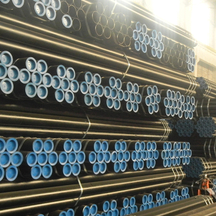
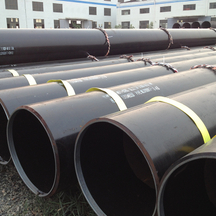
Seamless steel pipe is widely used in our daily lives, with a crucial application being its role as a conduit for the transmission of energy, including oil and natural gas. It can be laid not only on land but also on the seabed, greatly facilitating the flow of energy across different regions and offering a transportation method unmatched by land and sea transport.
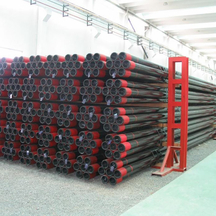
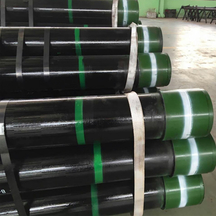
In today's society, protecting the safety of energy corridors is becoming increasingly important. Damage to oil pipelines has a significant impact on people, not only increasing their living costs but also seriously impacting regional security. What is so special about oil pipelines, such a vital means of production? Oil casing, a type of seamless steel pipe, is the lifeline that sustains oil well operations. It is primarily used to support the wellbore walls of oil and gas wells, ensuring the proper functioning of the entire well during drilling and after completion.
Oil pipe and casing differ from ordinary seamless steel pipe. Due to their use in complex geological environments and varying geological conditions, the downhole stresses are complex, with tensile, compressive, bending, and torsional stresses acting on the pipe body. This places high demands on the quality of the oil casing itself. In the API SPEC 5CT standard for oil pipelines, steel grades for oil casing and oil pipe are designated by their yield strength and specific characteristics. Steel grades are typically designated with one letter and two or three numbers, such as N80.
In most cases, the yield strength of the pipe increases with the letter's alphabetical order. For example, the yield strength of grade N80 steel is greater than that of grade J55. The numerical designation indicates the minimum yield strength of the pipe expressed in thousands of pounds per square inch. For example, the minimum yield strength of grade N80 steel is 80,000 lb/in². The API Spec 5CT standard lists the following oil casing steel grades: H40, J55, K55, N80, M65, L80, C90, C95, T59, P110, and Q125; oil casing steel grades: H40, J55, N80, L80, C90, T59, and P110.
Each well requires several layers of oil casing, depending on the drilling depth and geological conditions. Once lowered into the well, the casing is cemented. Unlike oil tubing and drill pipe, it is not reusable and is a disposable material. Damage to the casing itself can lead to reduced production or even the loss of the entire well. Consequently, casing consumption accounts for over 70% of all oil well pipes.
About Us / News / Product / Project / Quality Assurance / Service / Contact Us