Views: 11 Author: Site Editor Publish Time: 2026-05-09 Origin: Site
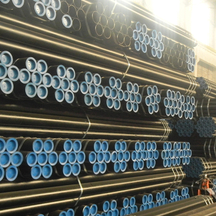
First, the standards and definitions of ASME SA-106Gr.B steel pipes and NACE MR0175 seamless steel pipes.
1. ASME SA-106Gr.B: This standard, developed by the American Society of Mechanical Engineers (ASME), is a specification for seamless carbon steel pipes used in high-temperature and high-pressure applications. Its chemical composition and mechanical properties are completely equivalent to those of ASTM A106 seamless steel pipes. Its core requirements include:
(1) Chemical composition: Carbon content ≤0.30%, manganese content 0.29%~1.06%, sulfur and phosphorus impurity content ≤0.035%.
(2) Mechanical properties: Tensile strength ≥415MPa, yield strength ≥240MPa, elongation ≥22%, operating temperature range covering -29℃ to 565℃.
(3) Application Scenarios: Widely used in high-temperature and high-pressure pipeline systems in the petroleum, natural gas, chemical, and power industries, such as boiler headers and high-pressure heat exchanger piping.
2. NACE MR0175: Developed by NACE, this standard specifies the performance requirements for metallic materials against sulfide stress corrosion cracking (SSC) and hydrogen-induced corrosion cracking (HIC) in corrosive media environments containing hydrogen sulfide (H₂S). Its core objective is to reduce the risk of major accidents caused by corrosion through material performance specifications, testing methods, and legal enforcement.
Second, the combination of AASME SA-106Gr.B steel pipe and NACE MR0175 seamless steel pipe
1. Material compatibility
ASME SA-106Gr.B seamless steel pipe must meet the NACE MR0175 standard, requiring strict control over chemical composition, mechanical properties, manufacturing process, and inspection:
(1) Chemical composition optimization: Limiting the content of impurities such as sulfur and phosphorus, and adding anti-corrosion alloying elements such as chromium and molybdenum to improve resistance to sulfide stress corrosion cracking.
(2) Mechanical property verification: Ensuring that the tensile strength, yield strength, elongation, and low-temperature toughness of the steel pipe meet the standard requirements through tensile tests, impact tests, etc.
(3) Hardness control: The material hardness must be ≤22HRC (Rockwell hardness) to reduce the risk of sulfide stress corrosion cracking.
(4) Heat treatment requirements: Tempering and quenching (quenching + tempering) are required to obtain a uniform microstructure and eliminate internal stress.
2. Manufacturing Process and Inspection
(1) Smelting: An electric arc furnace + LF refining + VD vacuum degassing process is used to control the sulfur content below 0.002%, reducing segregation defects.
(2) Hot Rolling: The tube billet is heated to approximately 1200℃, formed into a hollow tube by a piercing mill, and then extended through a continuous rolling mill with wall reduction. The final rolling temperature is controlled at 850-900℃, and the rolling speed is matched to ensure grain refinement.
(3) Cold Drawing: After pickling and phosphating, the hot-rolled tube billet is cold-drawn in multiple passes to achieve high precision, followed by normalizing to eliminate work hardening.
(4) Non-destructive Testing: Including ultrasonic testing and radiographic testing to detect internal defects.
(5) Physicochemical Performance Testing: Regularly, sample chemical composition, tensile tests, and impact tests are conducted to ensure compliance with standards. (6) Special Tests: No cracks were verified through HIC immersion tests and SSC four-point bending tests in an environment containing 5% H₂S and at 50℃.
Third, Application Areas of ASME SA-106Gr.B Steel Pipes and NACE MR0175 Seamless Steel Pipes
ASME SA-106Gr.B and NACE MR0175 seamless steel pipes combine high-temperature and high-pressure performance with resistance to hydrogen sulfide corrosion, making them particularly suitable for the following scenarios:
1. Oil and Gas Industry
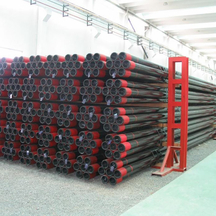
(1) Oil Well Casing and Tubing: Withstanding downhole pressure and corrosive media, such as in shale gas development in the Sichuan-Chongqing region, this material of tubing has been used in environments with 5% H₂S content for over 200,000 meters with an accident rate of <0.1%.
(2) Natural Gas Pipelines: Transporting natural gas containing small amounts of acidic impurities, ensuring safe energy transmission. For example, in Middle Eastern acidic gas field projects, seamless pipes of similar specifications have served at pressures up to 34.5 MPa and H₂S partial pressures of 1.2 MPa, without cracking for 10 years.
2. Chemical Industry: Transporting corrosive chemical raw materials or products, such as phosphoric acid solution in fertilizer production, avoiding the risk of leakage due to corrosion.
3. Power Industry: Used in cooling water pipelines and low-pressure steam transmission pipelines in thermal power plants, adaptable to environments with high temperature, high pressure, and weakly corrosive media.
About Us / News / Product / Project / Quality Assurance / Service / Contact Us