Views: 2 Author: Site Editor Publish Time: 2025-11-27 Origin: Site
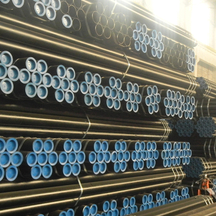
In the vast world of metallic materials, 316L stainless steel, with its unique properties and wide range of applications, has become an indispensable material in many industries, including industrial manufacturing, chemical equipment, and medical devices. In particular, 316L stainless steel seamless pipes play a crucial role in numerous engineering projects due to their high strength, corrosion resistance, and high-temperature resistance.
Details of 316L Stainless Steel Seamless Pipes.
Common Standards: ASME AS-213/SA-213M, ASME SA-312/SA-312, ASTM A312, GB/T14976
Chemical Composition: Carbon: 0.030, Silicon: ≤1.0, Manganese: ≤2.0, Phosphorus: ≤0.035, Sulfur: ≤0.030, Nickel: 10.00~14.00, Chromium: 16.00~18.00, Molybdenum: 2.0~3.0
Common Specifications: Outer diameter 57mm~1626mm, Wall thickness 1.2mm~60mm
First, an Overview of 316L Stainless Steel.
316L stainless steel is a type of austenitic stainless steel, obtained by adding 2%-3% molybdenum to 304 stainless steel. This change significantly improves the material's corrosion resistance in seawater and chloride environments, especially its resistance to intergranular corrosion under high-temperature conditions. In addition, 316L stainless steel also possesses excellent high-temperature resistance, capable of short-term use in environments up to 1300°C, while its continuous operating temperature can reach approximately 870°C. Simultaneously, its low carbon content (L represents low carbon) reduces chromium carbide precipitation during the welding of 316L stainless steel seamless pipes, effectively preventing intergranular corrosion in the weld area and ensuring excellent weld joint performance.
Second, the characteristics of 316L stainless steel seamless pipes.
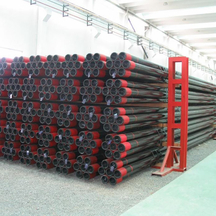
316L stainless steel seamless pipes, as the name suggests, are tubular products produced through a seamless process. They have smooth inner and outer walls, high dimensional accuracy, and can withstand high pressure without leakage. Compared to welded steel pipes, seamless steel pipes are superior in strength and reliability, especially suitable for applications requiring extremely high purity of fluid media. Their characteristics are mainly reflected in the following aspects:
1. Excellent corrosion resistance: As mentioned earlier, the corrosion resistance of 316L stainless steel seamless pipes is a major highlight, especially performing exceptionally well in chloride-containing environments, making it the preferred material in chemical, marine engineering, and other fields.
2. Good mechanical properties: High strength and high toughness, capable of withstanding large loads and impacts, ensuring stable operation under harsh working conditions.
3. Excellent high-temperature resistance: Maintains stable physical and chemical properties even in high-temperature environments, and is not easily deformed or damaged.
4. Easy to process and weld: Although 316L stainless steel seamless pipes have a slightly higher work hardening tendency, good processing and welding results can still be achieved by selecting appropriate tools and process parameters.
Third, Manufacturing Process of 316L Stainless Steel Seamless Pipes.
The manufacturing process of 316L stainless steel seamless pipes mainly includes raw material preparation, piercing, hot rolling (or cold rolling), heat treatment, pickling and passivation, inspection and testing, etc. Piercing is the key step in forming the tubular structure, usually using hot rolling, piercing, or extrusion piercing methods. During hot rolling, the 316L stainless steel seamless pipe is elongated, and its diameter is reduced at high temperatures, while simultaneously achieving the required wall thickness. Subsequently, depending on the requirements, the 316L stainless steel seamless pipe may need to undergo further dimensional finishing through cold rolling. Heat treatment helps eliminate processing stress and improve the overall performance of the material. Pickling and passivation remove oxide scale and stains from the surface of the 316L stainless steel seamless pipe, enhancing its corrosion resistance. Finally, rigorous inspection and testing, including visual inspection, hydrostatic testing, and non-destructive testing, ensure that the quality of each pipe meets standards.
Fourth, Application Areas of 316L Stainless Steel Seamless Pipes.
The application range of 316L stainless steel seamless pipes is extremely wide, covering the following major areas:
1. Chemical and Petrochemical Industry: Due to its excellent corrosion resistance and high-temperature resistance, 316L stainless steel seamless pipes have become the preferred material for key components such as piping systems, reactors, and heat exchangers in chemical plants.
2. Marine Engineering: In seawater environments, 316L stainless steel seamless pipes exhibit extremely high corrosion resistance and are widely used in offshore platforms, subsea pipelines, and seawater desalination equipment.
3. Food Processing and Pharmaceutical Industries: Due to its non-toxic, harmless, and easy-to-clean properties, 316L stainless steel seamless pipes meet hygiene standards and are therefore widely used in food processing and pharmaceutical equipment.
4. Paper and Textile Industries: In these industries, 316L stainless steel seamless pipes are used to transport corrosive liquids such as bleach and dyes, ensuring the continuity and stability of the production process.
Fifth, Current Market Status and Development Trends of 316L Stainless Steel Seamless Pipes.
In recent years, with the acceleration of global industrialization and the rise of emerging industries, the market demand for 316L stainless steel seamless pipes has continued to grow. Especially, the rapid development in environmental protection, new energy, and high-end equipment manufacturing has driven the development of 316L stainless steel seamless pipes towards higher quality and higher performance. At the same time, with the advancement of materials science, such as through innovations in alloying and heat treatment technologies, new varieties of 316L stainless steel with superior performance are constantly being developed, further expanding its application areas.
In conclusion, 316L stainless steel seamless pipes occupy a crucial position in modern industry due to their unique properties and wide range of applications. With technological advancements and market expansion, their future development prospects are even broader. For those working in related industries, a thorough understanding of the characteristics, manufacturing processes, and application areas of 316L stainless steel seamless pipes is not only helpful in improving product quality and service levels but also key to seizing market opportunities and meeting challenges. Let us look forward to 316L stainless steel seamless pipes shining even brighter in the future.
About Us / News / Product / Project / Quality Assurance / Service / Contact Us