Views: 11 Author: Site Editor Publish Time: 2025-11-17 Origin: Site
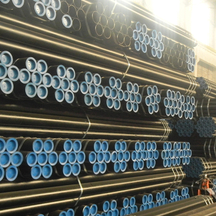
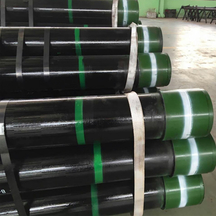
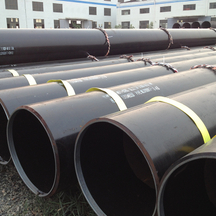
Q355B seamless steel pipe, a crucial material widely used in industrial fields, provides reliable protection for various engineering projects due to its excellent mechanical properties and stable chemical composition. This low-alloy high-strength structural steel not only inherits the basic characteristics of traditional carbon steel but also significantly enhances its comprehensive performance through the addition of trace alloying elements, making it an indispensable key material in modern engineering construction.
From a material properties perspective, Q355B seamless steel pipe possesses numerous outstanding advantages. Its yield strength reaches over 355MPa, tensile strength ranges from 470-630MPa, and elongation is not less than 22%, fully meeting the requirements of most load-bearing structures. Compared to ordinary carbon steel, Q355B achieves a balance between strength and toughness without significantly increasing costs through the addition of microalloying elements such as niobium, vanadium, and titanium. Particularly noteworthy is its excellent low-temperature impact performance, maintaining good toughness even at -20℃, making it particularly suitable for use in northern regions and low-temperature conditions. Chemical composition analysis shows that the carbon content of Q355B is controlled below 0.20%, effectively improving weldability. The reasonable ratio of silicon and manganese ensures strength while avoiding increased brittleness. Harmful elements such as sulfur and phosphorus are strictly limited to below 0.035%, ensuring material purity.
In terms of production processes, modern Q355B seamless steel pipes mainly employ two forming processes: hot rolling and cold drawing. Hot rolling involves heating the steel billet to approximately 1200℃ for piercing and rolling, ultimately forming a seamless pipe. This process boasts high production efficiency and is suitable for mass production of standard specifications. Cold drawing, on the other hand, involves multiple drawing operations on the hot-rolled tube at room temperature, resulting in finished products with higher dimensional accuracy and surface finish, particularly suitable for precision machinery applications with stringent tolerance requirements. Regardless of the process, rigorous quality control measures are required, including ultrasonic testing, eddy current testing, and hydrostatic testing, ensuring that each steel pipe meets the requirements of the national standard GB/T8162-2018.
In practical applications, Q355B seamless steel pipes exhibit exceptional adaptability. In the construction industry, they are widely used in load-bearing columns and trusses for large-span spatial structures such as stadiums and convention centers. In the machinery manufacturing industry, they are the preferred material for key components such as hydraulic cylinders and bearing sleeves. In the energy sector, they are an important material for petroleum cracking pipes and boiler tubes. Particularly noteworthy is that, against the backdrop of the rapid development of the wind power industry, Q355B seamless steel pipes have become the mainstream material for wind turbine towers due to their excellent fatigue resistance. According to feedback from engineering practice, correctly selected Q355B steel pipes rarely experience quality problems such as cracking or deformation during their service life, and their reliability is widely recognized in the industry.
From a market supply perspective, the domestic Q355B seamless steel pipe industry has formed a complete industrial chain. Large steel companies can stably provide high-quality products of various specifications, meeting diverse customer procurement needs. According to market research data, common specifications such as Φ89×4.5mm, Φ114×6mm, and Φ168×8mm are in ample stock, and custom production of special specifications is also available. Regarding pricing, influenced by raw material fluctuations, the mainstream price of Q355B seamless steel pipes in the third quarter of 2025 ranged from 5500-6500 yuan/ton, a slight decrease compared to the same period last year. This was mainly due to cost optimization resulting from improvements in steelmaking processes.
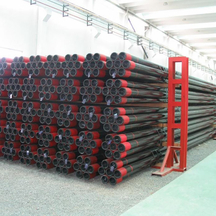
When purchasing Q355B seamless steel pipes, professionals recommend focusing on several key indicators. First, verify whether the supplier provides complete quality certification documents, including material certificates and test reports. Second, confirm through actual measurement whether dimensional parameters such as outer diameter and wall thickness meet tolerance requirements. Third, observe the surface for defects such as cracks and scale. For pipes used in important projects, third-party re-inspection is also recommended, especially impact testing and hardness testing. Storage is also crucial; steel pipes should be stored in a dry environment, avoiding contact with corrosive substances, and wooden strips should be used to separate stacked pipes to prevent surface scratches.
From a technological development perspective, Q355B seamless steel pipes are moving towards high performance and green manufacturing. Some leading companies have begun trial production of nitrogen-microalloyed Q355B steel pipes, further improving the strength-toughness balance through grain refinement. Other research teams are exploring short-process production techniques, potentially reducing energy consumption by over 20%. With the advancement of the "dual-carbon" strategy, green, low-carbon Q355B steel pipes produced using electric furnace short-process methods will gradually expand their market share. In terms of intelligent manufacturing, more and more steel pipe plants are introducing online quality monitoring systems, using big data analysis to dynamically optimize process parameters, significantly improving product consistency.
The installation and construction phase also requires professional technical support. For cutting Q355B seamless steel pipes, plasma or laser equipment is recommended; if flame cutting is used, preheating is necessary. Low-hydrogen welding rods should be used during welding, and interpass temperature should be strictly controlled. For structural parts subjected to alternating loads, post-weld stress relief treatment is recommended. In a real-world engineering case, a cross-sea bridge project improved the joint fatigue life by more than three times by optimizing the welding process of Q355B steel pipes, fully demonstrating the importance of correct construction.
In terms of maintenance, regular inspections are crucial for ensuring the long-term reliable operation of Q355B seamless steel pipes. In corrosive environments such as chemical plants, special attention should be paid to wall thinning; ultrasonic thickness gauges can be used for testing when necessary. For structural pipes used outdoors, it is recommended to repair the anti-corrosion coating every 3-5 years. It is worth noting that some new protective technologies, such as nano-coatings and cathodic protection, are being promoted and applied in the field of Q355B steel pipe protection, which can significantly extend its service life.
In summary, Q355B seamless steel pipes, with their balanced performance indicators and mature production processes, have established an irreplaceable position in many engineering fields. With the advancement of materials science and the innovation of manufacturing technology, Q355B steel pipes will play a more extensive role in the future, providing solid support for various infrastructure constructions. For users, a thorough understanding of material properties, strict control of procurement quality, and standardized construction procedures are essential to fully realize the performance potential of this high-quality material.
About Us / News / Product / Project / Quality Assurance / Service / Contact Us