Views: 9 Author: Site Editor Publish Time: 2025-06-19 Origin: Site
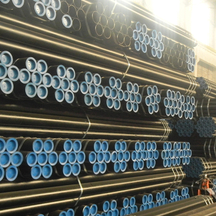
16MnDG seamless steel pipe is a special steel pipe commonly used in low-temperature environments. The following is an introduction to it from different angles:
First, the chemical composition of 16MnDG seamless steel pipe
- The carbon content is generally 0.12%-0.20%. The appropriate carbon content gives the steel basic strength and avoids the risk of embrittlement caused by excessive carbon.
- The manganese content is 1.20%-1.60%. The manganese element significantly improves the strength and toughness of the steel, allowing it to withstand greater stress. It is also one of the origins of the name "16Mn" for this steel.
- The silicon content is about 0.20%-0.55%. Silicon plays a deoxidizing role and also helps to enhance the strength of the steel and improve the hot processing performance.
- The content of impurity elements such as phosphorus and sulfur is strictly limited, phosphorus does not exceed 0.025%, and sulfur does not exceed 0.025%, so as to ensure the good toughness and welding performance of the steel.
- It also contains trace amounts of alloying elements, such as aluminum, which is beneficial for grain refinement and improving the low-temperature toughness of steel, especially in low-temperature service scenarios.
Second, the mechanical properties of 16MnDG seamless steel pipes
- The tensile strength is between 490-670MPa. The higher tensile strength indicates that the steel pipe has good bearing capacity under tensile stress and maintains structural stability.
- The yield strength is not less than 325MPa, which means that when the external force reaches this value, the steel pipe begins to produce plastic deformation. This indicator ensures that the steel pipe will not fail and deform prematurely.
- The elongation is not less than 21%. The larger elongation reflects that the steel has good plasticity. When encountering sudden external force impact, it can buffer energy through moderate deformation instead of direct brittle fracture.
- It has excellent low-temperature impact toughness and is specially designed for low-temperature use. Under specific low-temperature conditions (such as -40℃), the impact energy can also meet strict requirements to prevent low-temperature brittle fracture.
Third, the manufacturing process of 16MnDG seamless steel pipe
1. Hot rolling process
- Preparation and inspection of tube billets: Select steel billets that meet the chemical composition and quality requirements, strictly inspect their surface quality, dimensional accuracy, etc., remove surface defects such as cracks and scars, etc., to ensure that the quality of the tube billets is qualified.
- Heating of tube billets: Send the qualified tube billets into the heating furnace and heat them to a suitable temperature range, generally around 1200℃-1250℃, so that the tube billets have good plasticity and machinability.
- Perforation: The heated tube billets are sent to the perforator for perforation operation. Through the mechanical force and thermal action of perforation, a cavity is formed in the center of the tube billet to make a rough tube. During the piercing process, the tube billet rotates and moves forward continuously, and the prototype of the seamless steel pipe is gradually formed under the action of the rollers and the mandrel.
- Pipe rolling: The rough tube is then sent to the tube rolling mill for rolling. Through multiple rolling passes, the wall thickness of the steel tube is further reduced, its dimensional accuracy and surface quality are improved, and the shape and size of the steel tube are gradually close to the requirements of the finished product.
- Steel pipe reheating: The steel pipe after tube rolling may increase its hardness and reduce its plasticity due to work hardening and other reasons. It needs to be heated again to improve its structure and performance and prepare for subsequent sizing and other processes.
- Sizing (reducing): The reheated steel pipe enters the sizing machine or reducing machine. Through the extrusion of the rollers, the outer diameter of the steel pipe is accurately controlled to reach the specified dimensional tolerance range and obtain the required outer diameter accuracy and surface finish.
- Heat treatment: The sizing steel pipe is heat treated, generally using normalizing treatment, to refine the grains, improve the uniformity of the structure, eliminate internal stress, and improve the comprehensive mechanical properties of the steel pipe, so that it meets the use requirements in low-temperature environments.
- Finished pipe straightening: After heat treatment, the steel pipe may bend and deform to a certain extent. It needs to be straightened by a straightening machine to make the straightness of the steel pipe meet the standard requirements and ensure the appearance quality and performance of the steel pipe.
- Finishing: Surface treatment of the straightened steel pipe, such as pickling and phosphating, is performed to remove impurities such as scale and rust on the surface of the steel pipe to improve the surface quality of the steel pipe. At the same time, the two ends of the steel pipe are cut and chamfered to make the end surface flat and smooth, which is convenient for subsequent installation and use.
- Inspection: Comprehensive quality inspection of finished steel pipes, including non-destructive testing, physical and chemical properties testing, dimensional accuracy testing, etc. Non-destructive testing mainly uses ultrasonic flaw detection, eddy current flaw detection, and other methods to check whether there are defects such as cracks and pores inside the steel pipe; physical and chemical properties testing analyzes and tests the chemical composition and mechanical properties of the steel pipe to ensure that it meets relevant standards and technical requirements; dimensional accuracy testing mainly checks whether the outer diameter, wall thickness, length and other dimensions of the steel pipe are within the specified tolerance range. Only steel pipes that have passed the inspection can be put into storage or delivered for use as finished products.
2. Cold rolling (drawing) process
- Billet preparation: Select suitable hot-rolled tube billets or steel pipes that have been pre-treated by pickling, annealing, etc. as billets, and check the dimensional accuracy, surface quality, etc. of the billets to ensure that they meet the requirements of the cold rolling (drawing) process.
- Pickling and lubrication: In order to remove the oxide scale and oil stains on the surface of the billet, improve the surface quality of the steel pipe, and increase the service life of the cold rolling (drawing) die, the billet needs to be pickled. After pickling, lubricant is applied to the surface of the billet to reduce friction during the cold rolling (drawing) process and prevent scratches on the surface of the steel pipe and wear of the die.
- Cold rolling (drawing): The billet that has been pickled and lubricated enters the cold rolling mill or cold drawing machine for processing. Cold rolling causes the steel pipe to produce plastic deformation at room temperature through the extrusion of the rollers, thereby reducing the wall thickness, and improving the dimensional accuracy and surface quality; cold drawing pulls the steel pipe through the die to reduce its cross-sectional area and increase its length to achieve the required size specifications. During the cold rolling (drawing) process, it is necessary to reasonably select the process parameters such as the number of rolling or drawing passes and deformation according to the material, specifications, and finished product requirements of the steel pipe to ensure the performance and quality of the steel pipe.
- Heat treatment: The steel pipe after cold rolling (drawing) has high strength and hardness due to work hardening, but low plasticity and toughness, and heat treatment is required to improve its structure and performance. Generally, annealing or tempering treatment is used. Annealing can eliminate work hardening and restore the plasticity and toughness of the steel pipe. Tempering can further improve the toughness and stability of the steel pipe on the basis of maintaining a certain strength.
- Straightening: Similar to the hot rolling process, the cold rolled (drawn) steel pipe after heat treatment also needs to be straightened to ensure that its straightness meets the requirements.
- Finishing: The straightened steel pipe is subjected to surface treatment, such as pickling, phosphating, shot blasting, etc., to remove impurities such as oxide scale and oil stains on the surface and improve the surface finish of the steel pipe. At the same time, the two ends of the steel pipe are cut and chamfered to meet the requirements of dimensional accuracy and appearance quality.
- Inspection: The finished cold-rolled (drawn) steel pipe is subjected to comprehensive quality inspection, including non-destructive testing, physical and chemical performance testing, dimensional accuracy testing, etc., to ensure that the quality of the steel pipe meets the relevant standards and user requirements before it can be put into storage or delivered for use.
Fourth, the use of 16MnDG seamless steel pipe
- Chemical industry: In chemical production, low-temperature fluids are transported, such as some low-temperature reaction raw materials, and refrigerants, such as liquid ammonia transport steel pipes, which rely on their low-temperature toughness and corrosion resistance to stabilize the chemical process.
- Energy industry: In the exploitation and transportation of oil and natural gas, in cold areas, steel pipes for oil and gas transportation are used, which are not afraid of low-temperature harsh environments and ensure uninterrupted energy transmission.
- Refrigeration industry: As a cold storage refrigeration steel pipe, it directly faces low-temperature working conditions and refrigerant erosion, maintains the efficiency and stability of the refrigeration system, and reduces maintenance costs.
- Mechanical manufacturing: Some mechanical parts that work at low temperatures, if made of 16MnDG steel pipes, can meet the low temperature and force requirements of equipment operation.
About Us / News / Product / Project / Quality Assurance / Service / Contact Us