Views: 7 Author: Site Editor Publish Time: 2025-09-09 Origin: Site
The manufacturing process for internal and external plastic-coated composite steel pipe is similar to that of other plastic-coated steel pipes. The coating material may differ depending on the customer's requirements, and different coating materials will be applied based on the customer's needs. How should pipes be selected and purchased during modern home renovations? How can the quality of pipes be judged? Here are some tips on selecting and identifying the quality of plastic-coated steel composite pipes. Plastic-coated steel pipes are also used in the chemical industry, including for transporting various chemical liquids, and can also be used as ventilation pipes in mines and shafts.
The centrifugal casting process, a fixed-length method for producing plastic-coated steel pipes, is a process in which chopped glass fiber reinforcements and sand are fed into a steel mold fixed on bearings. A catalyst-containing unsaturated resin is injected into one end of the mold to impregnate the reinforcements. Centrifugal force displaces air from the fibers and filler, creating a dense, non-porous composite material. Centrifugal force forms a smooth, resin-rich inner surface on the pipe's inner wall, and the pipe cures at a relatively high temperature.
But what are the characteristics of internally and externally plastic-coated composite steel pipes? Data shows that my country reduced over 10 million tons of steel production capacity in the first half of the year, achieving approximately 10% of this year's target. If defects are found, they are automatically spray-marked, allowing production workers to adjust process parameters accordingly and promptly correct them. Coated steel pipes should have clear and durable markings, including at least: product model, base pipe specifications and wall thickness, implementation standards, manufacturer's name or trademark, and production date or batch number. After all, this type of pipe requires high drilling requirements during use, which can result in a very rough and uneven surface, significantly impacting its performance.
Scrap is divided into internal and external scrap. Casings are classified into different steel grades based on their inherent strength, namely J, K, N, L, C, T, P, Q, and V. If defects appear on the weld surface, there's a possibility of defects within the weld. Clearly, the development of plastic-coated steel pipes is a spiral process. The service life of plastic-coated steel pipes is expected to decline slightly. In recent years, the application of plastic-coated steel pipe has expanded rapidly.
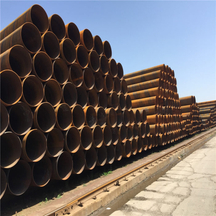
Plastic-coated steel pipe products include: water supply plastic-coated steel pipe, central air conditioning and HVAC circulating water plastic-coated steel pipe, fire protection plastic-coated steel pipe, anti-corrosion plastic-coated steel pipe, gas plastic-coated steel pipe, and so on. These products have been used in various diameters ranging from DN15 to DN. The coating of hot-dip plastic-coated steel pipe has extremely strong adhesion. The hot-dip plastic-coated steel pipe is surface-treated with internal sandblasting and external shot blasting to increase the contact area between the steel surface and the coating, making the plastic-coated steel pipe generally suitable for low-pressure fluid transportation. Spiral double-sided submerged arc-welded steel pipe is manufactured using double-sided automatic submerged arc welding or single-sided welding. It is used for water, gas, air, steam, construction piling, and low-pressure transmission pipelines.
Spiral steel pipe is generally stronger than straight seam welded pipe. It can produce larger diameter pipes from narrower billets, and can also produce pipes of different diameters from the same billet width. It's important to understand the forming methods used to produce plastic-coated steel pipes. These include the UOE method, CFE roll forming, RBE roll bending, JCOE forming, C-forming, and PFP step-by-step bending. Externally galvanized, internally plastic-coated composite steel pipe (steel-plastic composite pipe) uses galvanized pipe as the base pipe, with the inner wall coated with a high-adhesion, corrosion-resistant, food-grade, and hygienic polyethylene powder coating or epoxy resin paint. Standard models are as small as 1.8mm, while reinforced models are as small as 5mm. Coating adhesion to the substrate is a key indicator of the coating's corrosion resistance. Plastic-coated steel pipe manufacturers understand pickling: Chemical and electrolytic pickling are commonly used. Chemical pickling is the only method used for pipeline corrosion protection. It removes scale, rust, and old coatings, and can sometimes be used as a secondary treatment after sandblasting.
About Us / News / Product / Project / Quality Assurance / Service / Contact Us