Views: 1 Author: Site Editor Publish Time: 2025-12-10 Origin: Site
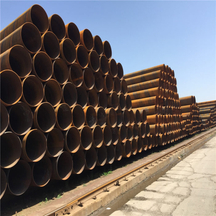
Spiral steel pipes are mainly used in water supply projects, the petrochemical industry, the chemical industry, the power industry, agricultural irrigation, and urban construction. Spiral steel pipes are one of the twenty key products developed in my country.
Spiral steel pipes are used for liquid transportation: water supply and drainage. For gas transportation: coal gas, steam, and liquefied petroleum gas. For structural applications: as piling pipes, bridge pipes, pipes for docks, roads, and building structures, etc.
Spiral steel pipes are made from strip steel coils as raw material, formed by cold extrusion, and welded using an automatic double-wire double-sided submerged arc welding process. The strip steel is fed into the welding pipe unit, rolled by multiple rollers, and gradually rolled up to form a circular pipe blank with an open gap. The pressure of the extrusion rollers is adjusted to control the weld gap to 1-3mm, and the two ends of the weld are flush.
Differences between Spiral Steel Pipes and Precision Steel Pipes
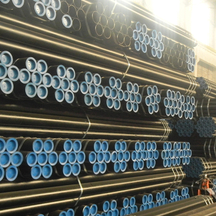
Spiral steel pipes can be divided into two main categories according to their manufacturing method: spiral steel pipes and welded steel pipes (also known as straight seam steel pipes). Spiral steel pipes can be further classified by manufacturing method into: hot-rolled seamless steel pipes, cold-drawn steel pipes, precision steel pipes, hot-expanded steel pipes, cold-spun steel pipes, and extruded steel pipes. Spiral steel pipes are made of high-quality carbon steel or alloy steel and are available in hot-rolled and cold-rolled (drawn) varieties. A key characteristic of spiral steel pipes is the absence of weld seams, allowing them to withstand greater pressure.
The product can be a very rough cast or cold-drawn part. Welded steel pipes are classified according to their welding process into furnace-welded steel pipes, electric-welded (resistance-welded) steel pipes, and automatic electric arc-welded steel pipes. They are also classified according to their welding method into straight seam-welded steel pipes and spiral-welded steel pipes. Finally, they are classified according to the shape of their ends into round welded steel pipes and irregularly shaped (square, flat, etc.) welded steel pipes.
Welded steel pipes are made by welding rolled steel plates into tubular shapes with butt joints or spiral joints. In terms of manufacturing methods, they are further divided into welded steel pipes for low-pressure fluid transportation, spiral welded steel pipes, direct rolled welded steel pipes, and electric welded steel pipes. Spiral steel pipes can be used for liquid and gas pipelines in various industries. Welded pipes can be used for water pipelines, gas pipelines, heating pipelines, electrical conduits, etc.
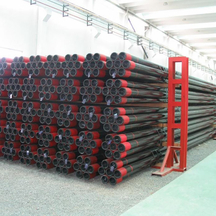
Precision steel pipes are a product that has emerged in recent years. They are characterized by strict tolerances and surface roughness in the inner diameter and outer wall dimensions. Precision steel pipes are a high-precision steel pipe material produced through cold drawing or hot rolling. Due to their advantages, such as no oxide layer on the inner and outer walls, no leakage under high pressure, high precision, high gloss, no deformation after cold bending, and no cracks after flaring and flattening, precision steel pipes are mainly used to produce pneumatic or hydraulic components, such as cylinders or oil cylinders.

About Us / News / Product / Project / Quality Assurance / Service / Contact Us
