Views: 6 Author: Site Editor Publish Time: 2025-09-12 Origin: Site
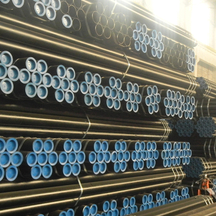
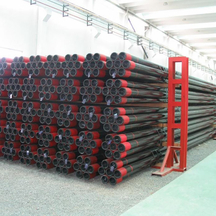
GB/T30059 Corrosion-Resistant Alloy Seamless Steel Tube for Heat Exchangers is a specialty steel tube widely used in corrosive media. Its unique material and manufacturing process make it an indispensable component in heat exchangers. This article will provide a detailed explanation of the GB/T30059 standard, including its development background, technical requirements, test methods, inspection rules, and application examples.
GB/T30059-2013 "Corrosion-Resistant Alloy Seamless Steel Tube for Heat Exchangers" is a national standard designed to regulate corrosion-resistant alloy seamless steel tubes used in heat exchangers. This standard was developed primarily based on the development needs of the domestic and international heat exchanger industry and the latest research findings in corrosion-resistant alloy materials. By clarifying technical requirements, test methods, and inspection rules, this standard ensures the reliability and service life of corrosion-resistant alloy seamless steel tubes in heat exchangers, and is of great significance in promoting the advancement of heat exchanger technology.
In terms of technical requirements, the GB/T30059 standard details the chemical composition range of the material, including the percentage limits for elements such as nickel, chromium, and molybdenum. The content of these elements has a decisive influence on the corrosion resistance of the pipe. For example, the addition of nickel and chromium significantly improves the material's oxidation and corrosion resistance, while the addition of molybdenum helps enhance the material's stability in high-temperature and high-pressure environments. Furthermore, the standard provides specific mechanical properties for different grades of corrosion-resistant alloy seamless steel pipe, such as tensile strength, yield strength, and elongation. These indicators are directly related to the reliability and lifespan of the pipe in practical applications.
GB/T30059 also provides clear regulations on dimensions and shape. These include outer diameter deviation, wall thickness deviation, and length ranges. These regulations ensure product consistency and interchangeability. For example, the curvature of alloy pipes should not exceed 1.5mm per meter, and the total curvature should not exceed 0.15% of the total length. Furthermore, the out-of-roundness and wall thickness unevenness of alloy pipes should not exceed 80% of the outer diameter and wall thickness tolerances, respectively. These regulations help ensure the stability and reliability of pipes during installation and use.
In addition to requirements for chemical composition, mechanical properties, and dimensions, the GB/T30059 standard also emphasizes the importance of surface quality. Finished products must be free of cracks, folds, or other defects that could affect performance. These defects not only reduce the corrosion resistance of the pipe but can also lead to safety hazards, such as leakage in heat exchangers during operation. Therefore, strict control measures are required during the manufacturing process to ensure pipe surface quality.
In terms of testing methods, the GB/T30059 standard describes how to verify pipe compliance with the aforementioned technical specifications through a series of tests. These tests cover chemical analysis, mechanical property testing (such as tensile testing), and process performance evaluation (such as flattening and flaring tests). Each test has its own specific purpose and operating procedures, working together to comprehensively assess product compliance. For example, chemical analysis can accurately determine the content of various elements in the pipe, thereby determining whether it meets the chemical composition range required by the standard. Tensile testing can measure mechanical properties such as tensile strength and yield strength to assess the pipe's reliability in use. In terms of inspection rules, the GB/T30059 standard specifies the inspection and acceptance process for alloy tubes. This includes the sampling quantity and locations, as well as re-inspection and judgment rules. These regulations ensure the fairness and accuracy of the inspection process and facilitate the timely detection and handling of substandard products. The standard also stipulates the packaging, marking, and quality certification of alloy tubes, facilitating their transportation, storage, and use.
In practical applications, GB/T30059 corrosion-resistant alloy seamless steel tubes for heat exchangers demonstrate excellent corrosion resistance and mechanical properties. For example, in industries such as chemical, petroleum, and power generation, heat exchangers are often subject to high temperatures, high pressures, and corrosive media. Using GB/T30059 corrosion-resistant alloy seamless steel tubes can effectively improve the corrosion resistance and service life of heat exchangers, reducing maintenance costs and downtime. Furthermore, GB/T30059 corrosion-resistant alloy seamless steel tubes also play an important role in high-end fields such as marine engineering and aerospace.
It's worth noting that with technological advancements and growing environmental awareness, the requirements for corrosion-resistant alloy seamless steel pipes used in heat exchangers are also increasing. For example, in the field of new energy sources such as solar and wind power, heat exchangers must withstand increasingly complex and variable operating conditions. This requires corrosion-resistant alloy seamless steel pipes to possess not only excellent corrosion resistance but also higher mechanical properties, such as strength and toughness. Therefore, the GB/T30059 standard will need to be continuously updated and improved to adapt to the development needs of new technologies and fields.
Furthermore, the manufacturing process of corrosion-resistant alloy seamless steel pipes requires continuous exploration of new processes and technologies. For example, optimizing smelting and processing techniques can further improve the purity and uniformity of the pipes, while adopting advanced surface treatment technologies can further enhance the corrosion and wear resistance of the pipes. The application of these new processes and technologies will help enhance the overall performance and market competitiveness of GB/T30059 corrosion-resistant alloy seamless steel pipes used in heat exchangers.
In summary, GB/T30059 corrosion-resistant alloy seamless steel pipe for heat exchangers is a specialty steel pipe widely used in corrosive media. Its unique material and manufacturing process make it an indispensable component in heat exchangers. Through clear national standards and specifications, including technical requirements, test methods, and inspection rules, the reliability and service life of corrosion-resistant alloy seamless steel pipes in heat exchangers are ensured. Furthermore, with the continuous advancement of science and technology and the development needs of new fields, the GB/T30059 standard will need to be continuously updated and improved to adapt to the development needs of new technologies and new fields. The manufacturing process also requires continuous exploration of new processes and technologies to enhance the overall performance and market competitiveness of the pipes.
About Us / News / Product / Project / Quality Assurance / Service / Contact Us