Views: 4 Author: Site Editor Publish Time: 2026-03-17 Origin: Site
First, Classification of Stainless Steel Pipes
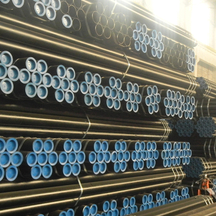
Stainless steel pipes can be classified into various types according to their material, with austenitic stainless steel being the mainstream choice, including 304 stainless steel, 316 stainless steel, and 316L stainless steel. Furthermore, they can be divided into two main categories according to manufacturing process: seamless steel pipes and welded steel pipes. Seamless steel pipes include various types such as seamless steel pipes for general structures, seamless steel pipes for mechanical structures, and seamless steel pipes for low and medium pressure boilers.
Second, the main characteristics of Stainless Steel Pipes
* Corrosion Resistance: Stainless steel pipes have excellent corrosion resistance to water, air, steam, and other chemicals, making them suitable for use in harsh environments.
* High Strength: Stainless steel pipes have high tensile strength and pressure resistance, suitable for applications requiring high pressure.
* Hygiene: Stainless steel pipes have a smooth surface, making them less prone to bacterial growth, which makes them suitable for the food and beverage industry.
* Heat Resistance: Stainless steel pipes can withstand certain high temperatures, making them suitable for hot water transportation.
* Aesthetics: Stainless steel pipes have a bright appearance, are easy to clean, and are suitable for architectural decoration.
* Weldability: Stainless steel pipes can be connected by welding, facilitating construction.
* Recyclability: Stainless steel is a recyclable material, which is beneficial to environmental protection.
Third, Application Areas of Stainless Steel Pipes
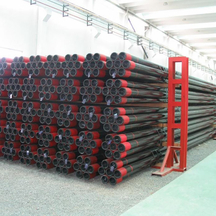
Fluid Transportation: Stainless steel pipes are widely used as pipelines for transporting fluids such as oil, natural gas, water, coal gas, and steam.
Machinery Manufacturing: Due to their lightweight and high strength, stainless steel pipes are also widely used in the manufacture of mechanical parts and engineering structures.
Construction: Stainless steel pipes are used in water supply, heating, and air conditioning systems in commercial buildings and high-rise residential buildings.
Medical: 316L stainless steel pipes are often used in the manufacture of medical equipment due to their good corrosion resistance and processing properties.
Food Processing: Stainless steel pipes must meet the GB 4806.9 standard, with the inner wall electropolished to Ra≤0.4μm to inhibit bacterial growth.
Fourth, Manufacturing Processes of Stainless Steel Pipes
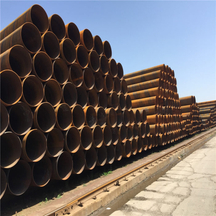
The main manufacturing processes of stainless steel pipes include hot rolling, cold drawing (cold rolling), and welding. Hot rolling is suitable for producing large-diameter, thick-walled stainless steel pipes, but the dimensional accuracy of the pipes is relatively low. Cold drawing and cold rolling processes are used to improve dimensional accuracy and surface quality. Welding is a process that involves welding stainless steel sheets or strips to produce steel pipes, offering high production efficiency and low cost.
In summary, stainless steel pipes are widely used in various fields due to their numerous excellent properties. When selecting stainless steel pipes, the appropriate material and specifications should be chosen based on the specific application scenario and requirements.
About Us / News / Product / Project / Quality Assurance / Service / Contact Us