Views: 3 Author: Site Editor Publish Time: 2026-03-10 Origin: Site
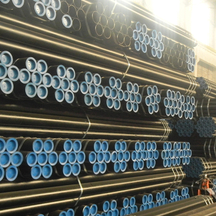
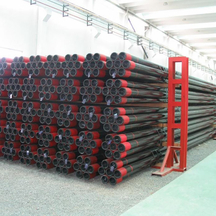
Seamless steel pipes are an important material widely used in petroleum, natural gas, automotive, construction, machinery, power, and chemical industries. Unlike welded pipes, seamless steel pipes are made by piercing a single piece of round steel, resulting in a surface without weld seams, hence the name "seamless steel pipe." Production methods include hot rolling, cold rolling, cold drawing, extrusion, and jacking.
Common materials for seamless steel pipes include carbon steel, alloy steel, and stainless steel. Carbon steel has good mechanical properties and weldability, but poor corrosion resistance. Alloy steel improves strength, hardness, and wear resistance by adding other elements. Seamless steel pipes for structural use (GBT8162), seamless steel pipes for low and medium pressure boilers (GB3087), seamless steel pipes for high pressure boilers (GB5310), and seamless steel pipes for petroleum cracking (GB9948) are mostly made of carbon steel or alloy steel.
Stainless steel possesses excellent corrosion resistance, formability, and toughness over a wide temperature range, making it widely used in industrial, consumer goods, and building decoration industries. Based on its main chemical composition, stainless steel can be classified into chromium stainless steel (commonly known as the 400 series), chromium-nickel stainless steel/chromium-nickel-molybdenum stainless steel (commonly known as the 300 series), and chromium-manganese-nitrogen stainless steel (commonly known as the 200 series).
The selection of seamless stainless steel pipes typically requires consideration of factors such as the material's properties (chemical composition), pressure and temperature requirements, corrosion resistance requirements, connection methods, dimensions, and surface treatment requirements. First, it's essential to know where seamless stainless steel pipes are used. Determine the appropriate material (steel grade/class) based on the intended application. Refer to relevant standards; some are as follows:
(1) General applications: Refer to the General Standard for Seamless and Welded Austenitic Stainless Steel Pipes (ASTM A269)
(2) Seamless Stainless Steel Pipes for Fluid Transport (GB/T 14976)
(3) Seamless Ferritic and Austenitic Alloy Steel Pipes for Boilers, Superheaters, and Heat Exchangers (ASTM A213)
(4) Seamless Steel Pipes for Pressure Applications (EN 10216)
(5) Diesel Engines - High-Pressure Fuel Injection Pipe Assemblies (ISO 13296)
(6) Precision Seamless Stainless Steel Pipes for Rail Vehicle Braking Systems (GB/T 34107). The above standards are also known as manufacturing execution standards, covering requirements for manufacturers in many aspects such as raw material procurement, production and processing, quality inspection, and packaging. These include steel grades (chemical composition), dimensional specifications (outer diameter/wall thickness), permissible deviations, heat treatment, mechanical properties (hardness/flaring, etc.), non-destructive testing, internal and external surface quality, and intergranular corrosion testing.
About Us / News / Product / Project / Quality Assurance / Service / Contact Us