Views: 7 Author: Site Editor Publish Time: 2026-01-09 Origin: Site
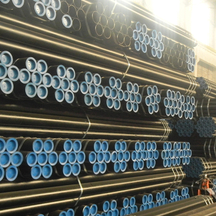
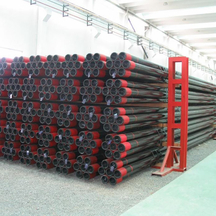
Cold-drawn steel pipes, with their high dimensional accuracy, low surface roughness, and excellent mechanical properties, are widely used in the manufacturing of blanks for high-precision components such as bearing rings, precision mechanical parts, and hydraulic components. Determining the length and cutting are the core steps in the preparation of cold-drawn steel pipe blanks, directly affecting material utilization, subsequent processing accuracy, and production costs. In the field of precision machinery manufacturing, the processing quality of cold-drawn steel pipes directly determines the performance stability of the final product. Inappropriate length determination can easily lead to material waste or insufficient processing allowance, while improper cutting methods can cause problems such as cut deformation and accuracy deviations, thus affecting the clamping and positioning effect and the finished product qualification rate. Currently, some enterprises rely on experience for length calculation and blindly match cutting parameters during the processing of cold-drawn steel pipes, resulting in low material utilization and high production losses. Therefore, mastering scientific methods for determining length and precise cutting selection techniques is of great practical significance for improving the economy and accuracy of cold-drawn steel pipe processing.
First, how to determine the length of cold-drawn steel pipes?
Determining the length of cold-drawn steel pipes requires considering three core objectives: "meeting subsequent processing needs," "maximizing material utilization," and "adapting to the pace of mass production." This avoids cost waste or quality risks caused by considering only one dimension. Specifically, the following three steps can be used for precise calculation:
1. Basic Length Calculation of Cold-Drawn Steel Pipes.
The basic length calculation uses the design length of the finished product as the core benchmark, superimposed with the processing allowance of all processes and the cutting loss, ensuring that subsequent processing can fully cover the needs for defect correction and precision improvement. The core calculation formula is:
Cutting length L = Finished product design length L₀ + Total end face allowance of subsequent processes ΔL₁ + Cutting allowance ΔL₂
The determination of each parameter needs to be combined with the characteristics of cold-drawn steel pipes and processing precision requirements:
(1) Finished product design length L₀: Strictly follow the drawing requirements, accurately extract the actual effective length of the final components, and avoid subsequent assembly problems due to dimensional deviations.
(2) Total end face allowance ΔL₁ for subsequent processes: This includes the end face machining allowance for rough turning, semi-finish turning, and finish machining, and needs to be adapted according to the precision level. For high-precision parts (such as bearing rings) of IT6-IT7 grade, ΔL₁ is usually 0.2-0.3mm; for ordinary precision parts, ΔL₁ can be simplified to 0.1-0.2mm to ensure that minor defects and clamping errors of the blank end face can be corrected.
(3) Cutting allowance ΔL₂: Cold-drawn steel pipes have a flat surface and stable dimensions, and the cutting deformation is minimal. Therefore, ΔL₂ can be controlled within 0.5-1.0mm. If heat treatment is required later, the upper limit can be appropriately used to reserve a small amount of deformation space; if it is direct machining, the lower limit can be used to reduce material waste.
2. Optimization of Batch Production of Cold-Drawn Steel Pipes.
In mass production, it is necessary to optimize the layout based on the standard length specifications of cold-drawn steel pipes (commonly 6m, 9m, 12m). Integer programming should be used to determine the number of single long pipes to be cut, maximizing material utilization and reducing short waste.
(1) Optimization Logic: First, calculate the maximum number of single-length steel pipes that can be cut (round to the nearest integer). Then, calculate the remaining material length. If the remaining material length is ≥ 80% of the single-cut length, it can be integrated into raw materials for small-batch orders. If the remaining material is too short, adjust the single-cut length appropriately (within the allowable fluctuation range) to improve overall utilization.
(2) Compensation for Special Working Conditions: If the cold-drawn steel pipes require heat treatment processes such as tempering and quenching, and the material has a strong hardening tendency (e.g., GCr15 bearing steel, 20CrMnTi alloy structural steel), an additional 0.1-0.2mm of heat treatment length deformation compensation should be reserved. The determination of the compensation amount requires obtaining actual deformation data through preliminary tests to avoid insufficient finished product size due to length shrinkage after heat treatment.
In addition, for parts with extremely high bending requirements, a straightening allowance of 0.05-0.1mm can be reserved when determining the length to ensure that the subsequent processing needs can still be met after straightening.
Second, how to select the cutting method for cold-drawn steel pipes?
Cold-drawn steel pipe cutting requires selecting the appropriate cutting method according to the wall thickness, precision requirements, and production batch. At the same time, optimize equipment parameters and standardize the post-processing process to ensure that the cut quality meets the standards and lays the foundation for subsequent processing.
1. Selection of cutting method for cold-drawn steel pipes: Precisely matching the processing scenario.
The core selection logic of the cutting method: the wall thickness determines the cutting difficulty, the precision requirements determine the cutting precision, and the batch determines the cutting efficiency. The specific matching schemes are as follows:
(1) Thin-walled cold-drawn steel pipes (wall thickness ≤ 4mm): laser cutting or plasma cutting is preferred. This method results in a very small heat-affected zone (≤0.2mm), high cut smoothness (perpendicularity deviation ≤0.1mm/m), and no significant deformation, which can greatly reduce subsequent processing allowances. It is especially suitable for high-precision component blanks (such as precision hydraulic component sleeves). Among them, laser cutting has higher precision (cut roughness Ra≤1.6μm), suitable for small-batch high-precision production; plasma cutting has higher efficiency, suitable for large-batch thin-walled tube processing.
(2) Thick-walled cold-drawn steel pipes (wall thickness >4mm): Use a high-precision saw (band saw or circular saw recommended) to balance efficiency and cost. Flame cutting should be avoided because its heat-affected zone is large (>1mm), which easily leads to cut oxidation and deformation, increasing the difficulty of subsequent processing. Manual precision saws are suitable for small-batch production, while fully automatic CNC saws are suitable for large-batch production and can improve cutting consistency.
2. Optimization of Cutting Equipment Parameters for Cold-Drawn Steel Pipes
Different cutting methods require targeted adjustment of equipment parameters to avoid cut defects due to improper parameters:
(1) Laser Cutting Parameters: Power increases with wall thickness (1000W for 2mm wall thickness, 2000W for 4mm wall thickness), cutting speed controlled at 1-3m/min; assisted slag removal with compressed air (pressure 0.4-0.6MPa) to prevent slag buildup on the cut and improve surface finish.
(2) CNC Sawing Machine Cutting Parameters: Use carbide saw blades (suitable for carbon steel/alloy steel), rotation speed 300-500r/min, feed rate 0.1-0.3mm/r; use V-clamps for precise positioning and clamping before cutting, with rubber pads at the contact points between the clamps and the steel pipe to prevent damage to the pipe surface and to avoid rotational deviation during cutting. 3. Post-cutting Processing Specifications for Cold-Drawn Steel Pipes
After cutting, the end face must be treated immediately to avoid affecting subsequent clamping and processing accuracy. The specific process is as follows:
(1) Burr and Slag Removal: Grind the cut surface with an angle grinder or file to ensure that the end face is free of sharp edges, burrs, and slag, preventing scratches on the clamps or affecting positioning accuracy during clamping.
(2) Precision End Face Grinding: For high-precision component blanks of IT6 grade and above, the end face needs to be further ground with a surface grinder to ensure that the flatness error is ≤0.05mm and the perpendicularity deviation between the end face and the steel pipe axis is ≤0.1mm/m.
(3) Rust Prevention Treatment: After treatment, promptly clean the iron filings from the end face and apply rust-preventive oil (for short-term storage) or spray rust-preventive primer (for long-term storage) to prevent rust corrosion of the cut surface. 4. Full-Process Quality Control of Cold-rolled Steel Pipes
Establish a batch-based quality monitoring mechanism to ensure stable cutting quality:
(1) Dimensional Sampling: Randomly select 3-5 pieces from each batch to check the cutting length accuracy, controlling the deviation within ±0.1mm; if the deviation exceeds the limit, adjust the equipment positioning parameters promptly.
(2) Cutting Quality Inspection: Visually inspect the cutting edge or use a magnifying glass to check for defects such as cracks, delamination, and excessive oxide scale; for products requiring high precision, use a roughness tester to check the surface roughness of the cutting edge to ensure compliance.
(3) Equipment Calibration: Check the positioning accuracy of the cutting equipment and the wear of the saw blade/laser head before starting work each day, and perform precise calibration regularly (weekly) to avoid batch quality problems caused by equipment deviation.
(4) Blank Management: After cutting, the blanks are classified and labeled according to specifications and batches, and stacked in layers (each layer height ≤500mm) to prevent collisions and deformation.
The determination of cold-drawn steel pipe length and cutting selection should revolve around three core objectives: "precision, efficiency, and economy." Scientific length calculation methods should be used to match processing needs with material utilization, and appropriate cutting methods and parameter optimization should be employed to ensure cut quality. In actual production, the plan must be flexibly adjusted based on the precision requirements of the end product, production volume, and equipment conditions. Simultaneously, strengthened quality control throughout the entire process is essential to effectively reduce material waste and production losses, and improve processing efficiency and product qualification rate. In the future, with the development of automated processing technology, CNC cutting equipment can be combined with online dimensional monitoring systems to achieve intelligent and precise control of length determination and cutting, further enhancing the level of intelligence in cold-drawn steel pipe processing.
About Us / News / Product / Project / Quality Assurance / Service / Contact Us