Views: 11 Author: Site Editor Publish Time: 2025-05-16 Origin: Site
As a high-strength low-alloy structural steel material widely used in construction, bridges, machinery manufacturing, and other fields, Q355B straight seam welded steel pipe has become the focus of attention in the industrial field for its performance characteristics, production process, and market application. The following is a comprehensive analysis of the aspects of material properties, technical standards, production process, application scenarios, and purchase points.
First, the material properties and standard specifications of Q355B straight seam welded steel pipe
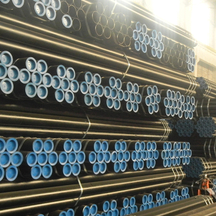
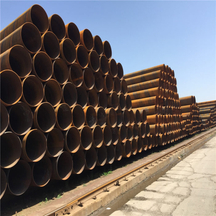
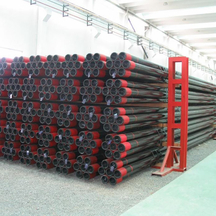
Q355B straight seam welded steel pipe uses low-alloy high-strength steel Q355B as the base material. Its chemical composition conforms to the GB/T 1591-2018 standard, and the carbon equivalent (Ceq) is controlled below 0.40%. It has good welding performance and low-temperature toughness. Compared with ordinary carbon steel, Q355B has a yield strength of more than 355MPa, a tensile strength of 470-630MPa, and an elongation of ≥22%, which can meet the mechanical requirements of heavy-loaded structural parts. According to the difference in usage, straight seam welded steel pipes implement standards such as GB/T 3091-2015 (low-pressure fluid transportation), GB/T 13793-2016 (structural use), or API 5L (petroleum and natural gas transportation). Some export products must also meet international specifications such as EN 10219 or ASTM A53.
Second, the production process and technological breakthroughs of Q355B straight seam welded steel pipes
1. Raw material pretreatment: hot-rolled steel coils (such as SPHC hot-rolled plates produced by Baowu and Anshan) are pickled to remove oxide scales to ensure surface finish.
2. Forming welding: The steel plate is bent into a tube shape through JCOE (progressive forming) or UOE (pressure forming) processes, using high-frequency resistance welding (HFW) or submerged arc welding (SAW) technology. Among them, the HFW welding speed can reach 20-40m/min, and the weld penetration is uniform; SAW is suitable for thick-walled pipes (wall thickness ≥6mm) and requires multiple passes of welding.
3. Post-processing process: After the weld is subjected to online ultrasonic flaw detection (UT) and eddy current testing (ET), the overall diameter is expanded (expansion rate 1.0%-1.5%) to eliminate residual stress, and finally the water pressure test (test pressure is 1.5 times the design pressure) is performed to ensure the sealing.
The technological upgrades in recent years are reflected in:
- The laser tracking system corrects the weld deviation in real-time (accuracy ±0.2mm)
- Medium frequency induction heating technology improves the impact toughness of the weld area (KV2≥34J at -20℃)
- Fully automatic inkjet equipment realizes the traceability of each steel pipe (including material batch number, production date, etc.)
Third, application scenarios and market analysis
1. Construction engineering: used for super high-rise building columns, replacing traditional concrete structures to reduce weight by 30%.
2. Energy field: as wind power tower foundation pipe (wall thickness 8-25mm), oil and gas gathering, and transportation pipeline (alternative solution below X65 level).
3. Transportation infrastructure: The guardrail support pipe of the Hong Kong-Zhuhai-Macao Bridge adopts a Q355B straight seam welded steel pipe, and the design life of the anti-corrosion coating is 50 years.
Fourth, key points for purchase and quality control
1. Qualification verification: Suppliers are required to provide a steel mill warranty (including chemical analysis report, and mechanical properties test data) and third-party SGS test report.
2. Appearance inspection: The weld excess height should be ≤3mm, there should be no defects such as scarring and cracks on the surface, and the ovality deviation should be <0.75%D.
3. Performance verification: Sampling for Charpy impact test (0℃), hardness test (HB≤180), and X-ray flaw detection (by GB/T 3323 Level II requirements).
4. Anti-corrosion selection: Select hot-dip galvanizing (zinc layer ≥80μm), epoxy coal tar, or 3PE anti-corrosion coating according to the use environment.
It is recommended that the purchaser specify the technical agreement (such as the additional requirement for Nb microalloying treatment) when bidding, and cooperate with manufacturers with ISO 3834 welding system certification to ensure that the quality of the entire life cycle is controllable. In the future, with the increase in new infrastructure investment, the penetration rate of Q355B straight seam welded steel pipes in prefabricated buildings, underground integrated pipe corridors, and other fields is expected to further increase to more than 45%.
About Us / News / Product / Project / Quality Assurance / Service / Contact Us