Views: 4 Author: Site Editor Publish Time: 2025-04-18 Origin: Site
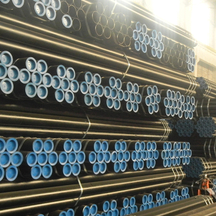
Straight seam steel pipes, as the name suggests, are products made of metal materials. Straight seam steel pipes are used in many industries. There are significant differences between straight seam steel pipes and steel pipes. I believe that many people think that the two are similar. The usage and performance of straight seam steel pipes are higher than those of steel pipes. The better types sold in the market include electric welded steel pipes, electric welded thin-walled pipes, etc. The production process of straight seam welded pipes is very simple and the cost is low, so they are deeply loved by manufacturers.
In the process of manufacturing straight seam steel pipes, straight seam steel pipe manufacturers need to have very good control over the extrusion pressure. This is because during the welding process when the temperature of the edges of the two tube embryos reaches the welding temperature, pressure is applied to them. This pressure allows their metal grains to penetrate each other and produce tightly bonded crystals to achieve the purpose of strong welding. However, if the extrusion is insufficient, the crystals cannot be formed well, and the strength of the welding position will be very low. During use, it is easy to cause cracking problems due to external forces. However, when the extrusion is too large, the welding metal that reaches the welding temperature will be squeezed out of the weld position, and the metal that can reach the temperature that is actually welded together will be very small, so the number of crystals will also be reduced, which will also lead to insufficient welding and large burrs, which is a more serious defect.
Maintenance methods for large-diameter straight seam steel pipes
1. Choose a suitable site and warehouse
(1) The site or warehouse for storing steel pipes should be selected in a clean and well-drained place, away from factories and mines that produce harmful gases or dust. Weeds and debris should be removed from the site to keep the steel pipes clean.
(2) Steel pipes must not be stacked together with materials that are corrosive to steel pipes, such as acids, alkalis, salts, and cement, in the warehouse. Different types of steel pipes should be stacked separately to prevent confusion and contact corrosion.
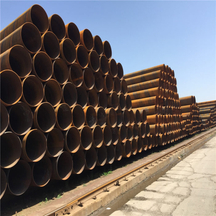
(3) Large steel sections, rails, steel plates, large-diameter steel pipes, forgings, etc. can be stacked in the open air.
(4) Small and medium-sized steel sections, wire rods, steel bars, medium-diameter steel pipes, steel wires wire ropes, etc. can be stored in ventilated material sheds, but with tarpaulins on top and pads underneath.
(5) Some small steel pipes, thin steel plates, steel strips, silicon steel sheets, small-diameter or thin-walled steel pipes, various cold-rolled and cold-drawn steel pipes, and expensive and easily corrosive metal products can be stored in the warehouse.
(6) The warehouse should be selected according to geographical conditions. Generally, an ordinary closed warehouse is used, that is, a warehouse with a roof, walls, tight doors and windows, and ventilation devices.
(7) The warehouse should be ventilated on sunny days and closed on rainy days to prevent moisture, and a suitable storage environment should be maintained at all times.
2. Reasonable stacking and first-come-first-served
(1) The principle requirement of stacking is to stack materials by type and specification under the condition of stable and secure stacking. Different types of materials should be stacked separately to prevent confusion and mutual corrosion.
(2) It is prohibited to store items that are corrosive to steel pipes near the stacking position.
(3) The bottom of the stack should be raised, solid, and flat to prevent the materials from getting damp or deforming.
(4) The same materials should be stacked separately according to the order of storage to facilitate the implementation of the first-served principle.
(5) For steel sections stacked in the open air, there should be wooden pads or stone strips underneath, and the stack surface should be slightly inclined to facilitate drainage. Pay attention to placing the materials straight to prevent bending and deformation.
(6) The stacking height should not exceed 1.2m for manual operation and 1.5m for mechanical operation. The stack width should not exceed 2.5m.
Straight seam steel pipe steel Non-ferrous metals are also called non-ferrous metals, which refer to metals and alloys other than ferrous metals, such as copper, tin, lead, zinc, aluminum, brass, bronze, aluminum alloys, and bearing alloys. In addition, chromium, nickel, manganese, molybdenum, cobalt steel, vanadium, tungsten, titanium, etc. are also used in industry. These metals are mainly used as alloy additives. With the properties of metals, tungsten, steel titanium, molybdenum, etc. are mostly used to produce hard alloys for cutting tools. The above non-ferrous metals are called industrial metals. In addition to steel, there are precious metals: platinum, gold, silver, etc., and metals, including radioactive uranium, radium, etc.
About Us / News / Product / Project / Quality Assurance / Service / Contact Us