Views: 11 Author: Site Editor Publish Time: 2025-09-01 Origin: Site
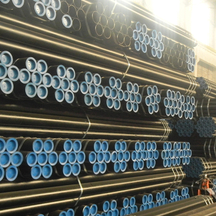
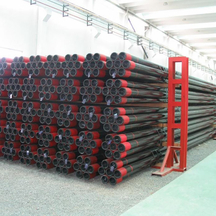
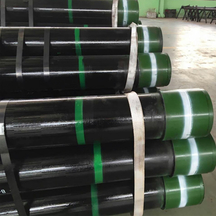
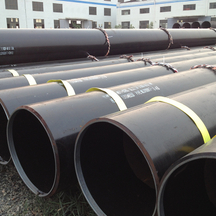
As a high-end pipe material for oil and gas transportation, X80Q straight seam steel pipe has attracted considerable industry attention in recent years for its technical standards and market applications. Produced to the API 5L standard, this welded pipe, with its high strength, high toughness, and excellent weldability, demonstrates irreplaceable advantages in long-distance oil and gas pipeline construction. From production technology to practical application, the development history of X80Q straight seam welded pipe reflects the technological breakthroughs and industrial upgrading of my country's energy equipment manufacturing industry.
In the field of materials science, X80Q represents the pinnacle of pipeline steel performance. Its minimum yield strength reaches 555 MPa (80 kilopascals), approximately 14% higher than conventional X70 steel. This means that at the same transmission pressure, pipe wall thickness can be reduced by 10%-15%, directly reducing material costs and shipping weight. Production data shows that X80Q steel plate produced using the Thermo-Mechanical Control Process (TMCP) maintains a Charpy impact energy of over 200 J at -20°C and a shear area fraction exceeding 90% in the Drop Weight Tear Test (DWTT), fully meeting the requirements for pipeline construction in extremely cold regions such as the Arctic Circle. This breakthrough in material performance has enabled the adoption of more economical and safer pipe solutions for national strategic projects such as the West-East Gas Pipeline III and the China-Russia East Line.
In terms of production technology, modern X80Q straight seam welded pipes generally utilize UOE or JCOE forming technologies. For example, a demonstration production line uses pre-bent steel plates first formed using a U-shaped press, then rounded using an O-shaped press, and finally mechanically expanded to achieve precise geometric dimensions. Temperature control accuracy in key processes reaches ±5°C, ensuring a microstructure with over 80% acicular ferrite, the microscopic foundation for achieving high strength and toughness. The welding process utilizes multi-wire submerged arc welding (SAWL) technology, with a four-wire welder capable of welding speeds up to 1.8 m/min. Combined with an online ultrasonic testing system, the weld quality meets the highest requirements of API 1104. Notably, domestic companies have achieved full localization of the X80Q welded pipe process. Third-party testing has shown that the strain capacity under hoop stress reaches 0.65%, exceeding the 0.4% requirement of API SPEC 5L.
Anti-corrosion technology is another key element in the application of X80Q straight seam steel pipe. In the Shaanxi-Beijing Line 4 project, cathodic disbonding strength tests on X80Q steel pipes using a three-layer PE anti-corrosion structure revealed a disbonding radius of only 5.3 mm after 28 days, far below the industry upper limit of 15 mm. The latest nano-composite coating technology extends the design life to over 50 years, which is particularly important for pipelines traversing highly saline and alkaline areas. Notably, domestically developed sacrificial anode materials have achieved a stable potential range of -1.10V to -1.05V (relative to Cu/CuSO4 electrodes), increasing pipeline protection efficiency in highly corrosive soils to 98.5%.
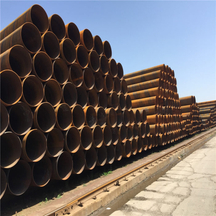
Market application data indicates that demand for X80Q straight seam welded pipe in my country will exceed 1.8 million tons in 2024, with a single batch procurement of 320,000 tons for the Central Asia Natural Gas Pipeline Line D project. Compared to spiral welded pipe, straight seam welded pipe offers higher geometric dimensional accuracy (ovality ≤ 0.6%) and is particularly suitable for high-pressure conditions (above 12 MPa). In terms of economic benefits, calculations by a multinational energy company indicate that pipeline projects using X80Q straight seam welded pipe reduce the lifecycle cost by 7%-9% compared to the X70 solution, with material savings accounting for 60%.
Quality control systems are key to ensuring the performance of X80Q. Advanced manufacturers have established a full-process traceability system from steelmaking to finished product. They use spectrometers to test each heat of molten steel for 22 elements, and laser thickness gauges are installed in the hot rolling process to achieve 0.01mm accuracy. Hydrostatic testing utilizes an automatic pressure-maintaining system, allowing test pressures to reach 1.5 times the standard requirement. A report from a third-party testing agency indicates that the dimensional pass rate for X80Q steel pipes from mainstream domestic manufacturers has reached 99.92%, far exceeding the API standard's 98% requirement.
Future development trends show three key characteristics: first, wall thicknesses exceeding 40mm to meet the needs of deep-sea pipelines; second, the development of automated welding processes compatible with X80Q to improve on-site construction efficiency; and third, the integration of intelligent pipeline technologies, enabling real-time stress and strain monitoring by embedding fiber optic sensors in the pipe body. The International Pipeline Association predicts that the global X80Q welded pipe market will reach US$15 billion by 2028, with the Asia-Pacific region's share expected to increase to 45%.
Against the backdrop of the dual carbon emissions targets, the technological evolution of X80Q straight seam steel pipe will continue to deepen. Research and development of hydrogen transmission pipelines have made progress. Preliminary tests have shown that specially treated X80Q material exhibits satisfactory resistance to hydrogen embrittlement in a 10MPa hydrogen environment. This suggests that this high-performance welded pipe may become a key enabler of energy transition in the future, and its technological boundaries and application scenarios will continue to expand. From raw material smelting to end-use applications, every link in the X80Q straight seam welded pipe industry chain embodies the technological trajectory of China's manufacturing industry towards high-end and intelligent development.
About Us / News / Product / Project / Quality Assurance / Service / Contact Us