Views: 0 Author: Site Editor Publish Time: 2025-12-04 Origin: Site
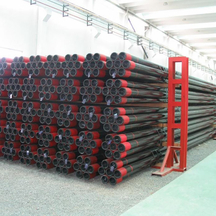
Oil casing, besides its use in oil extraction, also serves as a pipeline for transporting raw materials. To enhance the quality of oil casing, every step of the production process is crucial, especially temperature control, which must be strictly adhered to. Typically, oil casing employs sub-critical quenching instead of conventional quenching. Conventional quenching leaves the workpiece with significant residual stress, increasing brittleness and hindering subsequent processing. Sub-critical quenching prevents excessive brittleness from affecting subsequent processes. The main procedure involves first selecting a sub-critical quenching temperature, typically between 740-810℃, for approximately 15 minutes. After quenching, tempering is performed for 50 minutes at 630℃. Of course, different steels have their own specific heating temperatures and times for heat treatment; as long as the performance of the workpiece is improved, the purpose of the heat treatment is achieved.
Heat treatment is the most crucial step in the processing of oil casing. The performance and quality of the finished product largely depend on the results of heat treatment. Therefore, manufacturers maintain extremely strict requirements for the heat treatment process, leaving no room for negligence. Sometimes, low-temperature quenching can be used. Low-temperature quenching effectively removes residual stress from the oil casing, reducing post-quenching deformation and shaping the casing into a more suitable raw material for subsequent processes. Therefore, the current achievements in oil casing are inseparable from heat treatment. Since the introduction of this processing step, the impact toughness, rupture resistance, and tensile strength of oil casing have all been significantly improved.
About Us / News / Product / Project / Quality Assurance / Service / Contact Us