Views: 10 Author: Site Editor Publish Time: 2024-12-27 Origin: Site
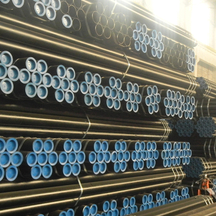
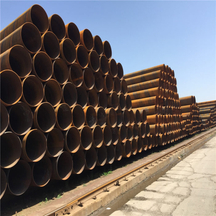
Straight seam steel pipe is a steel pipe with the weld parallel to the longitudinal direction of the steel pipe. It is usually divided into metric electric welded steel pipe, electric welded thin-walled pipe, transformer cooling oil pipe, etc. The production process of straight seam welded pipe is simple, the production efficiency is high, the cost is low, and the development is relatively fast. The strength of spiral welded pipe is generally higher than that of straight seam welded pipe. It can produce welded pipes with larger diameters with narrower billets, and can also produce welded pipes with different diameters with billets of the same width. However, compared with straight seam pipes of the same length, the weld length increases by 30~100%, and the production speed is lower.
According to different welding methods, straight seam high-frequency welded pipe (ERW) is divided into two forms: induction welding and contact welding. It uses a hot-rolled wide steel coil as raw material and undergoes pre-bending, continuous forming, welding, heat treatment, sizing, straightening, cutting, and other processes. Compared with spiral welded pipe, it has the advantages of short weld, high dimensional accuracy, uniform wall thickness, good surface, and high-pressure resistance. However, its disadvantage is that it can only produce small and medium-diameter thin-walled pipes, and gray spots, unfused, and groove corrosion defects are easily generated at the weld. At present, the most widely used fields are urban gas, crude oil, refined oil transportation, etc.
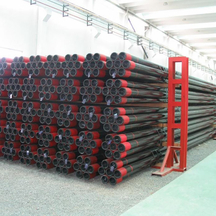
Straight seam submerged arc welded pipe (LSAW) is made of a single medium and thick plate as raw material. The steel plate is pressed (rolled) into a pipe blank in a mold or a forming machine and is produced by double-sided submerged arc welding and expansion. The finished product has a wide range of specifications, and the toughness, plasticity, uniformity, and density of the weld are good. It has the advantages of large pipe diameter, thick pipe wall, high-pressure resistance, low-temperature resistance, and strong corrosion resistance. When building high-strength, high-toughness, long-distance oil and gas pipelines, most of the required steel pipes are large-diameter thick-walled straight seam submerged arc welded pipes. According to API standards, in large oil and gas pipelines, when passing through Class 1 and Class 2 areas such as high-cold areas, seabeds, and densely populated urban areas, straight seam submerged arc welded pipes are the designated applicable pipe types. According to different forming methods, it can be divided into:
UOE welded pipe: After a single steel plate is pre-bent at the edge, it undergoes U forming, O forming, internal welding, external welding, mechanical cold expansion, and other processes;
JCOE welded pipe: that is, it is pre-welded, formed, and welded according to "J-C-O-E" and then cold expanded;
HME welded pipe: It is formed by the mandrel rolling method according to "C-C-O", and then cold expanded after welding.
Method of indicating the steel grade of large-diameter straight seam steel pipes:
1. Carbon structural steel:
① It is composed of Q+number+grade symbol+deoxidation method symbol. Its steel number is prefixed with "Q", which represents the yield point of the steel, and the number behind it represents the yield point value in MPa. For example, Q235 represents a carbon structural steel with a yield point (σs) of 235MPa.
② The steel number can be followed by symbols indicating the grade and deoxidation method. The grade symbols are A, B, C, and D respectively. The deoxidation method symbol F represents rimmed steel, B represents semi-calmed steel, Z represents calmed steel, and TZ represents special calmed steel. Calmed steel can be unmarked, that is, both ZT and TZ can be unmarked. For example, Q235-AF represents rimmed steel.
③ Carbon steel for special purposes, such as bridge steel, ship steel, etc., basically adopts the representation method of carbon structural steel but adds letters indicating the purpose after the steel number.
2. Carbon structural steel:
① The first two digits of the steel number indicate the carbon content of the steel, expressed in ten-thousandths of the average carbon content. For example, the steel with an average carbon content of 0.45% has a steel number of "45". It is not a serial number, so it cannot be read as steel No. 45.
② For carbon structural steel with high manganese content, the manganese element should be marked, such as 50Mn.
③ Boiling steel, semi-calming steel, and carbon structural steel for special purposes should be specially marked after the steel number. For example, the semi-calming steel with an average carbon content of 0.1% has a steel number of 10b.
3. Carbon tool steel:
① The steel number is prefixed with "T" to avoid confusion with other steels.
② The numbers in the steel number indicate the carbon content, expressed in thousandths of the average carbon content. For example, "T8" means an average carbon content of 0.8%.
③ For those with a high manganese content, "Mn" is marked after the steel number, such as "T8Mn".
④ The phosphorus and sulfur content of carbon tool steel is lower than that of general carbon tool steel. The letter "A" is added after the steel number to distinguish it, such as "T8MnA".
About Us / News / Product / Project / Quality Assurance / Service / Contact Us