Views: 2 Author: Site Editor Publish Time: 2026-04-02 Origin: Site
Regarding the construction sequence of steel pipe piles, a comprehensive consideration and analysis of all aspects of the project is essential, including construction machinery, construction period, design requirements, topography, workload, layout, steel pipe pile specifications and characteristics, and geological conditions.
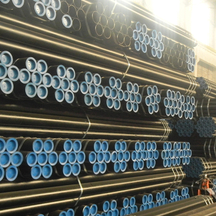
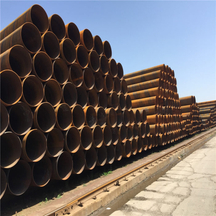
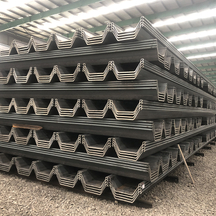
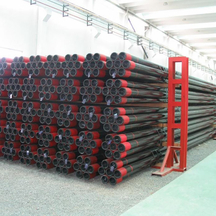
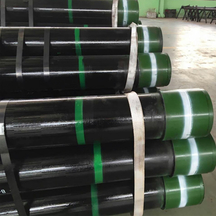
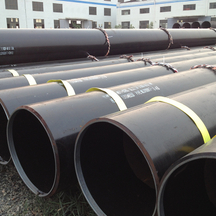
First, steel pipe piles need to be properly stacked.
The stacking site must be flat to ensure that large vehicles can access it directly. For low-lying areas, ballast or timber should be laid under the support points for artificial reinforcement, and drainage ditches should be dug around the site. When stacking steel pipe piles, they must be stacked according to their specifications to facilitate transportation. When stacking the support points, it must be ensured that the steel pipe piles do not deform. Furthermore, the steel pipe piles stacked on site should be placed within the lifting range of the pile driver. Since the steel pipe piles are lifted during hoisting, the tops of all steel pipe piles must face the pile foundation and be arranged according to the pile driving sequence.
Second, Construction of Steel Pipe Piles
Regarding the positioning of steel pipe piles, the pile driver is moved to the pile location. For a few locations requiring adjustment, the pile driver can be rotated for adjustment. Before lifting the steel pipe pile, a comprehensive inspection of its appearance should be conducted, paying particular attention to its ellipticity and the squareness of the end face of the H-shaped steel pipe pile. Detailed records must be made after the inspection, and lifting can only proceed after confirming that the steel pipe pile is qualified. When lifting the steel pipe pile, the top of the pile needs to be fitted into the pile cap, and the pile bottom should be aligned with the lime line before insertion. The outer perimeter of the H-shaped steel pipe pile is rectangular, requiring specific orientation for its arrangement. It is necessary to ensure that it is inserted correctly both longitudinally and laterally. For the right angle formed by the front and side of the pile driver, the verticality of the guide rod can be monitored using two theodolites to ensure that the pile body, pile cap, and pile hammer form a vertical line.
Third, Factors Affecting the Driving Accuracy of Steel Pipe Piles.
Due to the weight of the steel pipe pile, the pile can slowly sink into the soil under its own weight. This self-sinking process should be controlled to proceed slowly, and hammering should only begin after stability has been ensured. In the initial stage, hammering can easily lead to the diesel hammer failing to ignite properly, resulting in dry-firing. Therefore, the pile driving quality needs to be monitored closely during this period. If any abnormalities are found, corrective measures should be taken promptly. In severe cases, the steel pipe pile should be pulled out and re-inserted, using forced measures to make it sink along the predetermined trajectory.
About Us / News / Product / Project / Quality Assurance / Service / Contact Us