Views: 0 Author: Site Editor Publish Time: 2026-01-05 Origin: Site
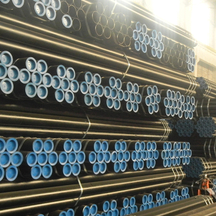
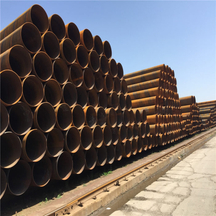
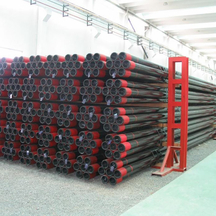
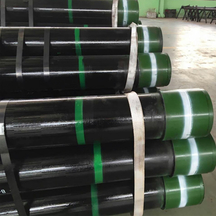
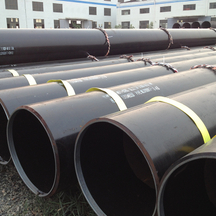
Welded steel pipe, also known as welded steel pipe, is a steel pipe made by welding steel plates or strips after they have been rolled and formed. The production process of welded steel pipe is simple, efficient, and offers a wide variety of specifications with low equipment investment, but its strength is generally lower than that of seamless steel pipe. Straight seam welded steel pipe has a simple production process, high efficiency, low cost, and has seen rapid development. Spiral welded steel pipe generally has higher strength than straight seam welded steel pipe, and can produce larger diameter pipes from narrower blanks, and can also produce pipes of different diameters from the same width of blank. However, compared to a straight seam pipe of the same length, the weld length increases by 30-100%, and the production speed is lower. Therefore, smaller diameter welded steel pipes mostly use straight seam welding, while larger diameter welded steel pipes mostly use spiral welding.
First, increasing the hot-charging temperature and hot-charging ratio of straight seam welded steel pipes.
Increasing the hot-charging temperature and hot-charging ratio is an important measure for energy conservation and emission reduction, and has received much attention. Currently, the average hot charging temperature in my country is 500-600℃, with some reaching 900℃; the average hot charging ratio is 40%, with production lines reaching over 75%. One company's 1780mm hot-rolling mill has a hot charging ratio of 65%, a direct rolling ratio of 30%, and a hot charging temperature reaching 1000℃; Sumitomo Kashima's 1780mm hot-rolling mill has a direct rolling ratio of 57%, a hot charging temperature exceeding 850℃, and a hot charging ratio of 28%. In the future, my country should increase the hot charging ratio of continuously cast billets above 650℃, striving for energy savings of 25%-35%.
Secondly, heating technologies for straight seam steel pipe furnaces.
Heating technologies include regenerative heating, automatic combustion control, combustion of low-calorific-value fuels, and low-oxidation or non-oxidation heating technologies. Statistics show that approximately 330 steel rolling furnaces in my country have adopted regenerative combustion technology, achieving energy savings of 20%-35%. Further energy consumption can be reduced through optimized combustion. This requires work on using low-calorific-value fuels and increasing the application of blast furnace gas and converter gas. Low-oxidation heating technology with atmosphere control and non-oxidation heating technology with gas protection are important measures to reduce oxidation loss and improve yield. This technology can even eliminate the need for pickling. Currently, the oxide scale generated during the steel rolling heating process is 3-3.5 kg/t, resulting in an estimated annual loss of approximately 1.5 million tons of steel (about 7.5 billion RMB). According to European scholars, pickling costs 15-20 euros/t /t. Reducing pickling and acid consumption through this technology would significantly benefit environmental protection and reduce the pressure on waste acid treatment.
Thirdly, low-temperature rolling and rolling lubrication technology for straight seam steel pipes.
Some domestic high-speed wire rod manufacturers have adopted low-temperature rolling processes, with average furnace exit temperatures reaching 950℃ and even dropping to 910℃. Some newly built high-speed wire rod mills have designed and manufactured their first stand with a starting rolling temperature of 850℃. The total energy consumption of low-temperature rolling is about 10%-15% lower than that of conventional rolling. According to statistics from a certain enterprise, reducing the billet exit temperature by 8℃ will save 4.2 kJ/t of energy, an energy saving effect of 0.057%. However, low-temperature rolling requires strict uniformity of billet heating temperature; the temperature difference along the entire length of a 130-150mm square billet should not exceed 20-25℃. Rolling lubrication technology can reduce rolling force by 10%-30%, reduce power consumption by 5%-10%, and reduce iron oxide scale by approximately 1 kg/t, thereby increasing the yield by 0.5%-1.0% and reducing pickling acid consumption by approximately 0.3-1.0 kg/t. Several domestic steel mills have successfully applied this technology to the production of stainless steel and electrical steel with good results. In the future, while vigorously promoting rolling lubrication, we should strengthen the development of environmentally friendly rolling lubrication media, lubrication technology, and recycling technology.
Fourth, Controlled Rolling and Cooling Technology and Equipment for Straight Seam Steel Pipes.
Controlled rolling and cooling technology is an indispensable means for energy saving, material saving, high-performance products, and production. Representative steel materials such as DP steel, TRIP steel, TWIP steel, CP steel, AHSS steel, UHSS steel, pipeline steel, structural steel, grain steel, and heat-treatment-free steel are all produced using controlled rolling and controlled cooling technology. Besides being based on new developments in physical metallurgy, controlled rolling and controlled cooling technology also benefit from new technological equipment, such as high-pressure rolling mills capable of low temperatures and high pressures, ultra-compact rolling mills, ultra-fast cooling (UltraFastCooling), online accelerated cooling (Super-OLAC) devices, and sizing mill equipment. Future development of controlled rolling and controlled cooling technology will strongly depend on new technological equipment. This is a crucial characteristic of the development of controlled rolling and controlled cooling technology and deserves serious attention.
About Us / News / Product / Project / Quality Assurance / Service / Contact Us