Views: 6 Author: Site Editor Publish Time: 2026-04-13 Origin: Site
Carbon steel pipes and seamless steel pipes are two common types of pipes in the steel industry, and they differ in manufacturing processes and performance characteristics.
1. Definitions and Manufacturing Processes of Carbon Steel Pipes and Seamless Steel Pipes.
Carbon steel pipes are steel pipes with carbon as the main alloying element, having a high carbon content, typically between 0.06% and 2.11%. Carbon steel pipes can be produced through two main manufacturing processes: seamless manufacturing and welding.
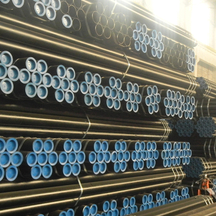
1.1 Manufacturing Process of Seamless Steel Pipes: Seamless steel pipes are made through processes such as billet heating, piercing, hot rolling, or cold drawing. The manufacturing process of seamless steel pipes is relatively complex, but because there are no weld joints on the inner and outer surfaces, they have high strength and corrosion resistance.
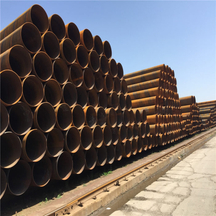
1.2 Manufacturing Process of Welded Steel Pipes: Welded steel pipes are manufactured by bending steel plates into a tubular shape and then welding them. The manufacturing process of welded steel pipes is relatively simple, but due to the presence of weld joints, the strength and corrosion resistance of the welded section are lower.
2. Comparison of Performance Characteristics of Carbon Steel Pipes and Seamless Steel Pipes
2.1 Performance Characteristics of Carbon Steel Pipes: Carbon steel pipes possess high strength, toughness, and corrosion resistance. They have good weldability and can be joined using various welding methods. Furthermore, carbon steel pipes are relatively inexpensive and widely used in many fields.
2.2 Performance Characteristics of Seamless Steel Pipes: Seamless steel pipes have smooth inner and outer surfaces, no welded joints, and possess high strength and corrosion resistance. They perform excellently under high temperature and high pressure environments, thus finding wide application in industries such as petroleum, natural gas, and chemicals.
3. Application Areas of Carbon Steel Pipes and Seamless Steel Pipes
3.1 Application Areas of Carbon Steel Pipes: Carbon steel pipes are widely used in industries such as construction, bridges, machinery manufacturing, and automobile manufacturing. For example, they can be used to manufacture water pipes, oil pipelines, and automotive parts.
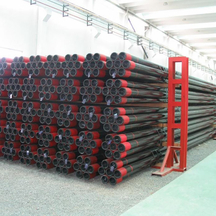
3.2 Application Areas of Seamless Steel Pipes: Due to their high strength and corrosion resistance, seamless steel pipes are widely used in industries such as petroleum, natural gas, chemicals, and power. Seamless steel pipes play a vital role in oil wells, pipeline transportation, and petrochemical equipment.
Carbon steel pipes and seamless steel pipes differ in manufacturing processes and performance characteristics. Carbon steel pipes are suitable for applications with less stringent requirements, are relatively inexpensive, and are widely used in construction, bridges, and machinery manufacturing. Seamless steel pipes, on the other hand, possess higher strength and corrosion resistance, are suitable for high-temperature and high-pressure environments, and are widely used in the petroleum, natural gas, and chemical industries.
Both carbon steel pipes and seamless steel pipes play important roles in their respective fields, contributing to the development of various industries. With continuous technological advancements and industry development, the manufacturing processes and performance characteristics of both carbon steel pipes and seamless steel pipes are constantly being improved and enhanced to meet ever-changing demands.
About Us / News / Product / Project / Quality Assurance / Service / Contact Us