Views: 1 Author: Site Editor Publish Time: 2026-03-02 Origin: Site
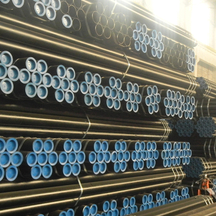
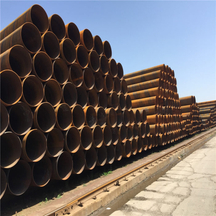
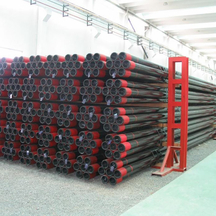
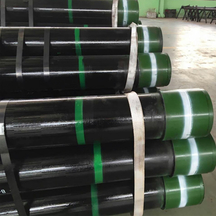
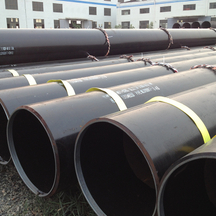
The base materials for 3PE anti-corrosion steel pipes include seamless steel pipes, spiral steel pipes, and straight seam steel pipes. The three-layer polyethylene (3PE) anti-corrosion coating, with its excellent corrosion resistance, water vapor permeability resistance, and mechanical properties, is widely used in the oil pipeline industry. The anti-corrosion layer of 3PE anti-corrosion steel pipes is crucial to the lifespan of buried pipelines. Steel pipes of the same material can vary greatly; some can remain uncorroded underground for decades, while others leak within years. This is because they employ different external anti-corrosion layers.
What is the anti-corrosion structure of 3PE anti-corrosion steel pipes?
The external anti-corrosion form of 3PE anti-corrosion steel pipes
3PE anti-corrosion generally consists of three layers:
First layer: Epoxy powder (FBE>100um)
Second layer: Adhesive (AD) 170~250um
Third layer: Polyethylene (PE) 2.5~3.7mm
In actual operation, the three materials are mixed and fused, and then processed to firmly bond with the steel pipe, forming an excellent anti-corrosion layer. The processing methods are generally divided into two types: spiral wound and circular mold coating. 3PE anti-corrosion steel pipe coating, also known as three-layer polyethylene anti-corrosion coating, is a new type of anti-corrosion steel pipe coating that cleverly combines the European 2PE anti-corrosion layer with the epoxy powder coating (FBE) widely used in North America. It has been recognized and used worldwide for over ten years. The 3PE anti-corrosion steel pipe coating consists of an epoxy powder coating as the bottom layer in contact with the steel pipe surface, a copolymer adhesive with branched functional groups as the middle layer, and a high-density polyethylene anti-corrosion coating as the top layer. 3PE anti-corrosion coating combines the high impermeability and high mechanical properties of epoxy resin and polyethylene materials. To date, it is globally recognized as the most effective and high-performance pipeline anti-corrosion coating and is therefore used in numerous engineering projects.
How are the standards for 3PE anti-corrosion steel pipes formulated?
In the early stages of introducing 3PE coating technology, the CNPC Engineering Technology Research Institute, in April 1995, compiled China's first 3PE coating construction and acceptance specification, referencing DIN30670-1991 and NFA49-710 (March 1988 edition), for use in the construction of the Shaanxi-Beijing Pipeline and the Kuqa-Shanshan Pipeline. That same year, it was upgraded to the industry standard SY/T4013-1995. After several years of engineering construction and practice, it was revised in 2001 to SY/T0413-2002 and implemented on August 1, 2002. At the beginning of the standard's formulation, based on China's actual conditions, high-density polyethylene was prioritized, with a Vicat softening point set at no less than 110℃; the thickness of the external anti-corrosion layer was determined according to the German standard DIN30670-1991, which primarily uses low- and medium-density polyethylene. This significantly improved the impact resistance of the 3PE anti-corrosion coating, ensuring the construction quality of the Shaanxi-Beijing and Kuqa-Shanshan pipelines. SY/T0413-2002 further enhanced the peel strength and impact resistance of the 3PE anti-corrosion coating, and clearly specified the carbon black content of certain special materials, ensuring the mechanical strength and weather resistance of the 3PE anti-corrosion coating. It also increased the frequency of sampling tests for the peel strength of joint repairs (i.e., the peel strength of heat-shrinkable sleeves and tapes to the primer steel), contributing to ensuring the quality of the pipeline's external anti-corrosion coating.
What industries use 3PE anti-corrosion steel pipes?
Currently, 3PE anti-corrosion steel pipes have successfully solved the problems of corrosion resistance and impact resistance on the outer wall of steel pipes. However, for internal wall corrosion protection, liquid epoxy coating IPN8710 is commonly used in China. This liquid epoxy requires a long time to cure at room temperature, and the use of liquid epoxy coating on the inner wall can only reduce drag, not achieve corrosion resistance and erosion resistance. If used in water pipelines, the inner wall must be made of hot-melt-bonded epoxy resin powder to improve the corrosion resistance and abrasion resistance of the inner wall. The 3PE outer and fusion-bonded epoxy composite steel pipe used in the Henan section of the South-to-North Water Diversion Project has been successfully applied to the project. This solves the problems of scale resistance, smoothness, wear resistance, and corrosion resistance on the inner wall.
About Us / News / Product / Project / Quality Assurance / Service / Contact Us